
What is a designer toy?
A designer toy is a figure read as a design decision as much as an object. The character may be familiar. What carries the piece is the surface, the stance, and the scale a maker chose. It occupies a room as a form you look at. The definition starts with intent, before it starts with a brand name.
That intent ties the figure to a point of view. An artist or a studio decides where the eyes sit, how the joints break the silhouette, how glossy the paint should be, and how much empty space the form needs. The result is still an object you can hold. What sets it apart is that those choices were made on purpose.
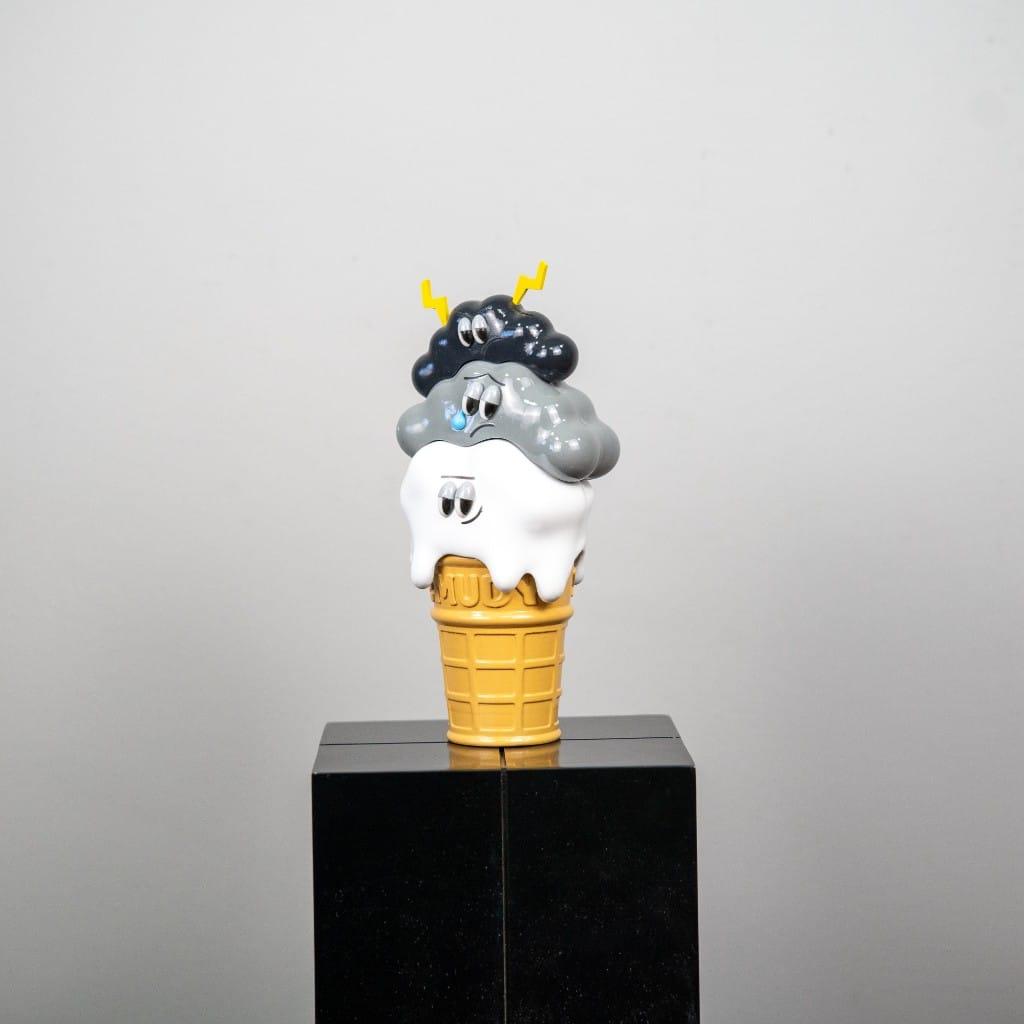
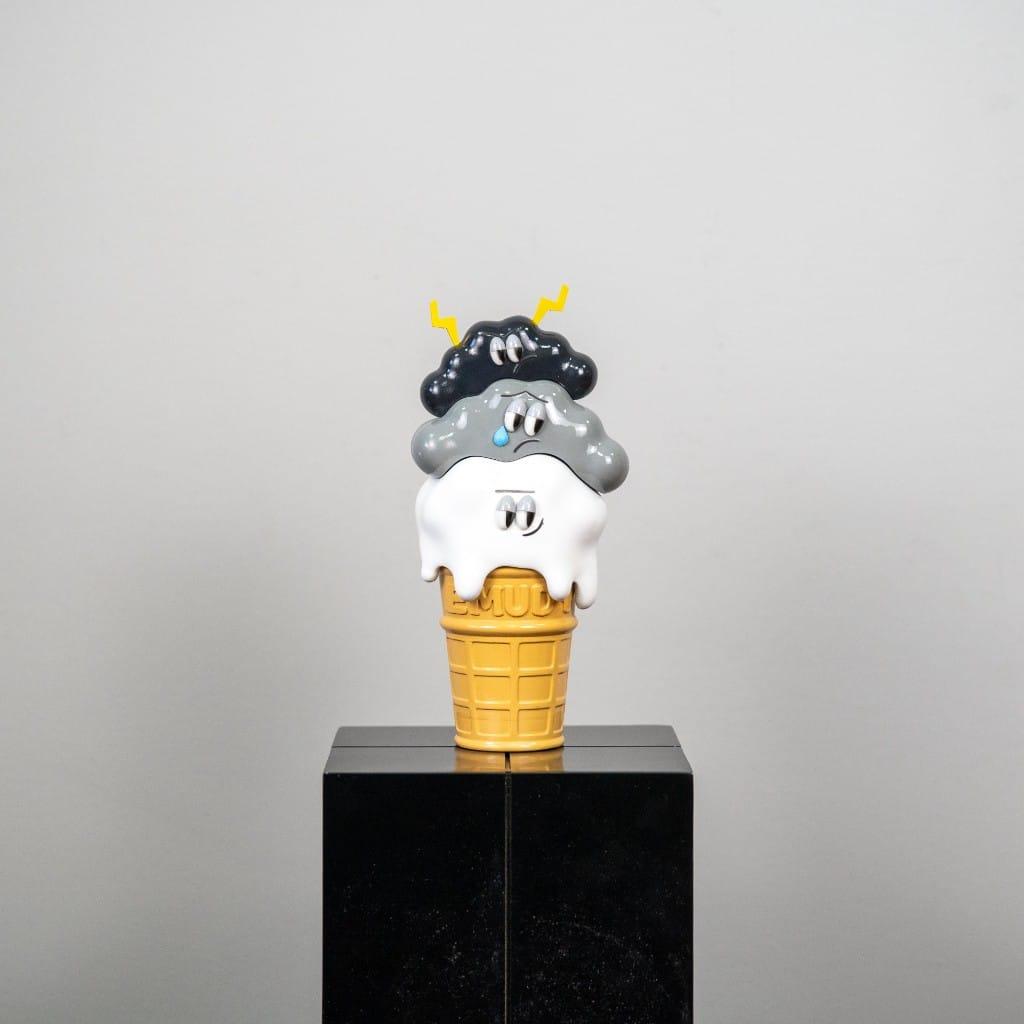
In the Popüler Sanat selection, the definition is easy to see in the EMUDY Cloud Cone. A three-scoop silhouette, a set of different faces, and a glossy surface turn a joke into a small sculpture. Looking at the designer toy edit this way keeps every shiny character from being filed under the same word.
The place between toy and sculpture
A designer toy borrows the familiar language of a toy and turns it toward a sculptural question. A round head, a short arm, an exaggerated face: these are signs from childhood. The same signs behave differently once they take light in a room. The silhouette reads from across the space. Up close, the surface, the seams, and the color decision do the talking.
The in-between is deliberate. Push the piece toward pure seriousness and it becomes a cold model. Leave it too close to a plaything and it disappears on a crowded shelf. The stronger examples hold a stance between those poles. The form is recognizable, and it has been thought through as an interior object.
The EMUDY Cloud Cone builds that tension with faces. Three scoops, three expressions. The cone is familiar, and the piece still sits like an object for a desk.
Surface, character, and platform
Three questions make a designer toy easier to read. First, the surface: matte, gloss, a marble pattern, or a print. Second, the character: face, proportion, and posture. Third, the platform. Some figures are born as a single artist’s sculpture. Others belong to a shared body, with graphics that change from one release to the next.
A platform is a structure, and a useful one. A shared silhouette lets color and pattern show more clearly. A solid bear and a leopard-print bear can share a skeleton and do entirely different work in a room. The useful question is which decision will read in your space.
The culture moved along the same line. In the late 1990s, urban vinyl figures often carried an artist’s own character. Platform toys then opened that language to a wider public. Today the line runs from a small piece on a console to an object that holds a hallway alone. The story of how the culture started picks up that path in more detail.
Misreadings that stick
The first misreading treats every vinyl character as a designer toy. Vinyl is a material. Designer toy is an intent. A licensed hero, an artist figure, and a decorative sculpture can share a shelf and still belong to different sentences. The material may match. The decision may not.
The second misreading treats small as trivial and large as automatically serious. Scale changes the volume of a presence. It does not build the meaning by itself. A three-scoop silhouette can change the character of a table in the right light. A huge form can also simply occupy the wrong corner. Scale is a tool.
The third misreading uses the term as a seal of personal fit. Calling something a designer toy says a design hand is visible. It does not say the piece belongs in your room. Fit is a matter of color, light, and how long you want to look. The difference between an art toy and a collectible figure opens that distinction further.
How it lives in a room
A designer toy does not have to dissolve into a pile of accessories. One piece can hold the middle of a console. Two pieces can talk through color. A crowded shelf works when it has a rhythm. Figures lined up at the same height, the same gloss, and the same volume cancel one another.
Light makes the definition visible. Gloss takes the room into the surface. Matte holds the shadow. The glossy cone reads as bright against a pale wall. In a dark niche, the faces become sharper. Before you choose, it helps to know the color of the surface it will stand on, and the hour when that surface gets light.
Setting the figure beside a book, a lamp, or a vase is also a decision. A designer toy changes the scale of whatever sits near it. A very small object disappears on a large table. A mid-size figure can write a sentence in front of an empty wall. Placement continues the definition.
A practical way to choose
Separate the silhouette you like on a first look. Then study the surface. Scratches, waves in the finish, uneven matte, and the edge of the paint tell you how the piece will live at home. A figure that shines in a photograph can shift color in daylight. Ask for more than one angle when you can.
Name the sentence you want the piece to make. Are you after a facial expression, a block of color, or a cultural reference? The bear in a kit carries the rhythm of sport. The cone carries humor. Both can be designer toys. They do not do the same job on the same shelf.
The third step is patience. A first piece does not have to be an entire collection. Starting a collection is less about hunting a single correct figure and more about choosing a way of looking. Note the surface and the scale you respond to. Let the next piece arrive beside that note.
Leave the definition in the room
The term becomes useful once it stops being a complicated label. You have a form. That form carries someone’s decision. You make the second decision by giving it a place. When the two meet, the piece leaves the product photograph and becomes a sentence in the room.
There is no need to memorize the vocabulary. Looking at surface, stance, and the space around the figure is enough. When a piece is clear in all three, it finds its place whatever the label says. The rest is the slow work of a shelf.
The collection is a calm place to return with that eye. Choose one piece, set it on a surface, and live with it for a day. The definition settles at the end of that look.