
How did designer toy culture start?
Designer toy culture became visible in the late 1990s through urban vinyl figures. Artists took the familiar body of a toy and turned it toward their own characters, clothes, and street language. What emerged was closer to a portable style than to a souvenir. The culture grew as that style was shared.
Pinning the start to a single day is misleading. Ideas moved through studios, small shows, and circles of friends. Photographs and magazines carried those circles farther. A figure stopped being only an object made in one city and became a piece of a culture people looked at.
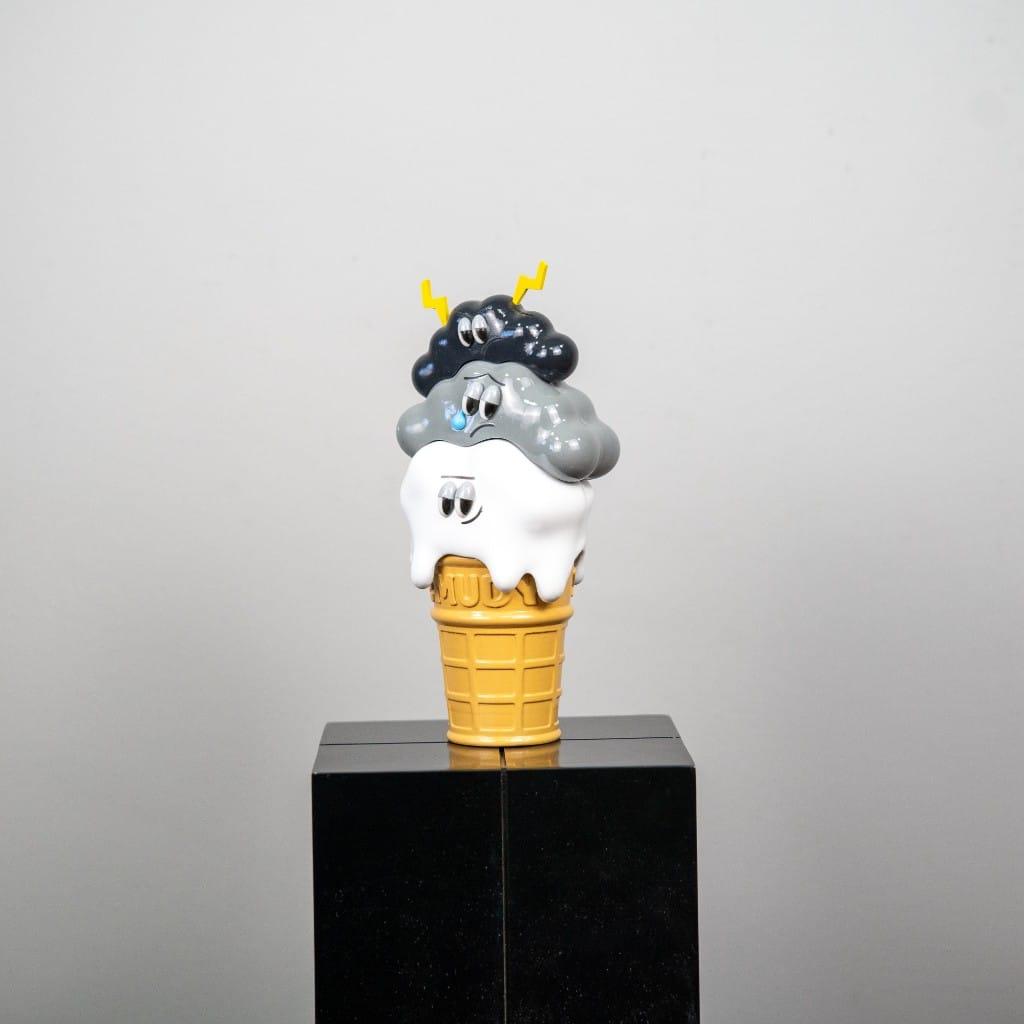
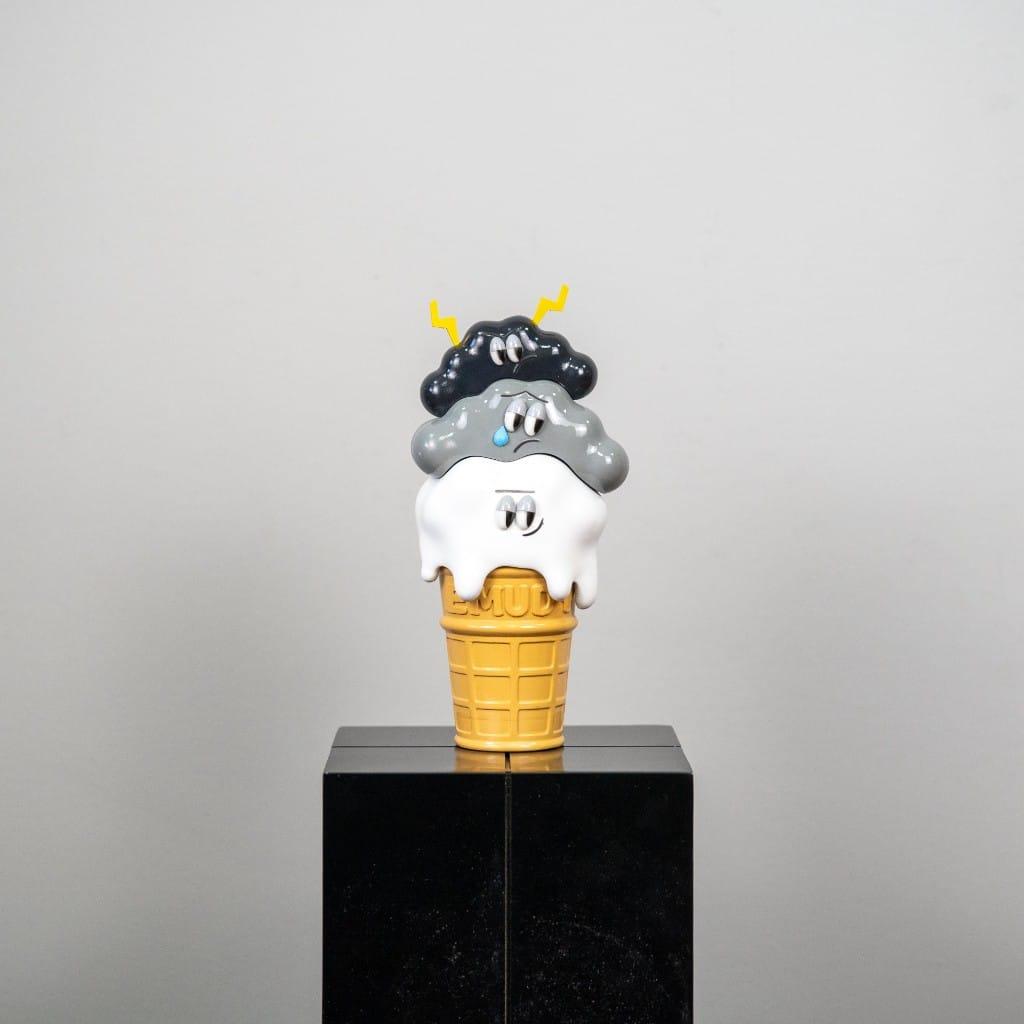
The same line is visible at home now. A piece like the EMUDY Cloud Cone turns that early humor into a glossy interior object. Three scoops, three faces, a flash of lightning: a city joke settles on a console. For the definition itself, what a designer toy is stands separately.
Hong Kong and Michael Lau
In that early period, the Hong Kong artist Michael Lau is often credited as a key figure. Lau joined the figure to street dress, music, and a personal character language. The point is not the legend of one sculpture. The point is the demonstration that a toy form could be read like a handwriting.
That approach separated the figure from a shrunken copy of a licensed hero. Head, shoes, stance, and color came from the rhythm of a neighborhood. A viewer saw someone’s wardrobe and humor. This shift is the core of what came to be called urban vinyl.
Treating Lau as a solitary beginning is too narrow as well. Other drawers, sculptors, and small makers were nearby. A culture gathers around a signature, then other people walk through the door that signature opened. Naming him is a way of remembering the door.
How platform figures carried the culture
The next widening came with platform figures built on a shared body. In Japan, makers such as Medicom Toy showed that changing graphics could dress the same silhouette. A figure could say something new without being sculpted from nothing each time. That made the culture easier to travel.
Later, platforms associated with Kidrobot met the idea in another geography and with another audience. There is no need to memorize the year of every collaboration. Inventing a date you are unsure of does not make the culture clearer. What is clear is the walk from the artist-customized figure to a shared platform.
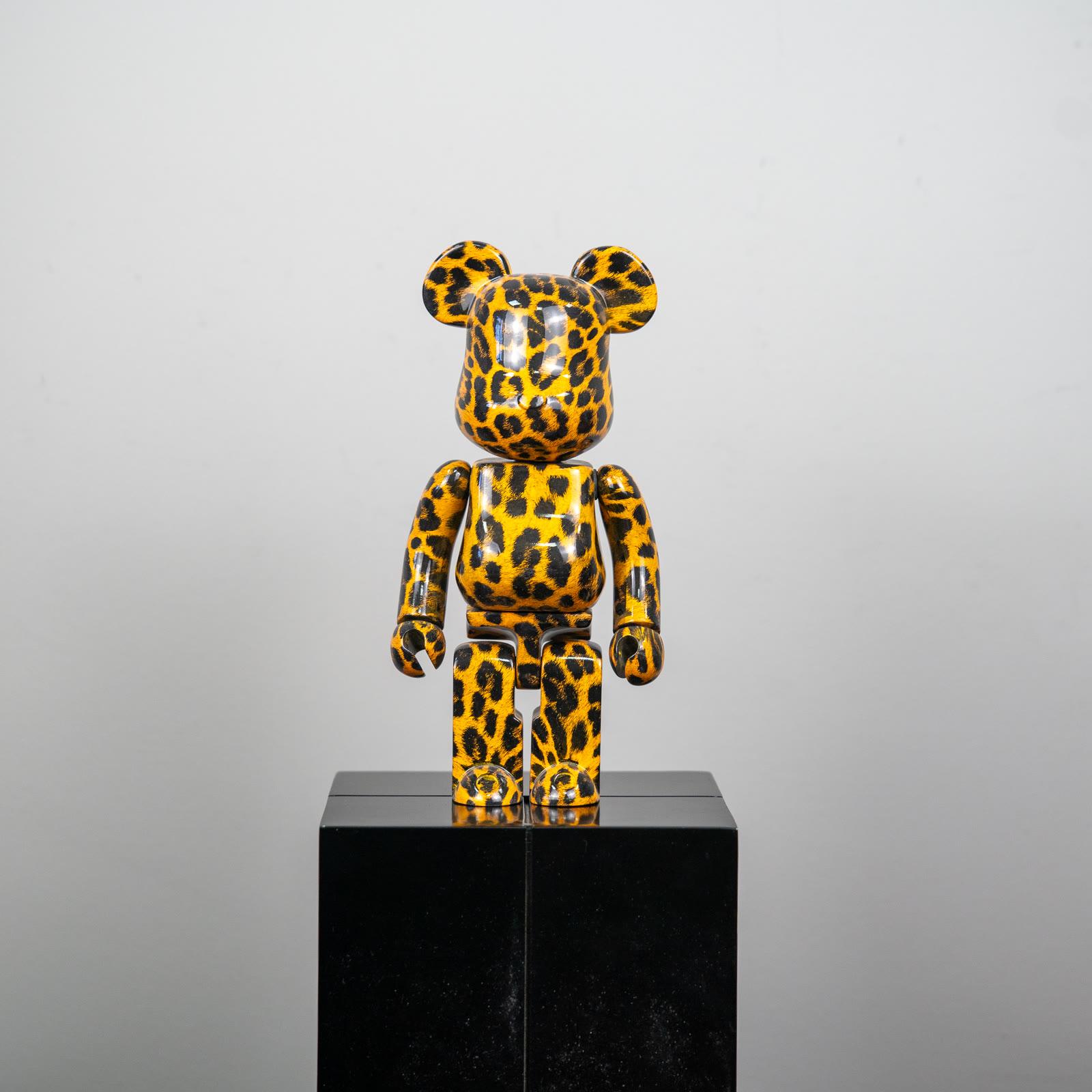
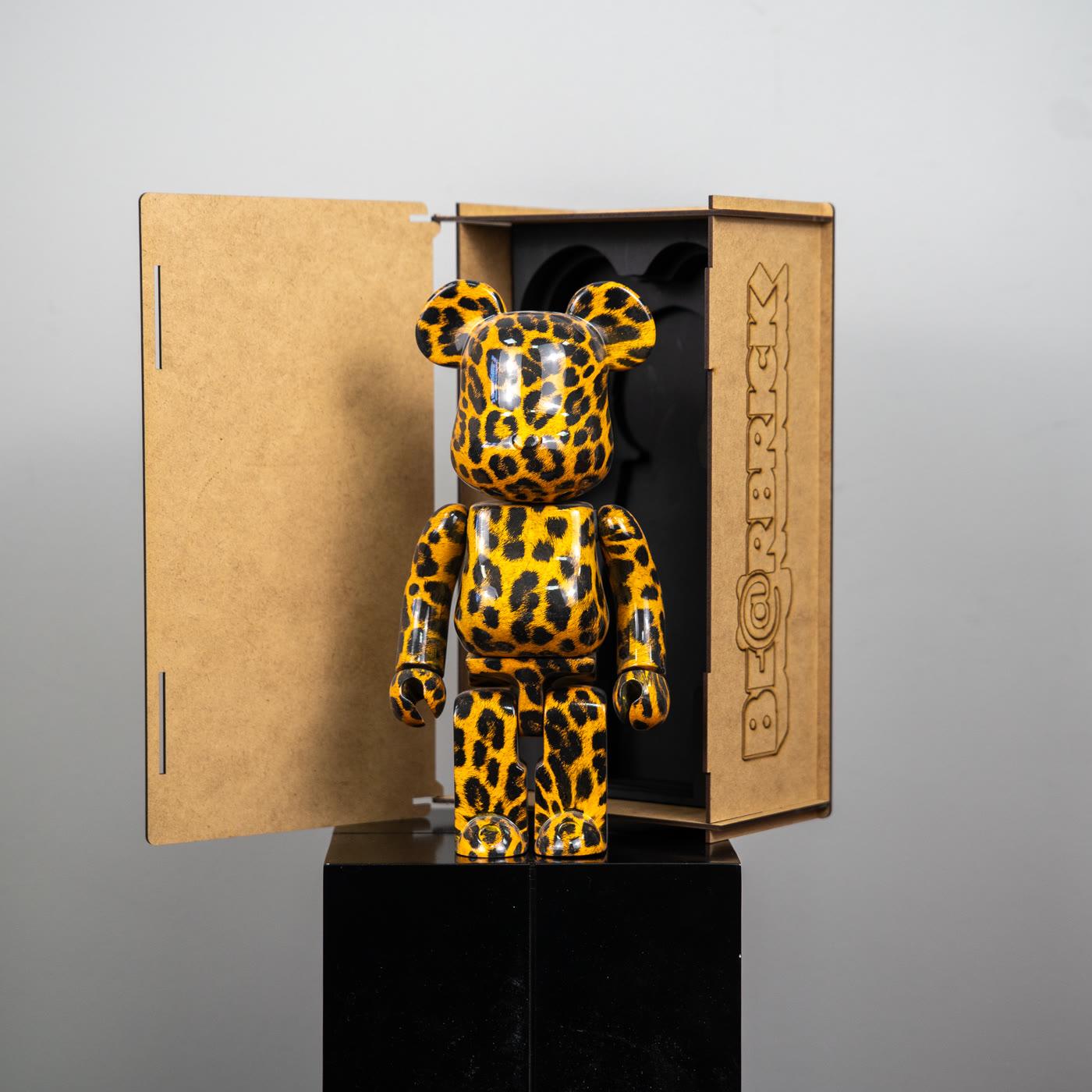
The platform did not erase personality. A shared bear body made the pattern on it easier to read. The leopard Bearbrick is a continuing example of that logic. Yellow and black spread a familiar fashion print across the whole surface. The silhouette stays. The sentence is the pattern. Bearbrick culture follows that thread on its own.
From the street into the interior
The third movement is the figure settling inside the home. Early pieces lived in a pocket, a bag, the edge of a desk. Over time the scale grew, the base was taken seriously, and the piece moved to the middle of a console. The question became how it stands in a room.
That passage did not cancel the street. A leopard print, a kit stripe, a cloud, a bolt of lightning are still signs from outside. Indoors they are read more slowly. In a hall, on a desk, in a lobby, the figure begins to do the work of a poster. It is looked at.
The tie to fashion, music, and the street belongs to the same journey. The detail sits in art toys, fashion, and music. Here it is enough to say that the figure became a three-dimensional cousin of a stage costume or a record sleeve. Then that kinship became an interior object.
Misreadings of the history
The first misreading reduces the culture to the birthday of a single brand. Brands enlarged the language. They were not the only vitrine that made it. The city, the artist, and small production were there before the platform. The history is messier than a catalog order.
The second misreading sticks a precise year onto every collaboration. Some meetings are well documented. Many get rounder each time they are retold. Placing a date you do not trust inside a sentence does not make a piece more serious. The value is in a readable surface and a readable intent.
The third misreading tells the past only as an investment story. The culture came out of a habit of looking. The rise and fall of a price does not replace that habit. Understanding a figure means asking which city, which hand, and which room it came from.
How to read a piece today
Ask the figure in your hands three questions. Does the silhouette belong to a familiar platform, or to a single character? Does the surface carry an artist’s humor, or the repeat of a pattern? Does the piece want a table, or a hall? Those three answers do more work than a long chronology.
The cone silhouette continues the early culture’s joke. The leopard print continues the meeting of platform and fashion. They do not have to be products of the same decade. They are two ends of the same way of looking. One speaks with a face, the other with a pattern.
Reading does not require a memorized timeline. Knowing the door Lau opened, the platform Medicom Toy carried, and the later widening around Kidrobot gives you a floor. The floor does not rewrite every label. It names the place you are looking from.
Keeping the culture on a shelf
Designer toy culture is not a finished story on a museum panel. Each new piece adds a short sentence. The sentence does not need to look rare to be right. It needs a clear surface, a clear stance, and a clear amount of air.
Keeping that at home does not ask for an elaborate system. Choose one piece, see its light, and notice whether the second piece shouts at the same volume. The culture lives in a chosen neighborhood of objects more than in a crowded shelf.
The rest of the journal follows that neighborhood from Bearbrick into the interior. The beginning is plain: in a city, people made the figure resemble themselves. Then the figure walked into our rooms.