
How do you start a designer toy collection?
You start a designer toy collection by choosing a piece you want to look at. A complete series, a perfect investment list, or a full vitrine is not a requirement of the beginning. The first figure makes your scale and your color visible. The rest arrives beside that choice.
The start does not have to be a manifesto. A matte black, a glossy joke, a small desk piece, or a larger form that holds a room: the collection opens where your eye stays. Consistency is not built on the first day. It appears, slowly, with the second and third pieces.
If the term itself is still new, what a designer toy is describes the threshold. After the threshold, the work is simple. Take one piece, put it somewhere, and look for a while. The collection is calm enough for that first look.
The first piece is not a manifesto
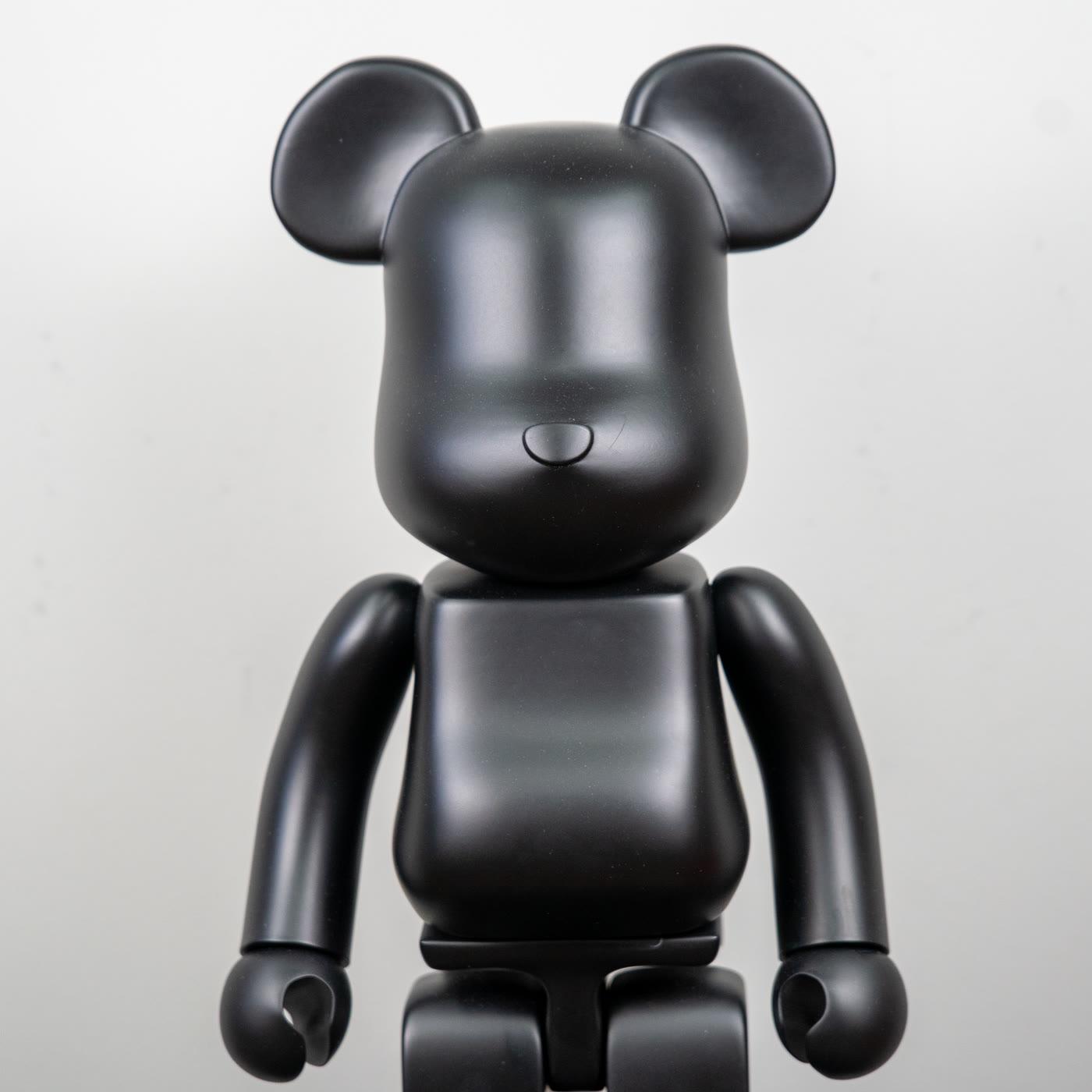
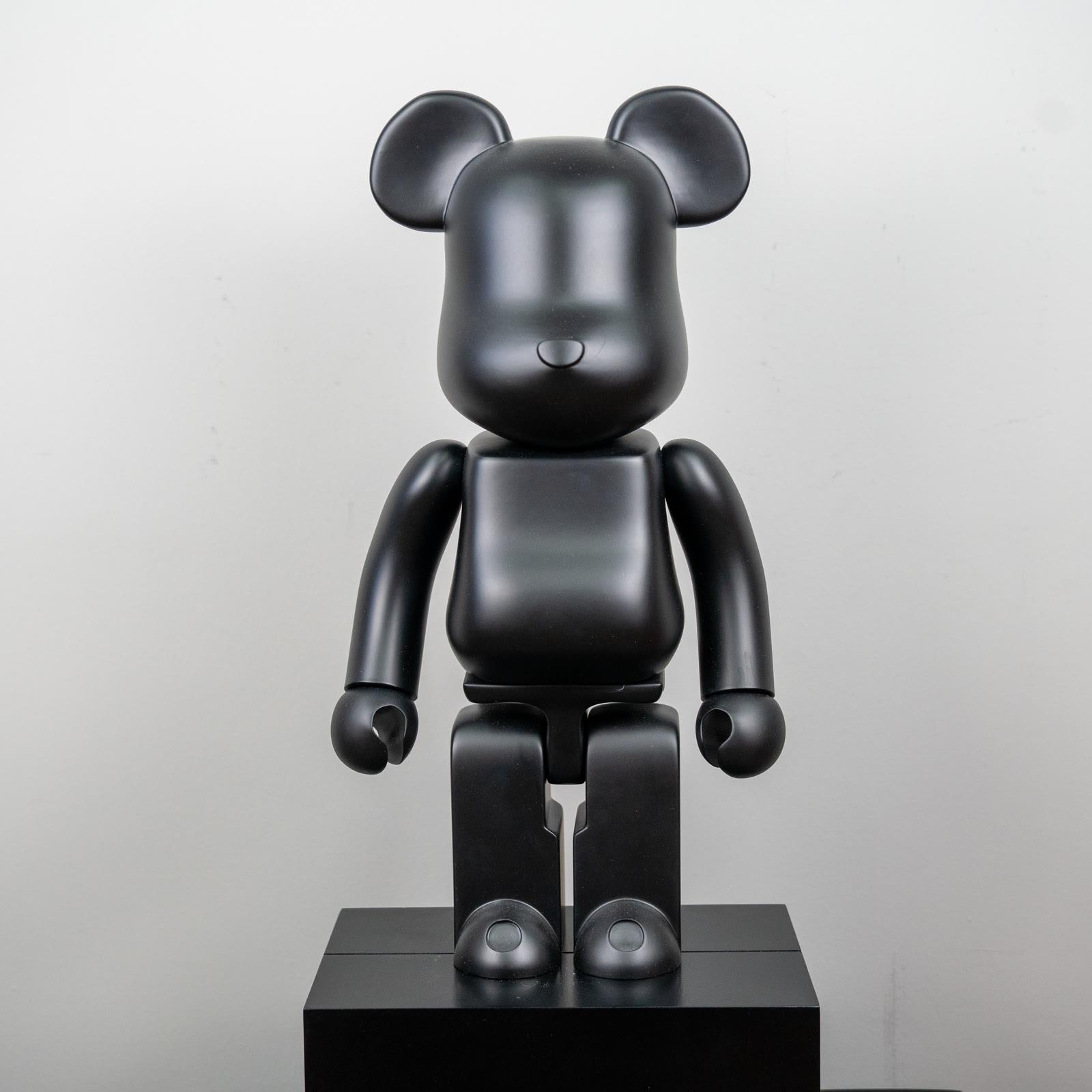
If the first piece is asked to represent your entire taste, the choice locks. That piece is only a sentence. If the sentence is clear, the collection has started. The matte black Bearbrick can be a first sentence of exactly that quietness. There is no shine. Form and shadow speak. It does not rush you toward whatever comes next.
Another first sentence can be built on humor. The EMUDY Cloud Cone changes the character of a table with three faces and a glossy scoop silhouette. It opens a door far from the matte black bear. Both are legitimate beginnings. Both do not have to land in the same corner on the same day.
The first piece also does not need to resemble someone else’s shelf. A row you saw in a magazine behaves differently in the light of your room. Take the color of your own wall, and the hour you actually sit at the table, as the measure. The collection comes out of that table.
Begin with color and scale
Color is the most honest question at the start. A dark home makes room for matte black easily. A pale home gives the same black a sharper contrast. A glossy, colored piece becomes a note on a quiet ground. On a pattern that is already busy, it disappears. The first color is chosen with the wall.
Scale is the second honest question. A desktop and a hall are not two lives of the same figure. A small piece holds a work corner. A larger mass stands at the entrance. Why scale matters is a good companion for deciding which one is yours. Memorizing a number does not replace measuring the room.
Do not enlarge both at once. Wanting the darkest color, the largest form, and the loudest pattern on the first day turns the collection into a vitrine contest. Choose one axis. Color, or scale. Let the other arrive with the second piece.
Misreadings at the beginning
The first misreading is the duty to complete a set. Buying every color of one bear does not build a way of looking. Seeing how the same color behaves in two different characters teaches more. An unfinished series is not a failed collection. It is a chosen neighborhood.
The second misreading reads the first piece as an investment at once. Talking about price before the habit of looking is built takes the piece out of the room. Watch what the surface does to you. A collection is the repeat of that look.
The third misreading glues every new piece to the previous one. A second black beside the matte black, then a third, produces a column. The column looks like a collection and tires quickly. Interval and difference are the right of a beginning.
The second and third pieces
The second piece should explain the first. If a very loud pattern arrives at the same scale beside a matte black bear, both tire. A smaller, more colorful form can accompany the first from the other end of the table. The glossy cone is suited to exactly that company: another humor, another height.
The third piece reveals your rule. If all three are dark, you have a dark palette. If all three belong to different worlds, you do not have a palette yet, and that is information too. Stopping to look before the third brings the fourth with less regret.
Keep the tempo slow. Living with one piece for a season teaches more than lining up three in a week. A season shows how the light changes and where the dust settles. Those two observations are the real advisors of the next purchase.
Keeping and looking
A separate room is not required at the start. A console, a shelf bay, or a quiet corner of a desk is enough. What matters is that the piece is not constantly pushed aside. A figure whose place changes every day stops being an object you look at.
If the collection grows, the surface given to it grows too. Then the idea of a room for the collection becomes useful. The room does not have to display every piece. Resting some and bringing others forward keeps the look fresh.
Dust, direct sun, and crowding are the three wears of a beginning. A soft look once a week is better than a hard wipe every day. While the piece gets used to its new home, intervene very little.
Continue without rushing
A collection begins when you look a second time with the same eye. The first piece builds that look. A matte black, or a glossy cone, is more than enough for the job. Each is a door.
Behind the door there is no series to chase. There is a color, a scale, and an amount of air. As those settle, the next piece makes itself known. If it does not, the shelf as it stands is already a collection.
Return to the collection with that calm. Choose one piece. Put it somewhere. Let the next one come only when that place starts to feel narrow.