
Are an art toy and a collectible figure the same thing?
An art toy and a collectible figure come from the same family and write different sentences. An art toy leads with a design hand and a surface decision. A collectible figure is read through a character’s pose, costume, and scene. Both are objects you look at. The split is about what the piece chooses to show you.
Everyday speech uses the two names interchangeably. A bear figure and a caped hero caught in flight can both be called collectibles. That usage is broad. A closer look separates where the piece comes from and what job it does in a room.
The question what a designer toy is sits at the threshold of this split. A designer toy often shares a table with the art toy. A collectible figure brings a story, a costume, and a frozen moment to that table. Seeing the designer toy page beside sculptural pieces puts the words back in place.
Where intent divides them
With an art toy, the first question is who wanted the form to look like this. Proportions may be exaggerated, the face reduced, the color flat as a poster. Even when a character is present, a graphic decision steps in front of the plot. You notice the pattern, then the story.
With a collectible figure, the order often reverses. The pose comes first: a flight, a stance, a gesture. The red of a suit, the fall of a cape, and the material of a base complete that pose. Detail accumulates to make a scene convincing. Surface still matters, and it serves the scene.
The two intents can live in one object. An art toy can stage a moment. A collectible figure can carry a strong graphic. Knowing which intent leads still keeps a shelf calmer. Mixed intent, piled in one spot, makes a noisy wall.
Two pieces, two readings
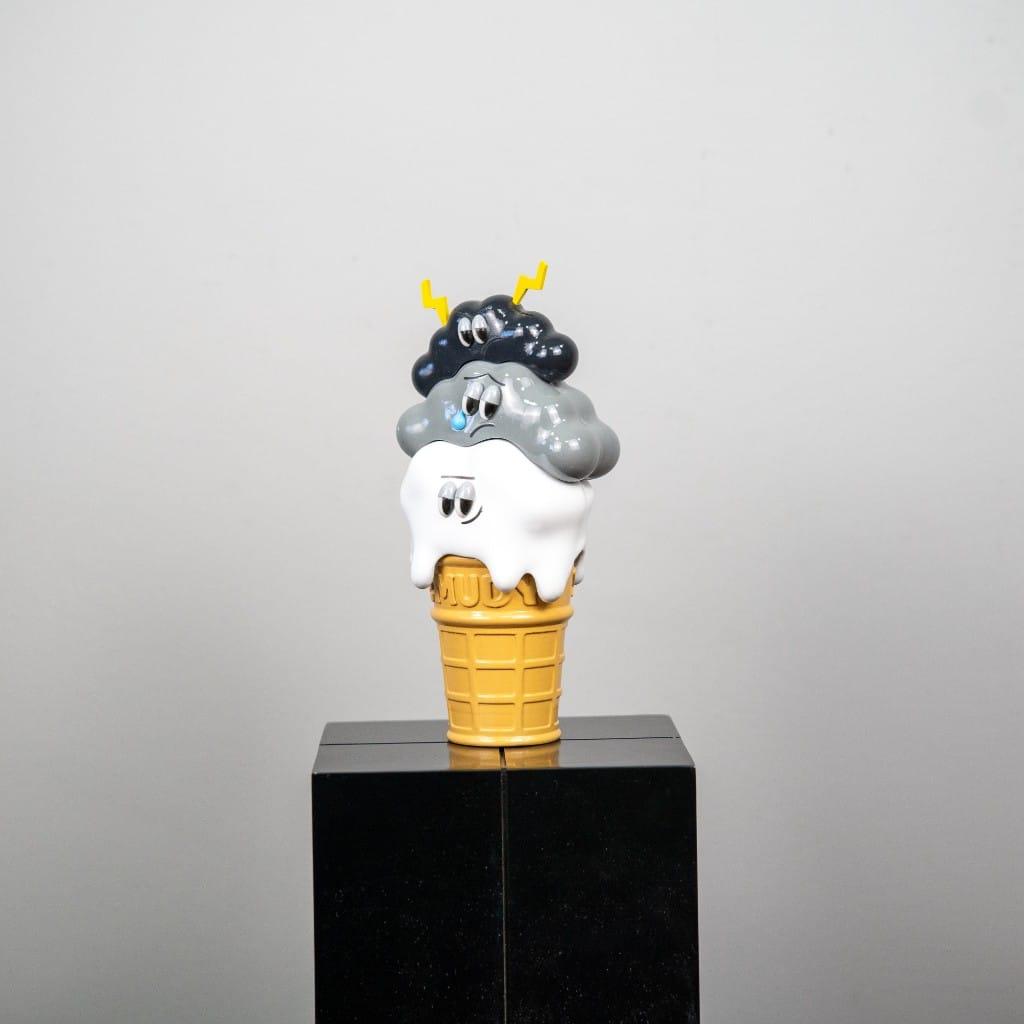
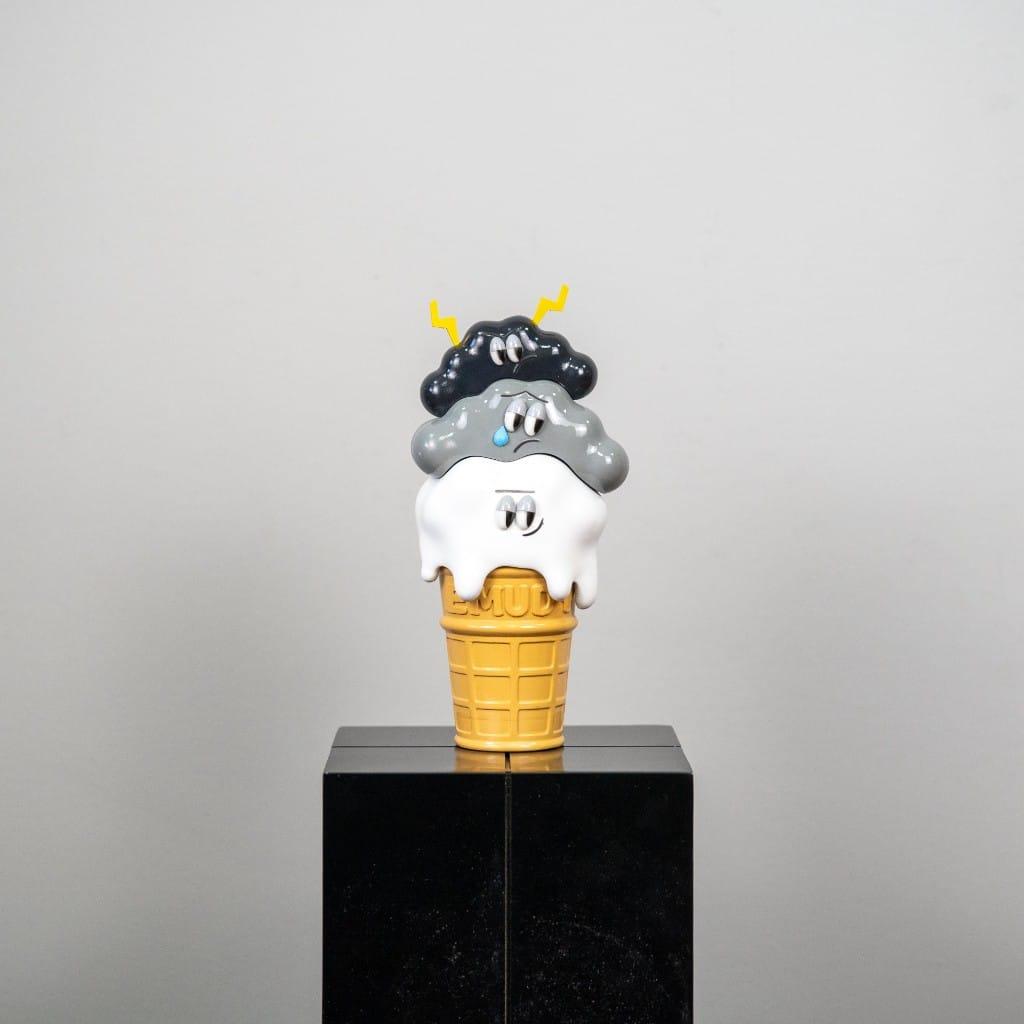
The EMUDY Cloud Cone sits close to the art toy side. Three scoops, three faces. The silhouette is familiar, and the piece still reads as a graphic. The humour is on the surface; the scene stays in the background.
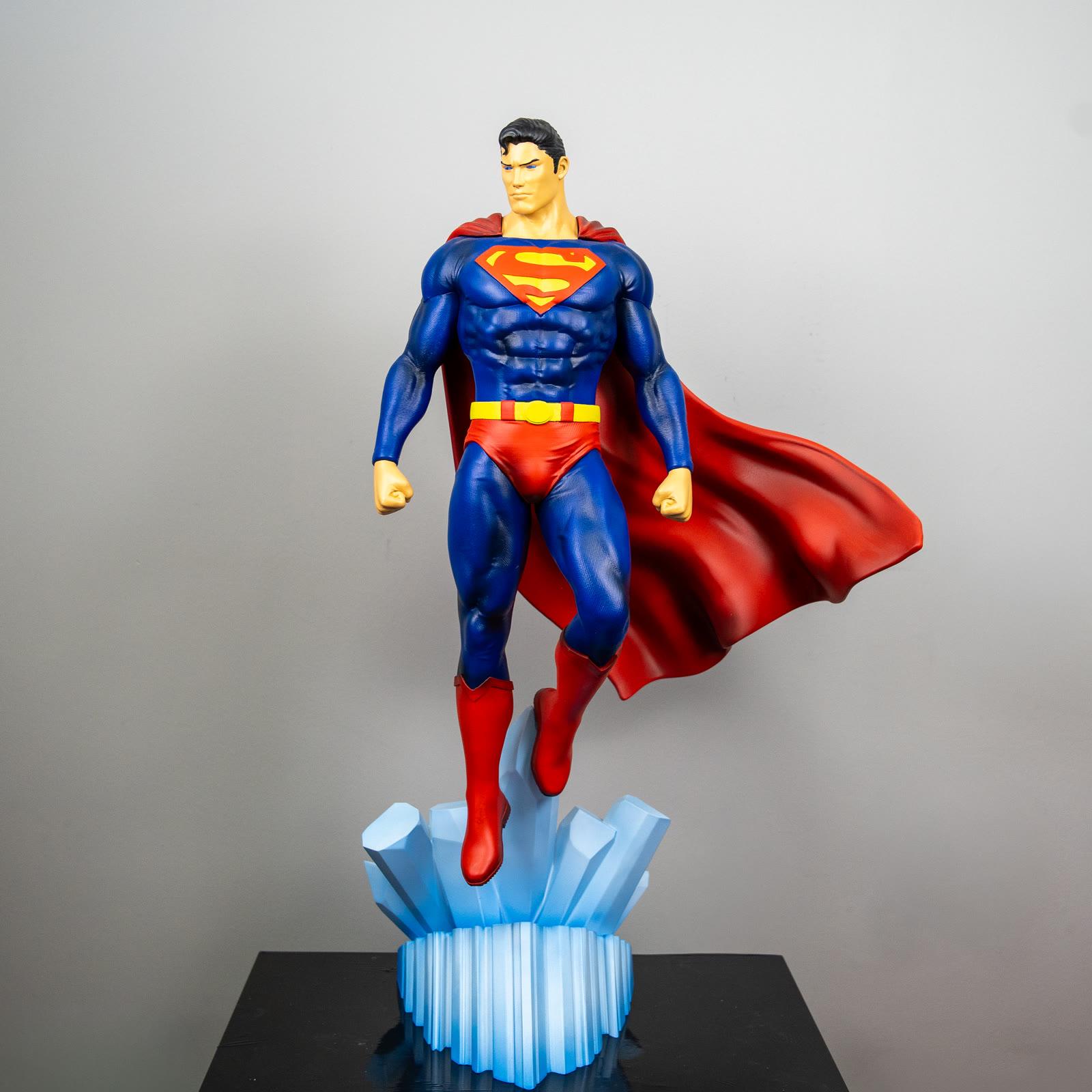
The caped hero in flight speaks the language of a collectible statue. The body is more narrative, the cape joins the motion, and the base lifts the scene off the floor. The eye travels through the fold of a costume and the pause of a flight. The piece freezes a moment.
They can share a table. One works as a block of color, the other as a small scene. If the gap between them closes, both tire. If they have air, their difference explains itself. That is a quiet rule of a good vitrine.
Points that get mixed
One misreading treats the art toy as automatically small and playful, and the collectible figure as automatically large and serious. Scale changes volume. It does not build the category alone. A bear on the floor and a flight pose on a table can each write their own sentence. Size does not replace intent.
Another misreading measures art toys by how little detail they have, and collectible figures by how much. A reduced face can be a decision. A crowded anatomy does not produce depth on its own. Detail works when the eye knows where to go. The rest is noise.
A third misreading declares one term the winner. A home is not a jury. Some rooms need a graphic. Some rooms can hold a pose. The right piece is the one the wall, the light, and your attention can carry.
Different jobs in the same room
An art toy changes the tempo of a piece of furniture through color and silhouette. Alone on a pale console, it works like a poster. In a dark niche, the gloss gathers like a jewel. Few objects around it keep the pattern readable.
A collectible figure, especially one caught in a narrative pose, asks for a little more air. A cape, an arm, and a base are already in motion. A second moving form beside them breaks the scene. A calm wall behind, and a little distance in front, lets the piece rest.
Thinking about both in one living room leads straight into how collectible figures sit in an interior. One can be a color note. The other can be the focus. Making both the focus tires the room. Letting one speak and the other accompany lasts longer.
A practical split when you choose
Note the first thing you see in the photograph. Is it a pattern, or a moment? If the pattern leads, the art toy language is in front. If a flight, a gaze, or a gesture leads, the collectible scene is in front. That note helps when you build the shelf.
Then ask about surface and condition. Scratches, paint edges, how the base sits, and what is actually documented are more concrete than the label. The seller’s sentence should be clear: what you are seeing, what is missing, how scale is described. What to look at when buying a figure walks through that look.
Also ask what kind of emptiness your room has. A narrow shelf can carry a graphic bear. A wide hall can carry a caped pose. Say what sentence the room needs before you try to bend a piece toward it. The term settles after that.
Reading the two together
An art toy and a collectible figure do not have to be rivals. One leads with a design decision, the other with a character’s moment. A good home can hold both, as long as each piece gets its own air. Confusion comes from putting two shouts in the same spot.
A kit, a cape, a ball, a base. These are small signs, and they build the language of a room. Knowing which sign you are looking at calms a collection. The rest is the work of the second piece, added later.
The collection lets you see the two languages side by side. A graphic, and a scene. The room tells you which one to place first.