What the X shows
The X-shaped eye on a KAWS figure carries no single official meaning. Critics and viewers have read the mark as erasure, as the cartoon convention of closed or crossed eyes, and as a way of flattening expression into a sign. These are readings, not a slogan the artist certified. On the Companion's rounded, skull-like head, the X takes on the work of the brow, the glance, and often the mouth. The face does not emote in detail. It binds feeling to a character. The strength of the mark is exactly this openness.
Brian Donnelly, working as KAWS, carried the mark to a wide public from a practice that started in graffiti. The name itself is kept in another essay. The question here is finer. Is the X a logo, a wound, a cartoon abbreviation? All three are answers that looking brings. None is a document that can send the others out of the room. Searching for one correct reply as you approach the mark spoils the simplification of the face. Simplification has been put in the place of an answer. Flooding it again with a crowded interpretation takes back the character's design decision.
Three readings, three limits
The first reading is erasure. The X can stand like a cancellation drawn over a face. An eye that comes from graffiti and from intervention in the street recognises this reading: crossing out an image both removes it and makes it more visible. On the Companion, what is crossed out is not a stranger's poster. It is the character's own eye. Erasure has turned inward. This is a strong reading. It is still not a word the artist has written onto every figure. The sense of cancellation is a result of the mark, not an instruction manual.
The second reading is the habit of the cartoon. A closed, dazed, or crossed eye tells feeling quickly on paper. KAWS carries that abbreviation into the volume of sculpture. The third reading is expression flattened into a sign. The brow does not rise, the eye does not blink, and the mouth does not tell a story. The X stands in for all of that movement. The three readings can complete one another. A face that is erased can be a cartoon face and a sign at the same time. They do not need to compete. The character language keeps the X as one part inside that system. Exaggeration begins when the part starts to speak as if it were the whole system.
There is no single slogan
As the mark becomes famous, ready-made sentences stick to it. People say the X stands for death, for a brand, or for one emotion. Those sentences are easy to share. They are hard to look with, because in front of the figure the mark does not speak in only one direction. When the colour changes, the feeling changes. When the pose changes, the X may not even be visible. A slogan cannot survive all of that change. If it cannot, it is a summary put in the place of the mark. The summary is a sign at the door. The face inside is calmer.
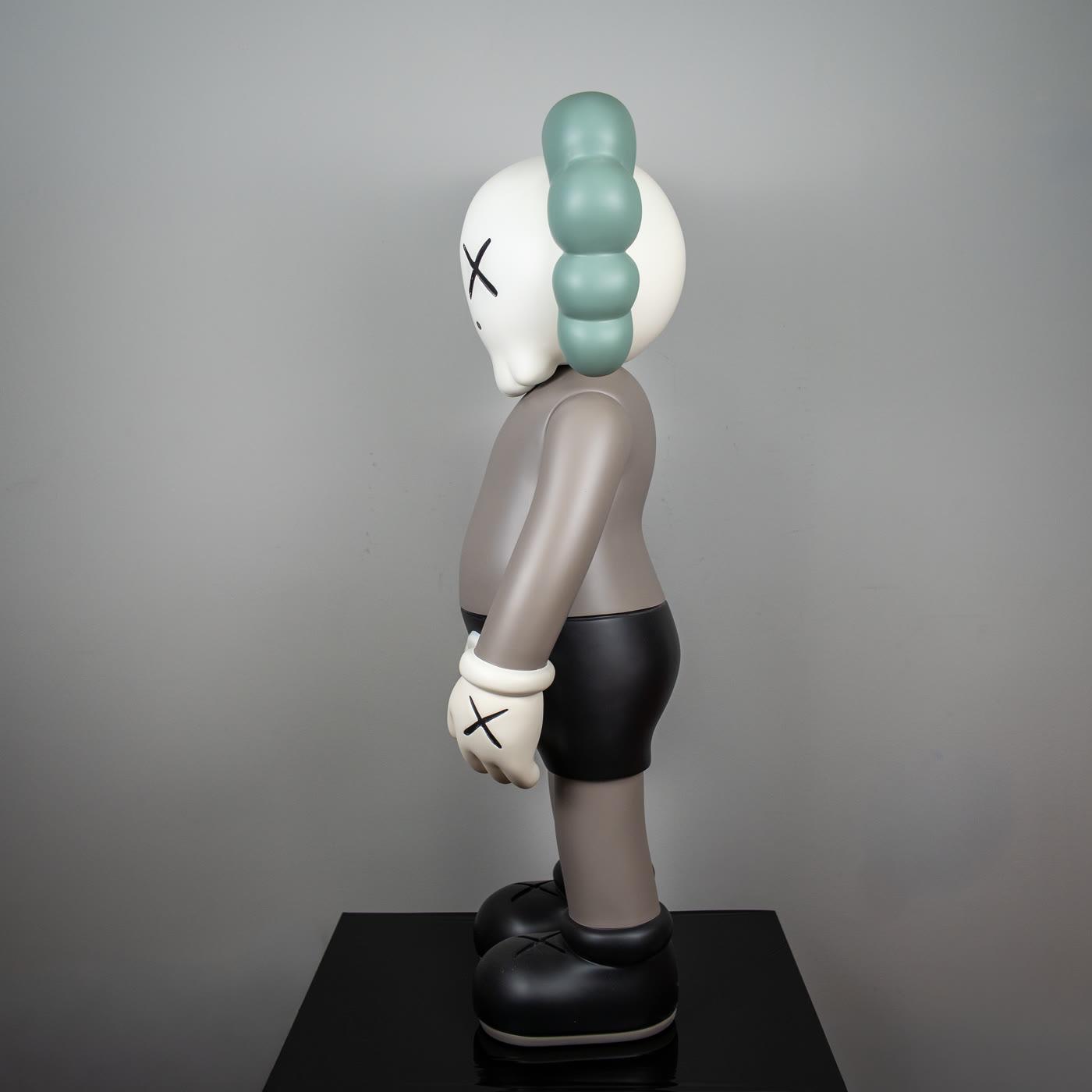
Describing the Companion, you need to mention the X. You do not need to finish it with one meaning. The Companion is completed together with the head, the gloves, the shorts, and the boots. The X sits in that quartet where the eye would be. Sitting where the eye would be does not mean the whole body is a sentence of mourning. On a standing, light-coloured figure the mark can feel almost gentle. In a dark, closed pose it can feel heavier. Weight is not the unchanging definition of the X. It is the result of the light and the pose that day. Telling them apart is a way of respecting the mark.
What happens to the X when the face closes
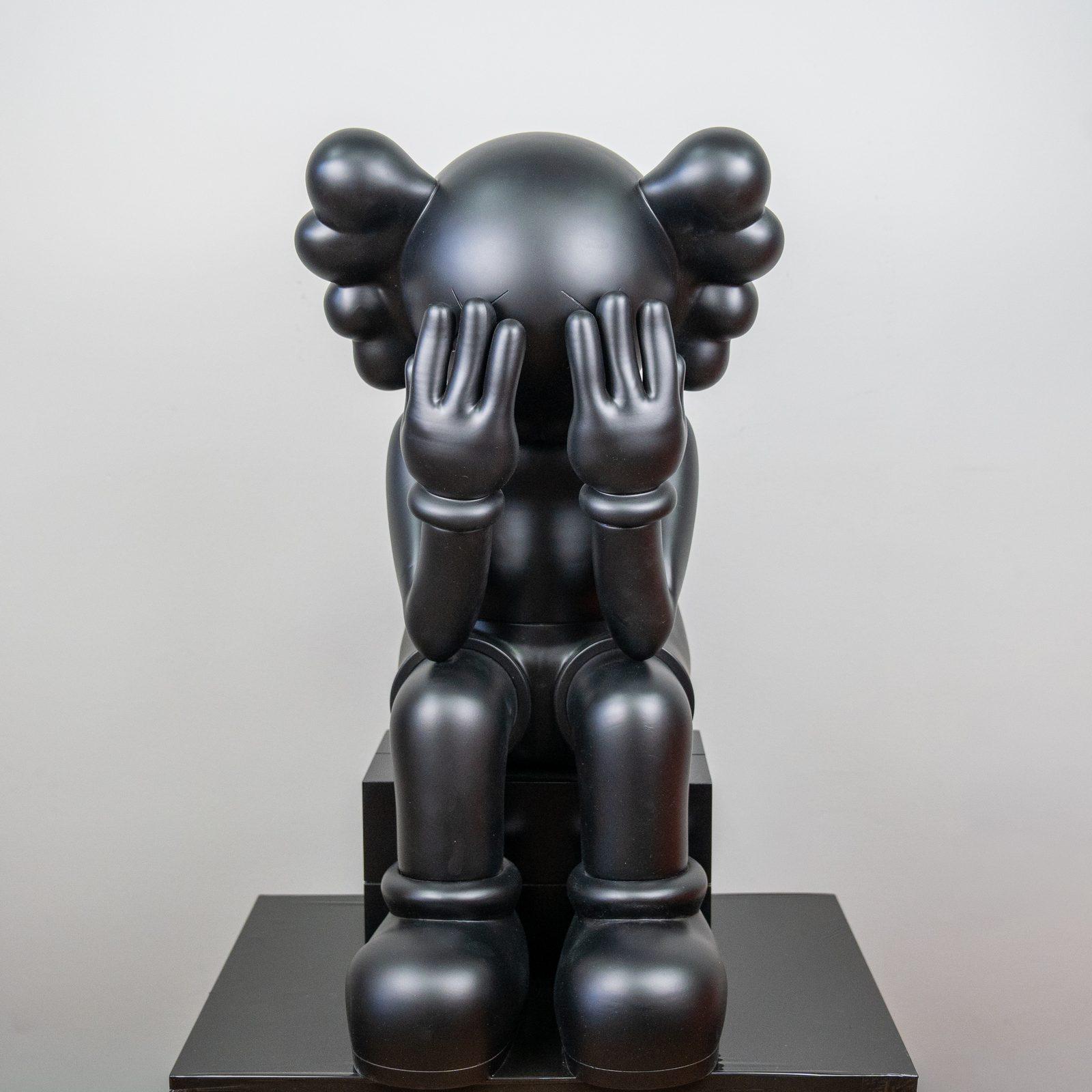
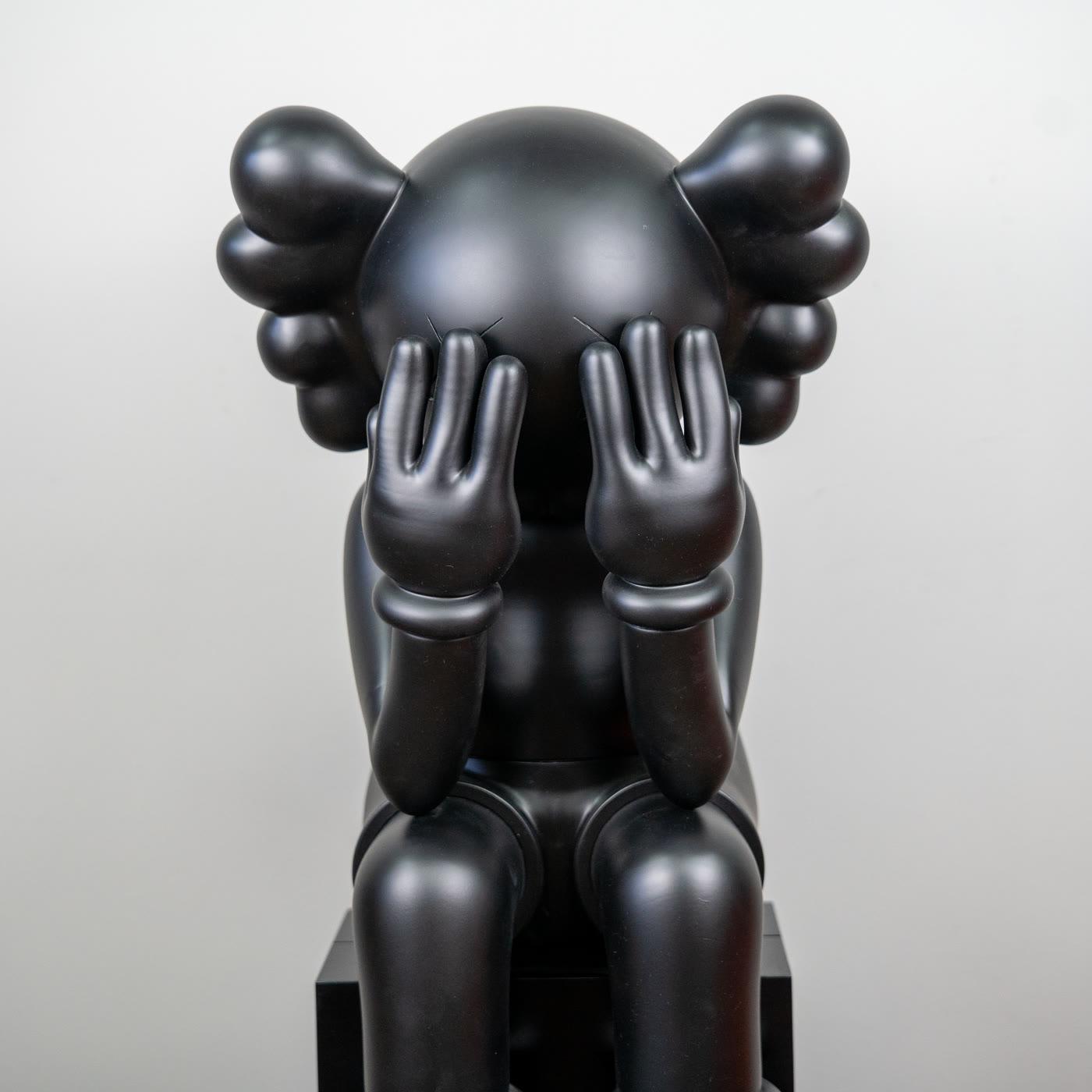
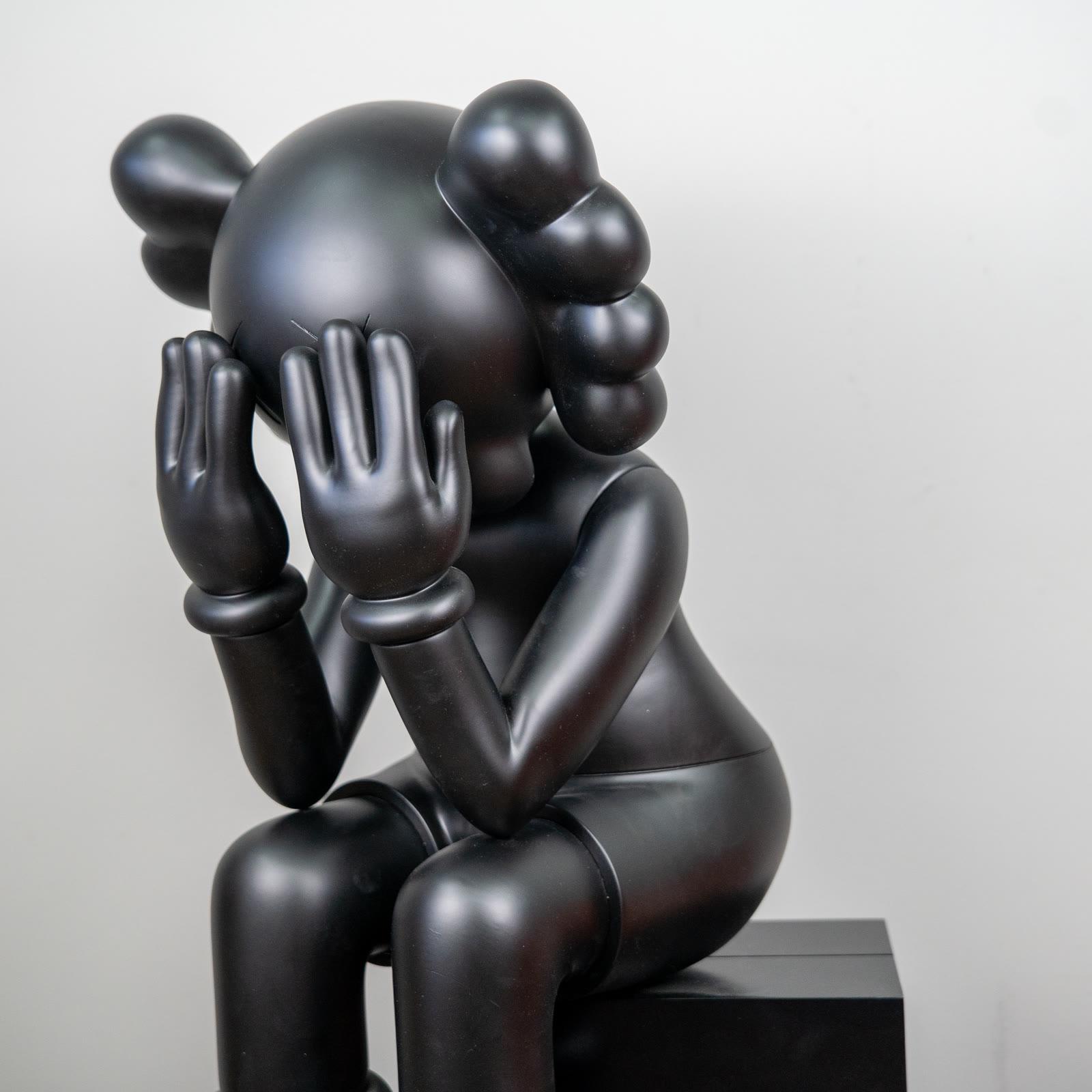
The Passing Through pose is the most interesting test of the X. The figure sits, and the hands cover the face. The name of the pose is not a quotation. It names the posture in which the hands go to the face. When the face closes, the X on the head is hidden. The character does not show its most famous mark for a moment. The viewer then looks at the hand, the shoulder, and the weight of the seat. The character still stands when the mark is absent. That remembers that the X alone is not the Companion. The X can become an emphasis. It cannot take the body's place.
On a covered face, people read a pause, a withdrawal, or a silence. The reading belongs there. Declaring it the hidden meaning of the X does not. Meaning is sought in the hidden mark as much as in the visible one. What is hidden is not always a secret. Sometimes it is only a hand. The white or the black of the hand builds that order by itself. On a matte surface the hand sits against the face like a shadow. The mark is there too, but it is not at eye level. The gaze drops a little. That drop is another sentence of the motif.
The X on the glove
The Companion's glove often carries the same mark. The X at the eye and the X on the hand repeat each other. Repetition does not lock the meaning. It builds a rhythm. While the face speaks, the hand speaks the same language. When the face closes, the hand becomes the part of the language that stays visible. For that reason the glove is not a secondary ornament. It is the second stage of the mark. On a white glove the X breathes between dark shorts and boots. On a dark figure the mark separates only when the light catches an edge.
A motif repeated at two heights binds the character without flattening it into an emblem. A logo stays in one place and says the same thing in every direction. On the Companion the X sits in the volume of the head and the mass of the hand. It changes as you turn. It thickens when the light falls. That change remembers that the mark is sculpture. A cross on paper is the same in every copy. An X in a room is another line depending on where you stand. Spending it with one meaning spends that change as well. The motif freshens as it is looked at.
The mark on a black figure and a sage one
The matte black Passing Through keeps the character standing even at the moment it shows the X least. The figure sits, the hands cover the face, and the surface is matte and single-tone. The mark at the eye is hidden. The silhouette speaks through the roundness of the head and the mass of the glove. A light close to a gallery, coming slightly from the side, separates the edge. On this piece, following the edge is a truer look than searching for the mark. Black does not make the motif shout. It leaves it inside a shadow. If the room can carry the same quiet, the piece sits in its place.
The Sage Companion shows the open state of the mark. Sage ears, a taupe body, black shorts, white gloves marked with X, and black boots. The face is open, the X is at eye level, and the glove holds a second X lower down. Someone looking for the first time learns the motif in two places at once. The learning happens without a shout, because sage and taupe sit close. The mark does not need the noise of colour. The selection on the KAWS page puts these two states side by side. One hides the motif. One spells it. Both belong to the same reading.
Leaving the mark in the room
Bringing an X home is not the same as hanging a dictionary of symbols. It is enough to stand in front of the figure and see which reading the mark approaches that day. Sometimes the sense of erasure weighs more. Sometimes the speed of the cartoon. Sometimes only a clean graphic decision. All three leave the figure intact. What reduces it is writing a small explanation on the wall and then stopping looking. In practice the mark competes on a crowded poster wall. It breathes on a plain ground. If the light is hard, the shadow draws a second line over the X. If the light is soft, the line stays as itself.
The figures in the Popüler Sanat catalogue are finished collection objects that carry this motif. On them, too, the motif stays open in the same way: it is read, it is not sealed. Refusing to close the meaning early is also a way of not using the piece up early. The rest of the essays continue the character, the street, and the room through other doors. The X is left here without a sentence larger than it is. A mark that is left alone stays fresh in the room for longer.