
Where does the path of pop art begin?
Pop art begins with the Independent Group in Britain in the 1950s and becomes a public pictorial language in the United States in the early 1960s. The short chapter fits in about fifteen years. The long chapter starts once flat color, printed pattern, and ordinary goods remain available as a way of seeing.
This is not a timetable of exhibitions. It keeps to stops that can be stated plainly: the British conversation, Hamilton’s 1956 collage, Warhol’s 1962 soup cans, Lichtenstein’s comic paintings. The definition itself lives on the page what pop art is.
The story does not end in a museum corridor. The same habits continue in objects with a familiar silhouette, and in the way a printed pattern can sit on a small sculptural body. Read the history as attention you can still use, rather than as a list of things to miss.
Britain in the 1950s
The Independent Group brought artists, critics, and architects together in London. Their subject was less pure form than the new visual crowd of postwar life. Magazines, advertising, science fiction, and household goods entered the talk. The popular was treated as material worth study, not as a vulgar outside.
Richard Hamilton’s 1956 collage Just what is it that makes today's homes so different, so appealing? was made for This Is Tomorrow at the Whitechapel Gallery. It sets out the period’s home like a packed display: muscle, a can, a lamp, a comic, a tape recorder. Comfort and image-density share one plane.
Eduardo Paolozzi is the other name regularly placed beside Hamilton on that British line. Both used the cut of collage to show how American mass culture was already inside the room. These early works do not yet look like the flat graphic paintings of the 1960s.
They are piecemeal and stacked. The path begins at a crowded table, not at a clean poster.
America in the early 1960s
The American visibility keeps the same interest and changes the unit of attention. Images get larger and more singular. Andy Warhol (1928–1987) takes up silkscreen. Campbell's Soup Cans is 1962.
The repeat of a shop shelf becomes the repeat of a canvas. The Marilyn silkscreens follow. A publicity face stays both close and distant as the color changes.
Roy Lichtenstein (1923–1997) enlarges a different printing habit. Ben-Day dots and comic framing reach the scale of painting in works such as Look Mickey, Whaam!, and Drowning Girl. The detail sits in Lichtenstein and the comic panel. What matters here is that the dot is a trace of commercial printing, not a decorative sprinkle.
Claes Oldenburg turns the object into bulk. James Rosenquist uses the crop of the billboard. Tom Wesselmann rebuilds the still life with the flat color of ads.
The early 1960s are not one studio. What they share is the decision to center things high art had treated as empty: soup, comics, a famous face, the goods of a counter.
Habits that stayed available
After the classic moment, the language does not vanish. Flat color, a familiar image, and deliberate repetition stay in circulation. This piece does not invent a later exhibition calendar. What lasts is a method: take an image from circulation and change its scale and its interval.
Character-shaped objects sit nearby, not inside, that method. People recognize a silhouette before they know a maker’s name. That recognition neighbors the shared memory pop art cared about.
Neighboring is not the same thing. Popular culture in art holds the distinction more widely.
Three habits still travel to domestic scale. Use commercial color without apology. Leave printed pattern readable up close. Repeat one form while the color changes.
None of this requires a period room. All three can work on a single shelf if the gaps are honest.
Mix-ups about the history
One mix-up starts pop art suddenly in 1960s New York and nowhere else. The British conversation is earlier. Collage has a stacked heat that later flat painting does not share. Folding both scenes into one sentence makes it harder to tell Hamilton’s inventory from Warhol’s repeat.
A second mix-up files the movement away as a finished joke. Humor is there. So is a refusal of solemnity. The works are also stubborn about printing, cropping, and scale.
The joke does not replace the method. A third mix-up keeps the history on canvas alone. Oldenburg’s objects show that sculpture entered the same talk.
A fourth mix-up declares every colorful figure today a direct heir. Continuity is not an automatic family tree. A habit of seeing may be shared.
An object does not have to carry it. Keeping that distinction leaves both the history and the room more honest.
A practical echo in a room today
Bringing the history home does not mean building a period set. It also does not mean filling every surface the way Hamilton’s collage is filled. He arranged that crowd on purpose.
At home, the same crowd is usually just clutter. The more useful lesson is to choose one printed energy, or one familiar silhouette, and leave the rest quiet.
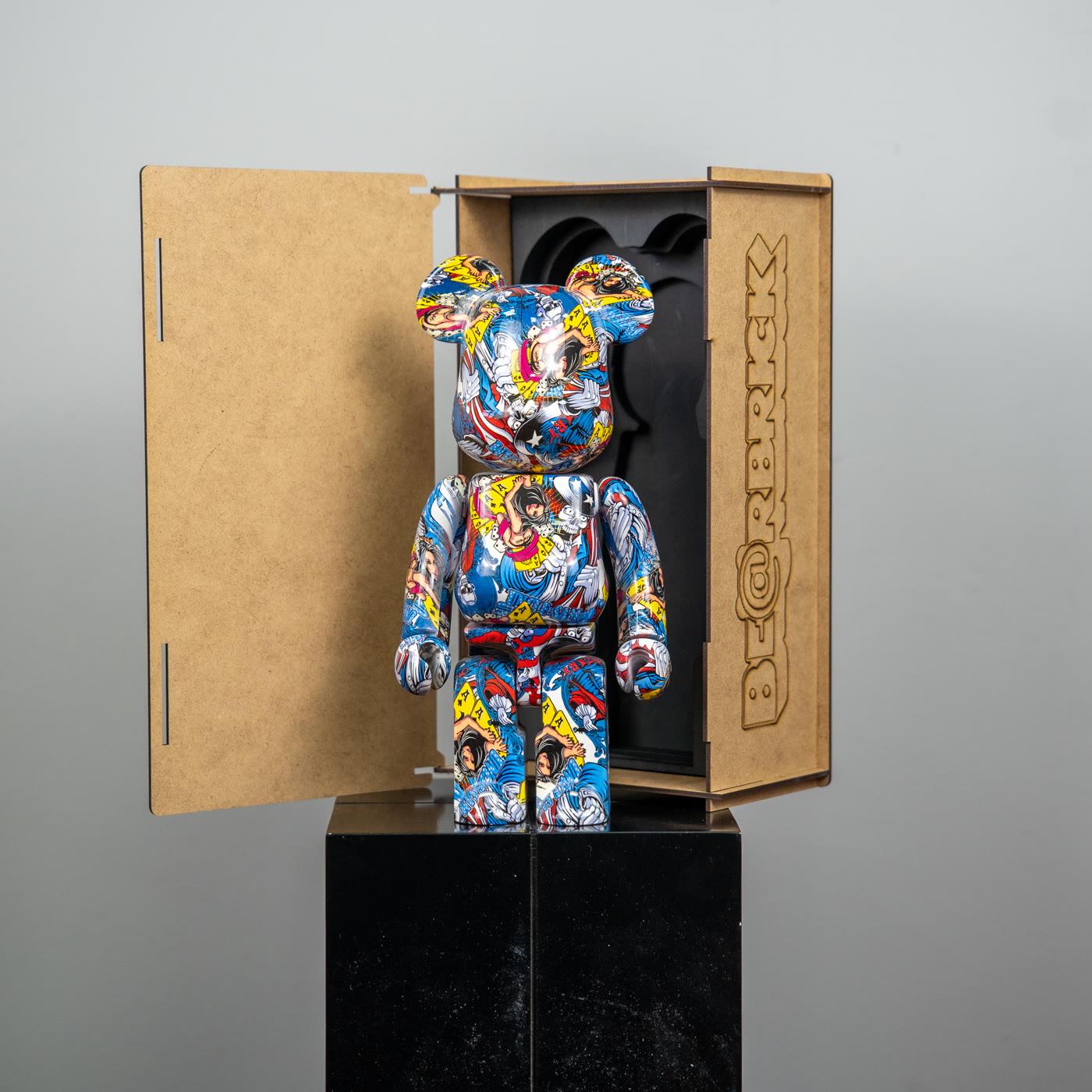
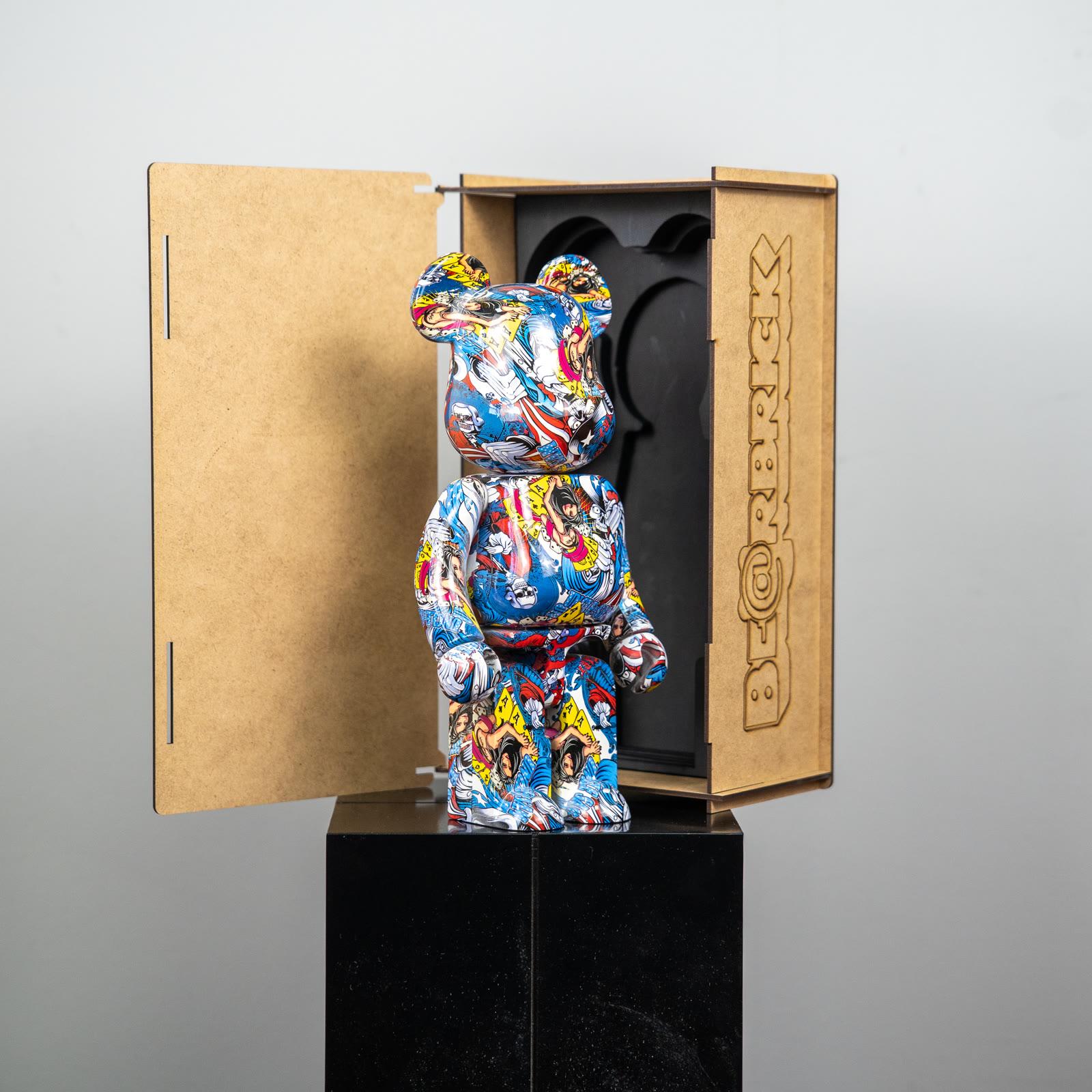
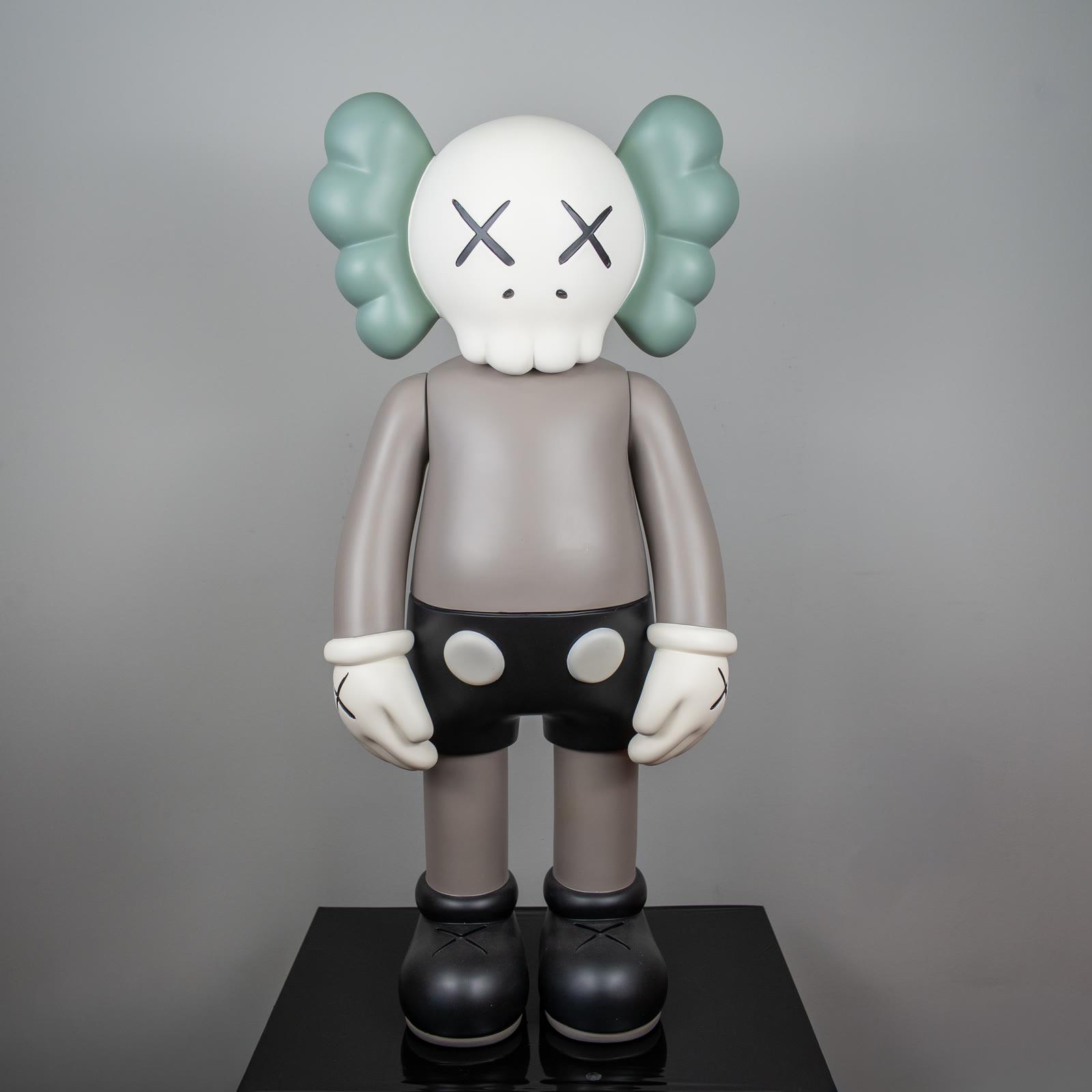
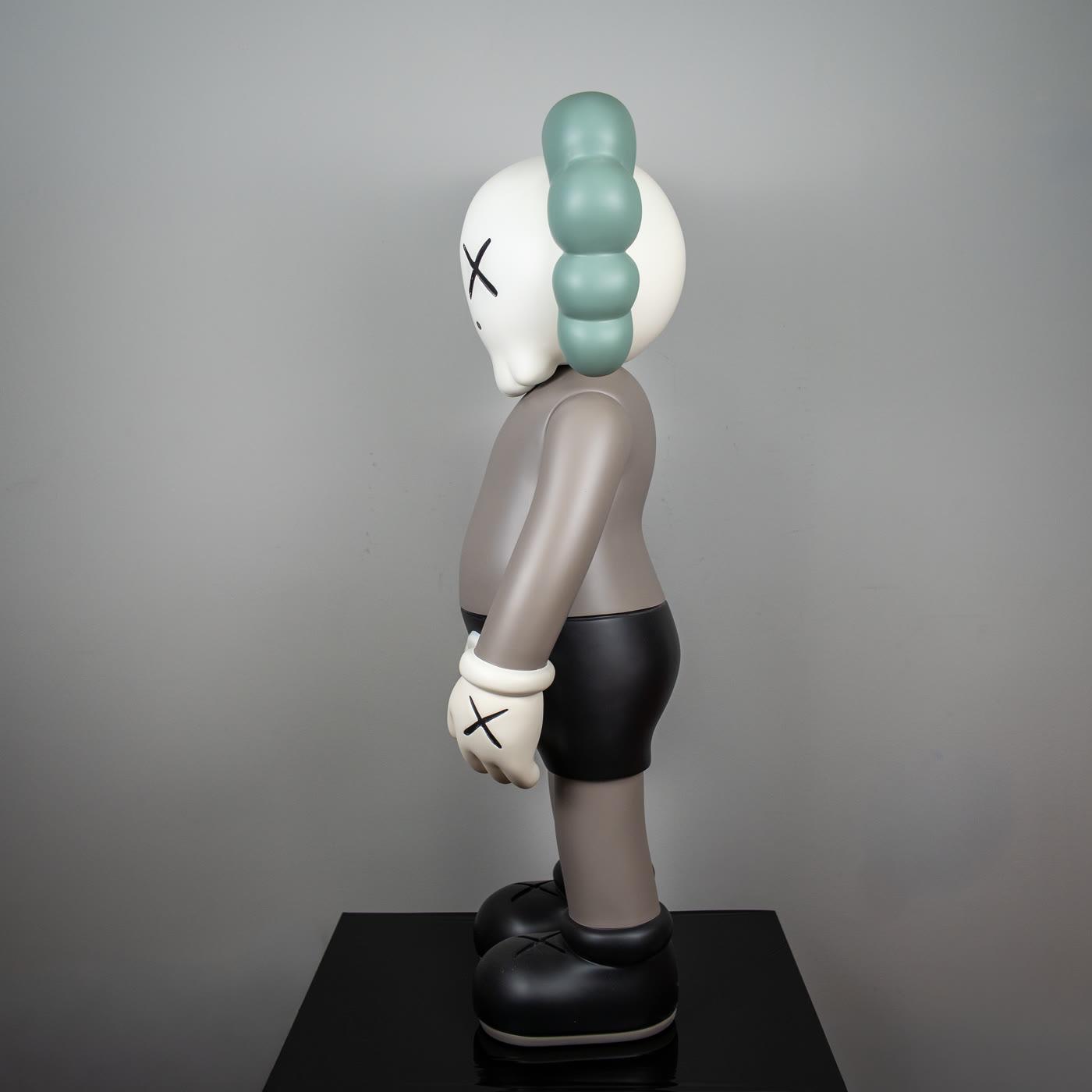
The comic-print bear shows that the texture Lichtenstein enlarged can still be read at a smaller scale. The pattern stays on the body. The room does not have to become a comic cover. The sage-and-taupe Companion sits toward another pole: a known character, a narrow palette, almost no gesture.
Think of them with a gap between. One is the voice of print. The other is the quiet of a silhouette. The pop art page is a calm threshold if you want those two poles next to each other in the selection.
History does not have to shout from a shelf. At the right distance, it remains readable.
A short closing
The path opens with the Independent Group’s interests in the 1950s and becomes widely visible through silkscreen and the enlarged comic in the early 1960s. After that, the method scatters and the material keeps living in other hands. Scattering is not a closing sentence.
The definition page is there if you want to step back. The comic line has its own essay with Lichtenstein. The wider life of shared images is in the piece on popular culture. Museum glossaries are pointed to from the definition, without invented quotations.