Between the studio and the window
KAWS is a name that stands between art, fashion, and design because the same character has passed through all three doors. Brian Donnelly was born in Jersey City in 1974 and started in graffiti. The Companion, with its skull-like rounded head, X eyes, gloves, shorts, and boots, repeats in painting, in sculpture, and in widely seen commercial collaborations. The studio builds the character. The window multiplies it. They are not the same door. Understanding the name without seeing both stays incomplete. Counting one as the cancellation of the other stays incomplete too.
The crossing itself is not new. The relation to popular culture is a visual language already in circulation, carried into sculpture. Fashion is that language worn, and standing in a window. Design is the same body reduced to a decision about an object, a surface, a room. All three feed on the Companion's recognisability. Recognisability does not mean every product has the same seriousness. A sculpture is walked around. A garment is talked about for a season. A collection figure stays at home. Separating their status is not a denial of the crossing. It keeps the crossing legible.
Why fashion holds on to this language
Fashion needs marks that read from far away. The Companion gives exactly that. The roundness of the head can be picked out on a shoulder, on a window mannequin, even at the corner of a bag. The X completes the character even in a small field. Gloves, shorts, and boots sit close to a body that clothing already speaks. Fashion houses and wide retail have taken the character into their windows for that reason. We will not invent years or product names. What is visible is enough. Collaboration has taken the character out of the studio's immediate circle and left it to a much more crowded gaze.
That crowded gaze does not finish the work. A window campaign does not replace a sculpture. The campaign ends. The character remains. What remains is that people have learned the face by heart. The memory comes home too. Many people see the Companion first on a garment or in a window, then look for it in a room. The order can be built that way. The street origin prepared the same directness. Fashion sits closer to the street's speed. Sculpture slows that speed. The home chooses a tempo between them. The choice is not filling an entire wardrobe with the character.
The figure as a design object
Design binds the character to a use or a stance. The Companion can be a print on a cup, the sculpture itself, or a collection figure between the two. All three carry a design decision. The difference is how seriously the body is taken. A print ornaments a surface. A figure stands in air and wants air around it. A good design object is not ashamed of the interval between ornament and sculpture. The Companion's grammar fits that interval: a silhouette from far away, a system from close up.
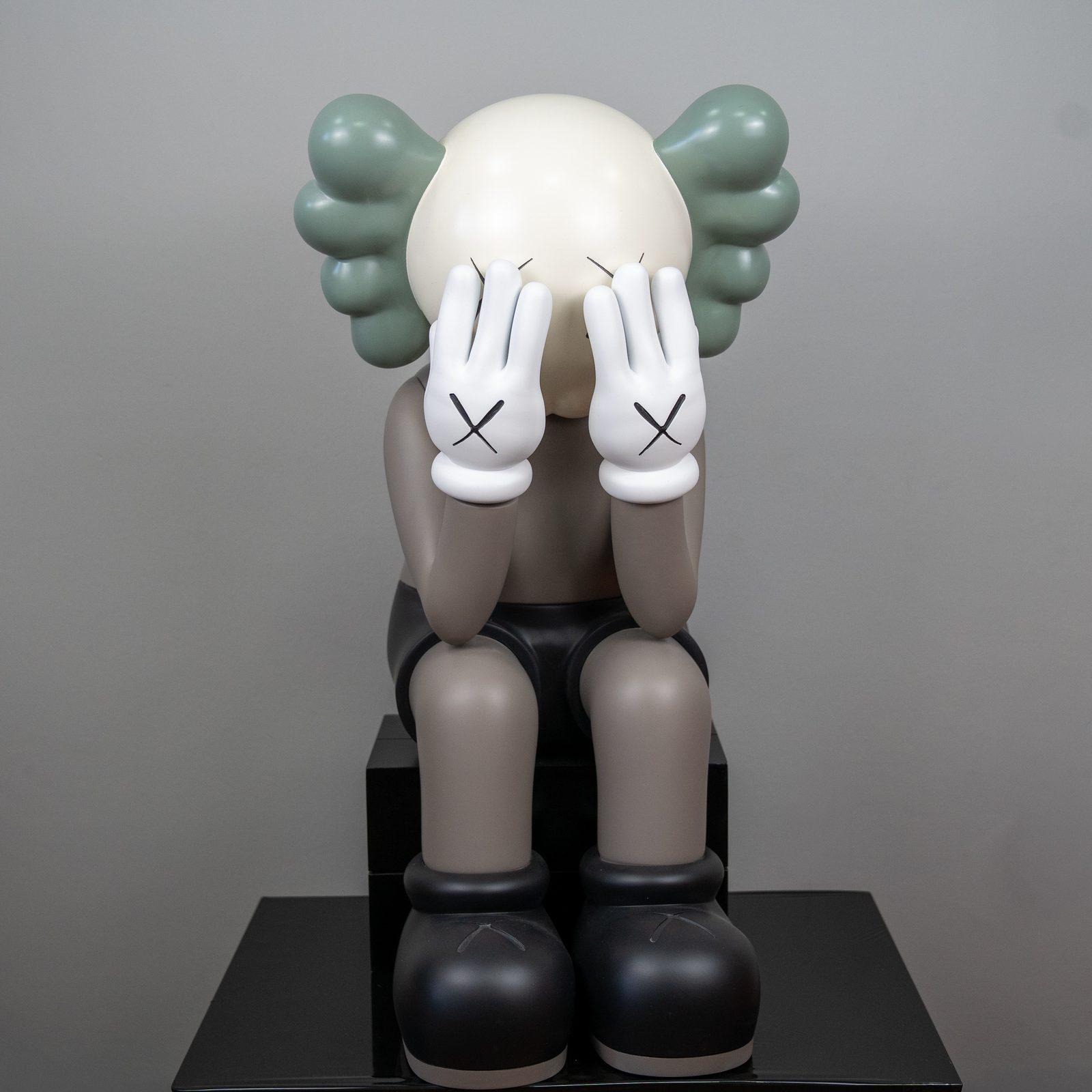
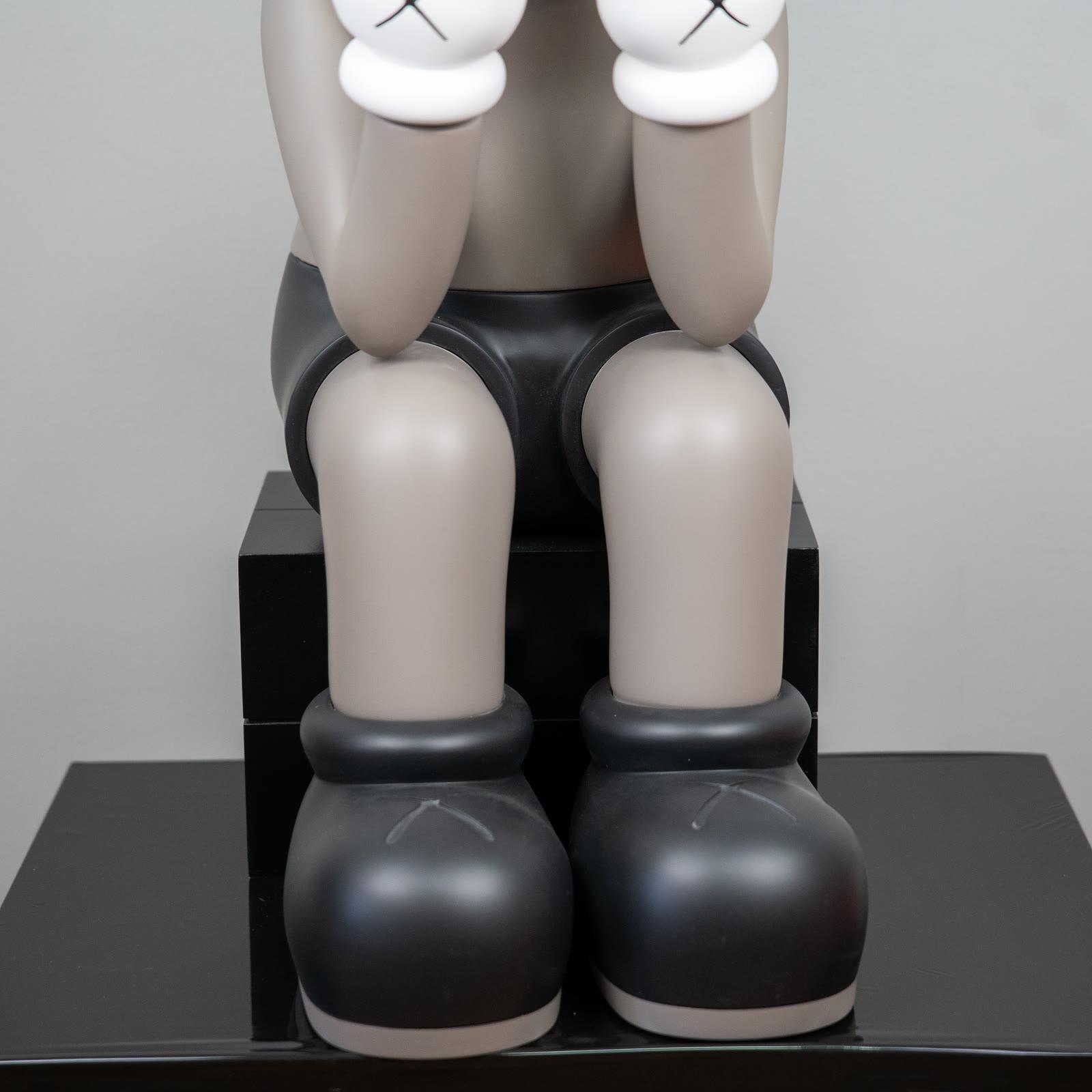
The Passing Through pose is the silent side of design. The figure sits, and the hands cover the face. The name says the pose. It is not a quotation. Most of fashion's poses walk, turn, and look toward a camera. This pose sits and hides its face. Even in a window it slows things down. At home it does what a design object ought to do: it leaves a stance without imposing a function. It has no function. It has an effect. The effect can be finer than a shouting logo wall. Fineness is the maturity of design.
Leopard as a surface, taupe as a stance
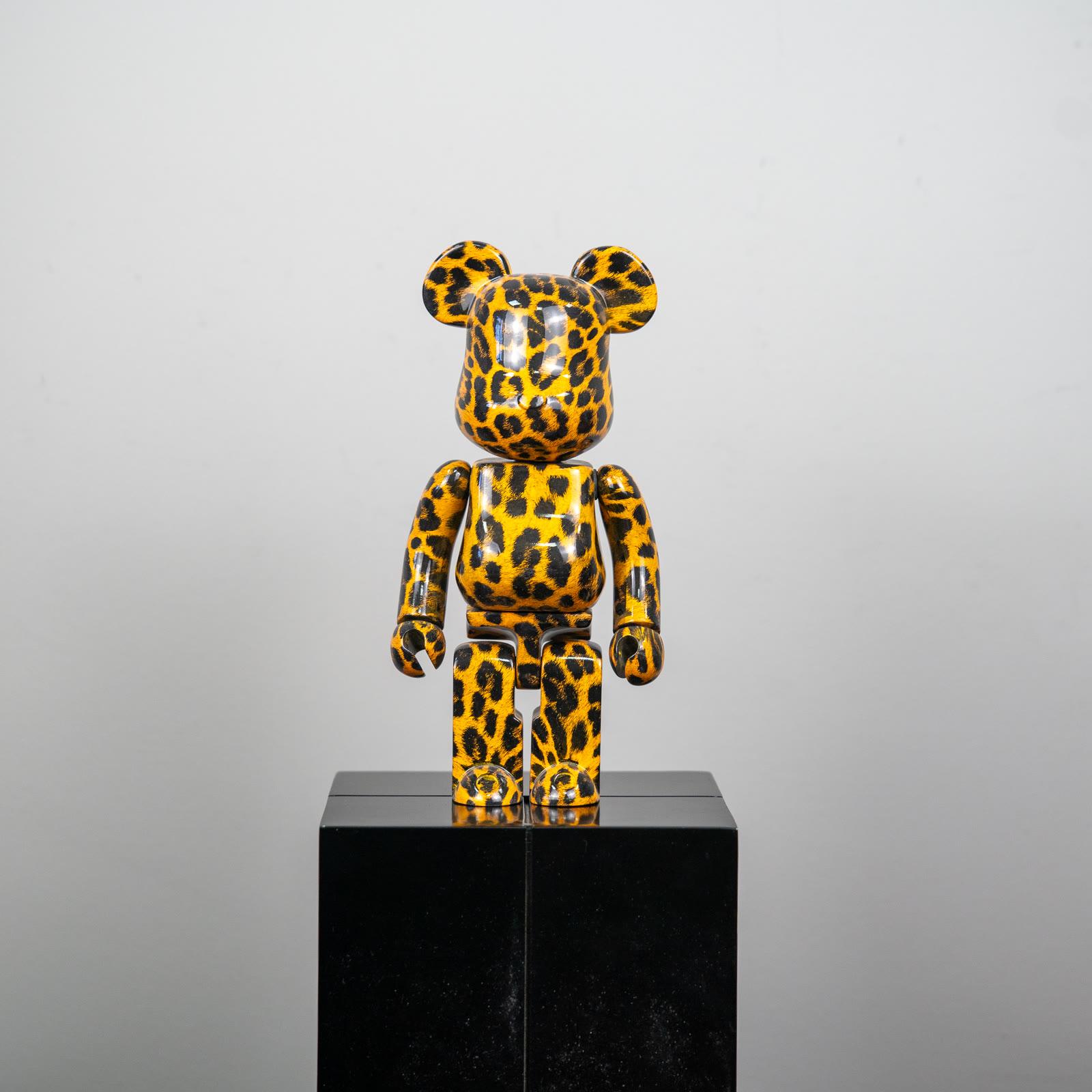
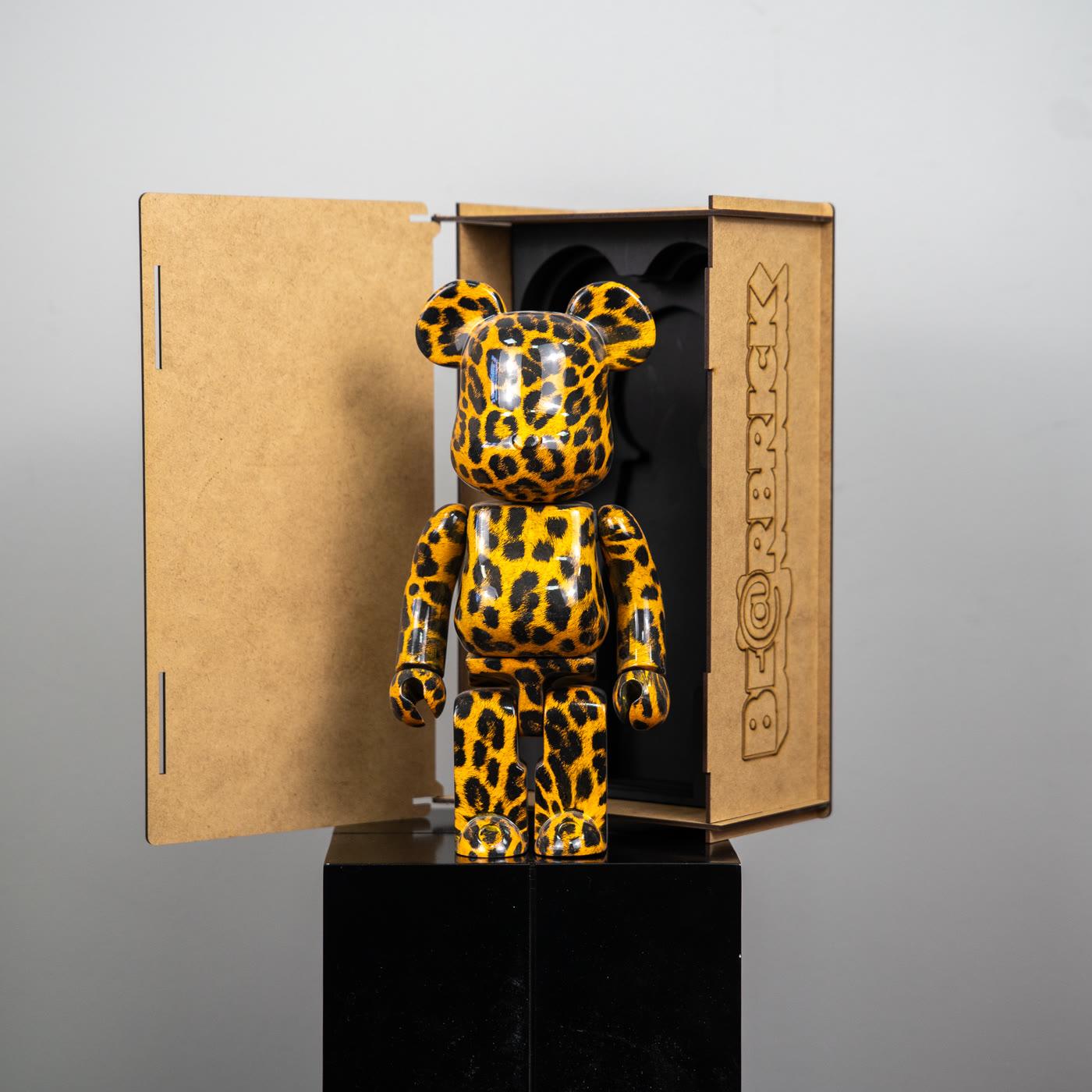
Another language of fashion lives in pattern. The leopard Bearbrick carries the glossy, familiar rhythm of an animal print onto a collection body. It is not the same artist as the Companion. In one home they can stand as two states of a love of fashion: one the nerve of a pattern, the other the quiet of a character. They do not need to build a campaign when they meet. If air remains between them, one speaks a memory of cloth and the other a memory of sculpture. Setting them flush turns both into mannequins.
The taupe Passing Through is the calm choice on the KAWS side. The figure sits, the hands cover the face, and the colour is warm and low-voiced. It approaches the leopard only if the room is large enough and the ground plain enough. On a small console, the two together build a boutique corner. If you do not want a boutique corner, leave the taupe figure alone. A piece left alone carries the fashion crossing without turning it into a costume. The KAWS page and the Bearbrick page keep that distinction in the catalogue too. Keeping it at home is the same courtesy.
Statuses that get blurred
The first blur counts every collaboration as the peak of the studio work. A window introduces the character. Sculpture holds the character in another duration. The second counts every collaboration as the fall of the art. Circulation is added beside painting and sculpture. It does not have to replace them. The third takes every Companion silhouette at home for a licensed fashion product or an original sculpture. The figures in the Popüler Sanat catalogue are finished collection objects that carry this pose and this silhouette. The fourth takes the X for a brand slogan. The mark has been read as erasure, as a cartoon eye, and as expression flattened into a sign. A reading is not a motto.
A fifth blur treats the crossing as a collecting duty. You do not need to bring every season, every window, and every colour home. A taupe seat does not have to represent an entire history of collaboration. The burden of representation tires the piece. Let the piece make its own gesture in the room. The gesture can be hands covering a face, or a standing greeting. Both sit inside the crossing. Neither has to be an archive. Anyone who wants the archive looks at the artist's own record. Anyone who wants a home chooses the gesture.
Keeping the taupe seat at home
Taupe does not fight fashion's shouting seasonal colour. It speaks with linen, oak, warm grey, and broken white. The Passing Through pose does not need a window light either. A soft light, coming slightly from the side, separates the mass of the hands and the roundness of the head. A hard spot turns the piece into a launch plinth. If you do not want that, lower the spot. Leave a breath around the figure, about its own width. Do not let its neighbour be a row of perfume bottles or a stack of magazines. A design object is not an advertisement for other design objects.
The practical order is short. Choose the pose first: a silent seat carries the fashion crossing with the least costume. Then choose the colour: taupe stands without shouting. Last, reduce the neighbours. If a louder piece, such as leopard, sits among the collections, take it to another surface. Two crossings on one shelf build a shop window. Two affections on separate surfaces build a home. The distinction looks small. The result in the room is large.
Keeping the crossing plain
Art, fashion, and design can meet in the same character. The meeting does not have to equate the three on one wall. Painting and sculpture stay in their own duration. Fashion stays at its own speed. The figure at home remains a stance chosen from between them. This plainness is not an incurious plainness. It knows the origin, it knows the window, and then it leaves a single sentence in the room. The sentence is not a long list of collaborations. It is a Companion with hands on the face, or an open-faced greeting.
The neighbourhood of fashion and music is a wider map. This page holds the edge of the map that touches KAWS, and it does not turn that edge into an identity card. The work of Popüler Sanat sits at the same boundary. The catalogue carries the crossing into a room. It does not show the crossing as the studio's seal. If you keep the same boundary in front of the piece, the figure relaxes. A relaxed figure stands neither like a leftover from a runway nor like an imitation of a monument. It remains a design sentence at its own measure. That measure is enough for a home.