
How do art toys speak with fashion, music, and street culture?
An art toy speaks with fashion, music, and the street by sharing their signs. A leopard print, a kit stripe, a pair of colors, or a graphic eye is seen first on a garment, a record sleeve, or a wall. Then the same sign passes into a figure you can hold. The figure becomes a small sculpture of that culture.
The kinship does not mean every piece is a stage costume. Some figures spread a pattern over the whole body and read like cloth. Others carry a moment, a stance, a neighborhood rhythm. What they share is that the sign comes from outside and slows down indoors.
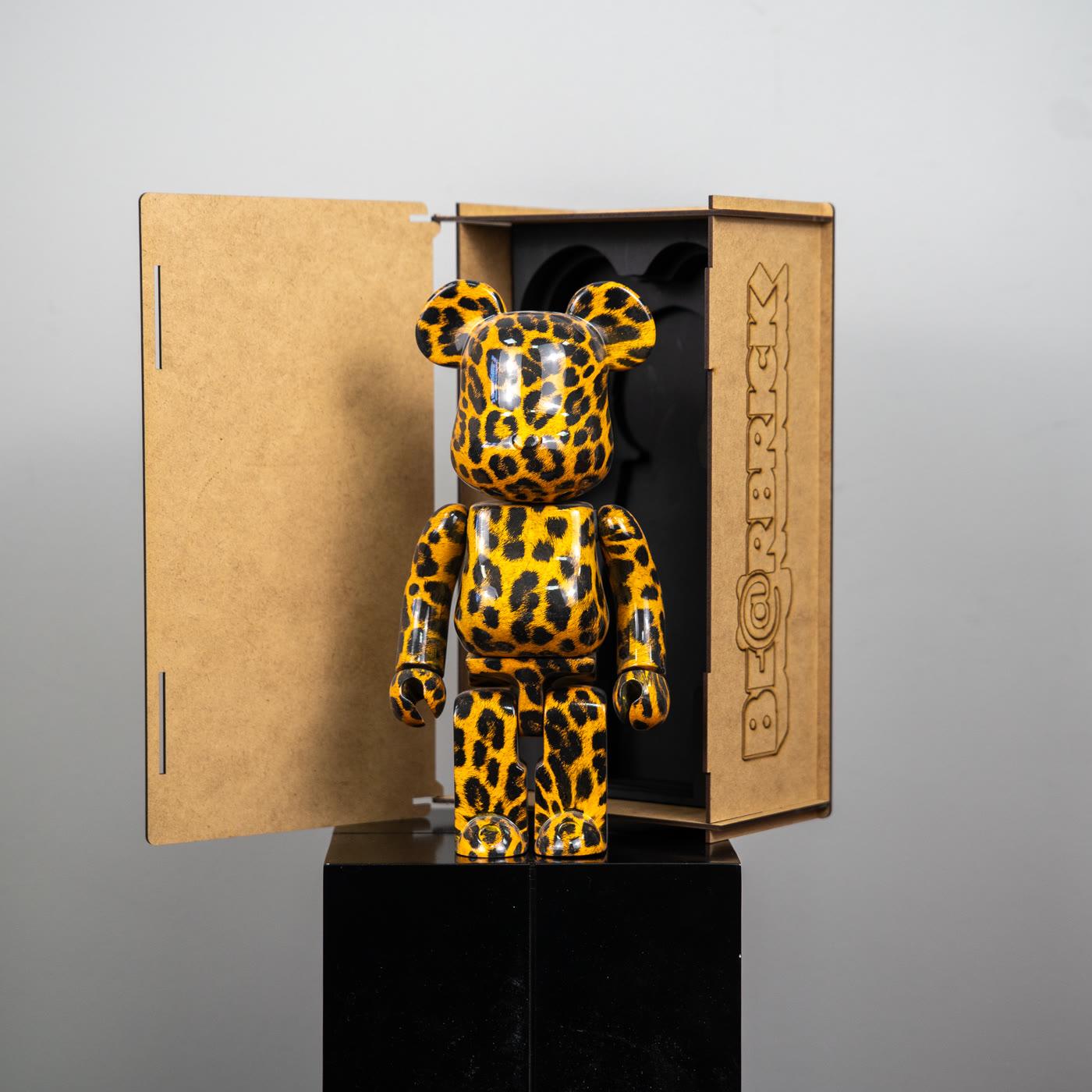
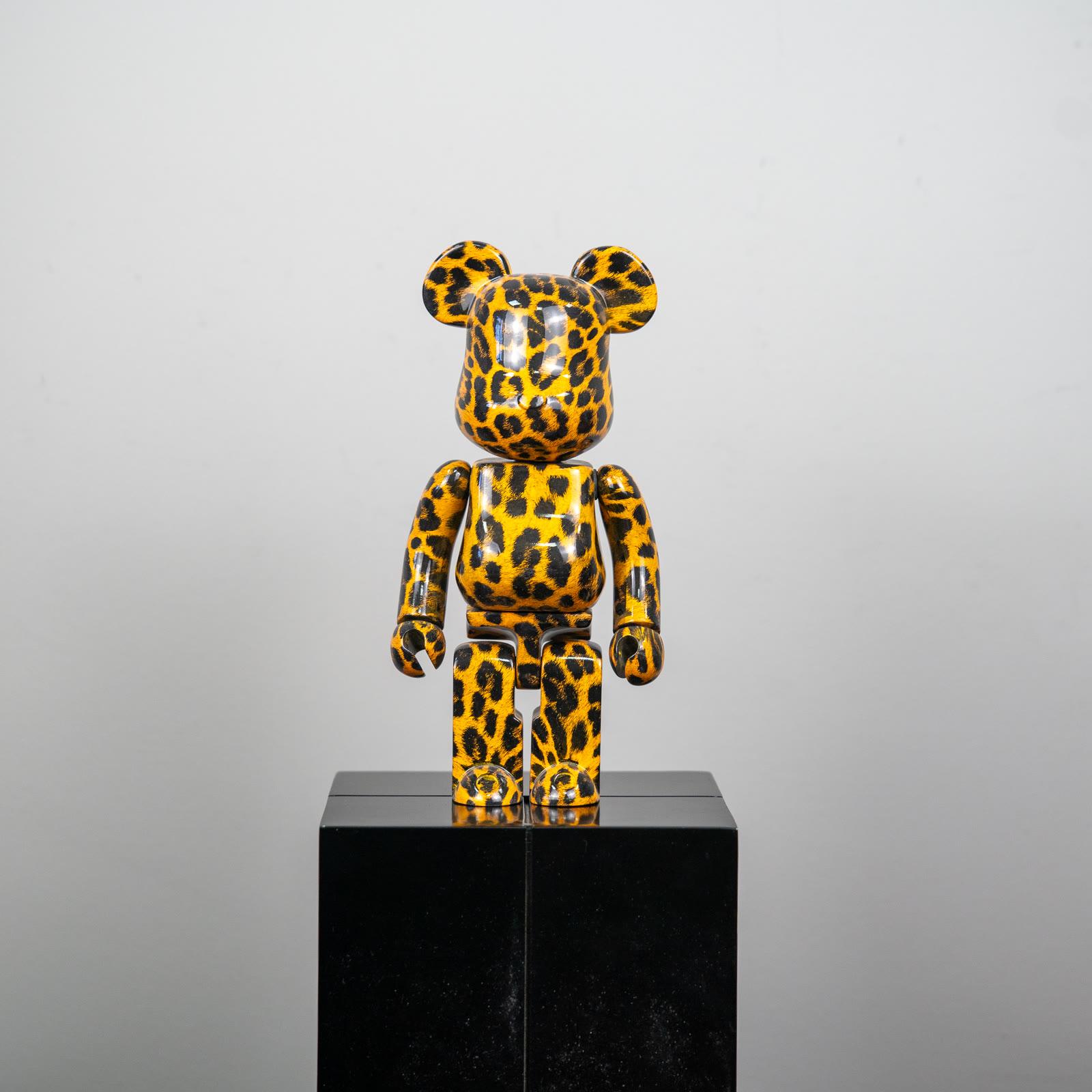
The leopard Bearbrick is a clear example of the passage. Yellow and black are a print the language of fashion already knows. The platform’s quiet silhouette holds the print like a poster. The piece does not have to narrate a runway. The pattern is enough. A wider map sits in popular culture and art.
Print, cloth, and pattern
Fashion usually enters the figure through the surface. Leopard, camouflage, a check, or a single block of color produces the same first look it produces in cloth. The difference is that cloth folds, and the figure stays still. The print remains on a form you look at.
A good fashion reference does not have to shout a logo. A pair of colors, the size of the spot, and the plainness of the silhouette are enough. When leopard covers the whole body, the piece stands as a three-dimensional version of a clothing window. Setting a real bag or a shoe beside it over-explains the reference. The pattern was already speaking.
The visual language of sport is a language of cloth too. A stripe, a pair of colours and a repeat can be read as a kit from across a room. When those signs move onto a figure, the piece turns a moment of dress into sculpture. The leopard bear is that passage in this selection: the pattern covers the body, and no logo is required.
The stage and the street
Music enters the figure as graphic and tempo. The flat colors of a sleeve, the gloss of stage light, and an exaggerated face are tools the art toy already knows. The piece does not have to illustrate a song. It is enough that it builds an image clear enough to sit beside a cover.
The street enters through stance. The share given to shoes, the tilt of a head, a layered silhouette: these are the rhythm of someone walking a neighborhood. In the late 1990s that rhythm passed into customized figures. The story of the passage sits in how designer toy culture started. Here it is enough to say that the street gave the figure a subject, and the figure carried that subject indoors.
The tie to street art belongs to the same family. A large picture on a wall and a small sculpture on a shelf can use the same eye. One cuts the city. The other cuts the room. KAWS and the street opens that tie through a character language. Not every art toy has to live inside that language. The kinship is a shared way of looking.
Be careful with collaboration stories
In fashion and music, a figure is often told as the souvenir of a meeting. Some meetings are documented. Many turn into a precise calendar as they are retold. Writing a drop year you are not sure of does not make the piece more real. The real thing is the pattern you can see.
A leopard print does not have to be a particular house in a particular season. A kit does not have to be the souvenir of a particular match. If there is a collaboration, and you have a clear record of it, the record can be said. If you do not, the pattern can stand as a pattern. That is already a cultural sentence.
The practical result for a collector is simple: do not buy the story before the piece. Look at the surface first. Then ask for the date you were told, the source you were told, and the name you were told. If the three agree, the story can join the piece. If they do not, the piece can still be a beautiful pattern. Only the legend is missing, and that should not be counted as a loss.
Building the crossing at home
A home is not a backstage or a concert stage. The way to build the crossing is to place the sign once and then leave it alone. If leopard stands on a shelf, repeating the same leopard on a cushion, a rug, and a curtain makes the pattern shout. Placing it once turns fashion into an interior. Placing it three times produces a themed room.
The kit figure asks for the same measure. A striped pair of colors stands as a note on a plain ground. Lining flags, scarves, or posters in the same colors around it hands the sculpture’s job to a supporter’s corner. The piece does not ask for that. The gold tone of the ball and the stripe of the kit are a sentence on their own.
On the music side, one cover, one record, or a single poster is enough. If the figure stands beside that cover, the two look related. If the whole wall is papered with the posters of one tour, the figure disappears among them. A sign that came from the street becomes more valuable when it is rarer at home.
Readings that miss
The first misreading treats every pattern as a brand collaboration. Leopard is common property of fashion. Its presence on a bear does not, by itself, narrate a particular house’s permission. The pattern is a cultural sign. A signature is a signature only when it is documented.
The second misreading treats street culture as clutter. The rhythm of the street does not have to become a pile at home. The clearest street references stand more clearly on a plain pedestal. Clutter does not prove the culture. It hides the silhouette.
The third misreading joins music only to sound. A figure does not play a song. It carries the image of a cover, a light, a character. Sticking it on top of a speaker leaves that image in the vibration. Setting it a step away protects both the sound and the sculpture.
Carry the culture without exaggerating it
An art toy is a cousin of fashion, music, and the street. The kinship does not ask for proof on every wall. A leopard, a kit, a graphic eye: one of these is enough to recall a whole culture in a room. The recall gets weaker each time it is repeated.
You also do not need to invent the history. If you do not know who met whom in which year, describe the pattern itself. That account is more honest, and it carries the piece longer. A legend tires. A surface stays.
Return to the designer toy page with that eye. Choose one pattern, place it once, and leave the second sign in another room. The culture speaks more clearly across that distance.