A name that started in graffiti
KAWS's relation to street art is not a decorating theme. The name used by Brian Donnelly belongs to an artist born in 1974 in Jersey City, New Jersey, whose practice started in graffiti. The street is the first place the name travelled. People later meet it in painting, in sculpture, and in widely seen commercial collaborations. A beginning does not lock the list of arrivals. Skipping the beginning, though, misses why the Companion carries such a direct language of signs. A mark read in the street has to be picked out from far away.
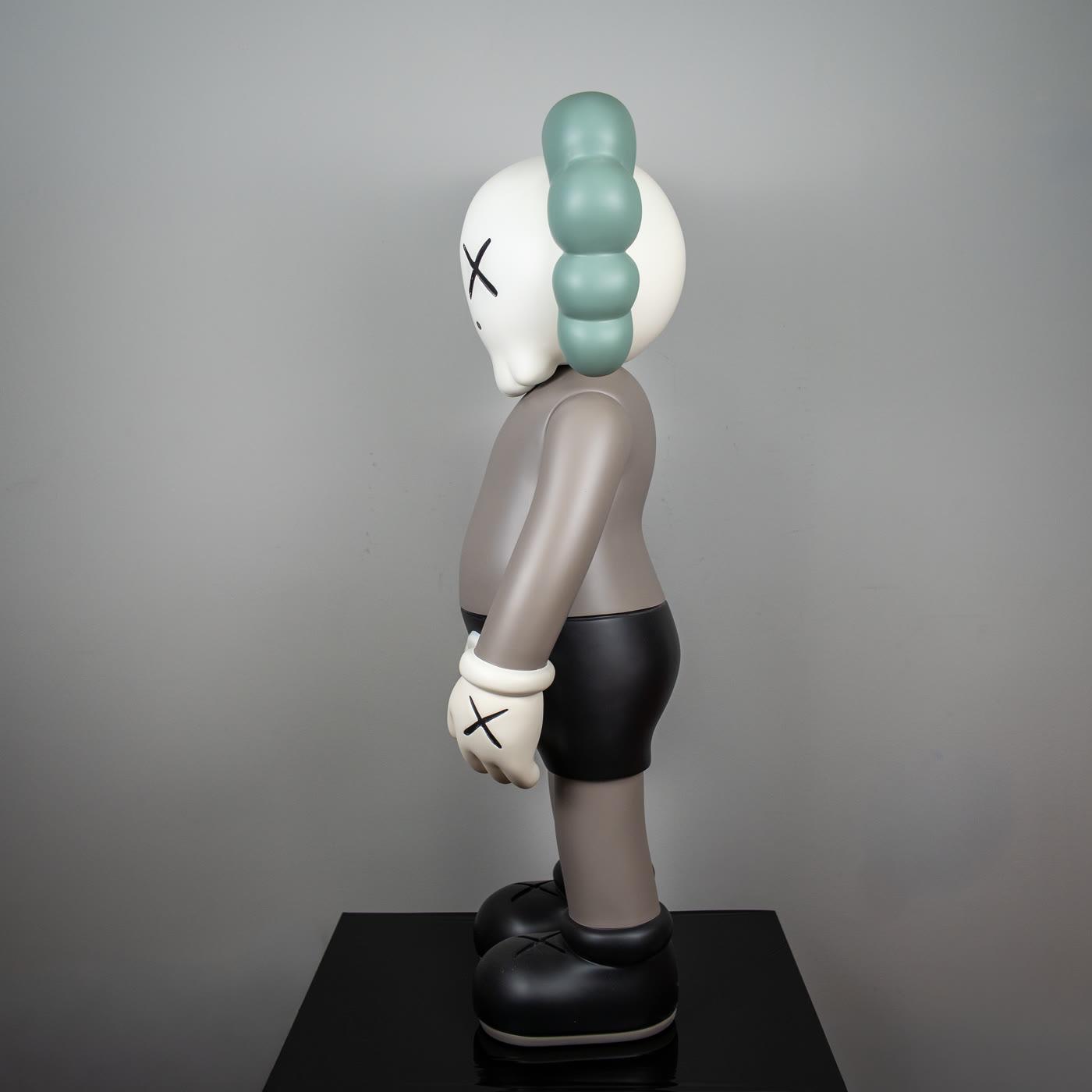
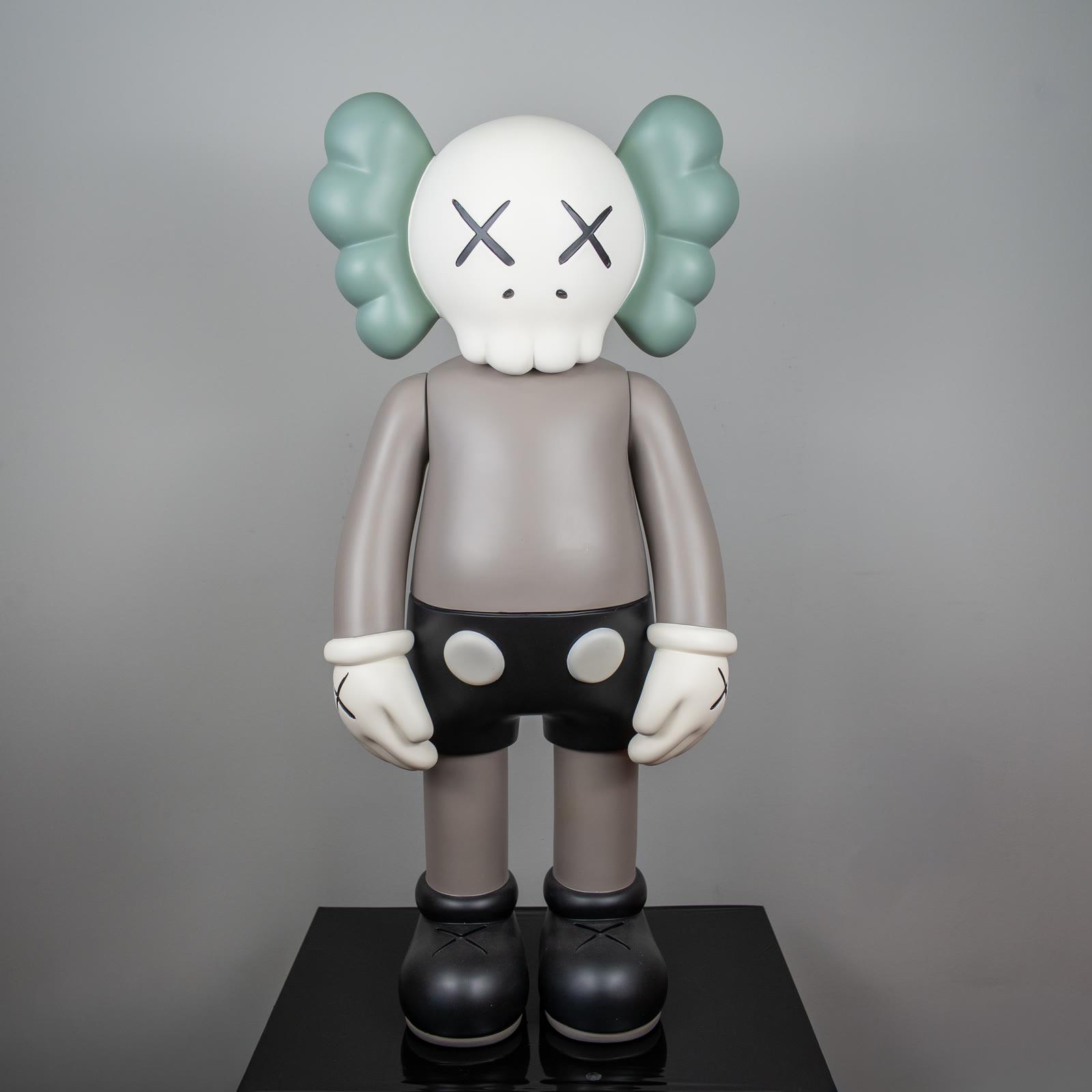
That directness lives in the character's anatomy. A rounded, skull-like head, X-shaped eyes, gloves, shorts, and boots are recognised passing a wall and passing a room. Who KAWS is keeps the name and the city wider. The question here is what the street adds to the language. The addition is not a matter of bringing spray texture home. It is that the figure was designed plainly enough to separate in one glance, even inside a crowded visual world. Plainness is what a street-born intelligence hands on to sculpture.
Intervention in the street
After graffiti, KAWS became visible to a wider circle through work that intervened on advertisement images already standing in the street. We will not invent dates. The method that is visible is enough: placing a mark over an existing image both cuts that image and makes it more visible. The X is often spoken of together with that gesture. Critics and viewers have also read the X at the eye as erasure. That is a reading, not a sealed slogan. The same mark can be read as the cartoon's closed eye, and as expression flattened into a sign. The street builds the ground of one of these readings. It does not cancel the others.
Intervention does not reduce street art to a catalogue of styles. Not every writing on a wall is KAWS. Not every KAWS work has remained a writing on a wall. The relation is a reply to the visual noise of the city. The reply later moves into sculpture. In sculpture, what is crossed out is not a stranger's poster. It is the character's own face. The gesture turns inward. That turn does not deny the street origin. It leaves the origin to the seriousness of another material. Understanding this at home does not mean spraying a wall. It means understanding why the mark is so clear.
The move into sculpture
In the street, a mark owns the wall and you pass it. In sculpture, the figure asks to be walked around. KAWS's work carries both tempos. Museums and sculpture parks have exhibited it. Public scale reads the head against the sky. The scale of a room holds the same head on a console. Both work with a plainness that comes from the street. One makes you step. One makes you stop. Reading the passage as a betrayal misses the way sculpture enlarges the street mark. The Companion is a signature become three-dimensional. It has stopped being only a signature and become a body.
The Passing Through pose works especially against the tempo of the street. The figure sits, and the hands cover the face. The name of the pose is not a quotation. While everything in the city walks, this posture sits and hides its face. That a character from the street also knows how to fall silent is the maturity of the language. Not every work has to shout like a wall. The seated figure takes the noise of the origin inside, then closes it. This is not domesticating street art. It is drawing a pause out of it. The pause is the work of sculpture.
Bringing a street aesthetic home
A home does not need to resemble an alley. Brick, spray texture, and hazard stripes imitate the origin. They do not understand it. What the Companion adds to a home is the calm of a silhouette chosen out of a crowd. A plain ground keeps that calm. A crowd of posters rebuilds the street's noise cheaply. The figure has already come out of that noise. Burying it in noise again takes the gesture back. The practical rule is clear. You can host a language that comes from the street without building a street set.
Light asks for the same distinction. Street light can be hard and overhead. At home, a hard ceiling light draws a second shadow over the X and dirties the mark. A soft light, coming slightly from the side, reads the roundness of the head as sculpture. This is not gallery affectation. It slows, in a room, the looking that the street rushes. Popular culture is a neighbour of this slowness, because advertising in the street is also the speed of popular images. You do not have to carry the speed home as it is. The figure can remain a stance chosen from inside that speed.
The neighbourhood of fashion and music
Street art has long shared a pavement with fashion and music. KAWS's character has been seen on that pavement too. Widely seen commercial collaborations have taken the Companion to the scale of windows and clothing. We will not invent a list of years and products. Art toys, fashion, and music keeps that neighbourliness wider. What you need here is that the street is not only a wall. The same body can repeat on a stage image, in a shop window, and in a room. Repetition makes the character popular. Popularity does not mean every repeat has the same status.
A figure at home does not have to behave like tour merchandise. A stage light is not a sculpture light. Wedging a concert poster and a Companion onto the same wall thins both. Leaving air between them accepts that the street, music, and sculpture are separate sentences. Acceptance is not coldness. It is a distance at which you can hear each voice. A piece in the Popüler Sanat catalogue is a finished collection object that stands at that distance. It carries a street origin. It does not take the street's place.
The Sage Companion and a quiet wall
The Sage Companion carries a language from the street without shouting. Sage ears, a taupe body, black shorts, white gloves marked with X, and black boots. The colour does not resemble the phosphor of writing on a wall. An earthy, green-leaning calm keeps the mark clean. The white glove shows the X a second time. It shows it, and it does not scream. Placing the figure on an open wall, at a height where the eye finds the face without strain, is the most honest way to bring a street origin home. A brick sticker is unnecessary.
The piece sits on the KAWS page. You may want a photograph of a city beside it. You may have one, provided it does not race the figure on the same line. Let it stay a little lower, a little farther, at another scale. Then the Companion stands like a guest who came from the city and has also left it. That is the domestic form of respect for street art. It does not deny the origin, and it does not turn the origin into a costume. Among the essays, the name, the character, and the room continue through separate doors. The street is the ground under all of them. It is not their wallpaper.
Outside the wall
Locking KAWS as a street artist means walking past the sculpture and the painting. Counting the work as never having come from the street is the same look reversed. The truer sentence is longer, and calmer. A name that started in graffiti left the gesture of intervention to a character, and continued that character in sculpture and in wide circulation. The home is one of the last stops on that road. The last stop does not have to be an imitation of a wall. It can be an emptiness in which the silhouette reads easily.
When you stand in front of the figure, do not look for spray. Look for the head, the mark, and the boot meeting the floor. If those are there, the street and the sculpture are both in place. If they are not, no brick pattern completes them. The sage Companion in the catalogue holds those three things in a calm colour. The rest is your distance. When you keep the distance, street art stops being a theme at home. It remains a habit of looking. The habit outlasts the wall.