
What did Bearbrick culture start from?
Bearbrick culture started when the block bear figure Medicom Toy introduced in 2001 became a surface that could be repeated. A BE@RBRICK did not have to tell a character story. The cylindrical torso, round ears, and simple face were empty enough to carry someone else’s image. The culture gathered around that emptiness.
The basic form, widely associated with Tatsuhiko Akashi, did not belong to a single scene. Collectors, designers, and people around music liked the same body for different reasons. Some cared about the stance that scale gives, some about a surface that can change, some about the repetition of a row on a shelf. Designer toy culture tells the wider version of that gathering.
The beginning is not a detonation story. A form is produced, people show it to each other, surfaces multiply, and a size system starts to meet the room. Popüler Sanat is not the authorized narrator of this culture, and not a Medicom dealer. The catalog offers decorative figures that look toward the same visual language. The history of the culture and the piece in the vitrine are not melted into one sentence.
Why did the open surface become a stage?
The open surface became a stage because the silhouette stayed a bear no matter what landed on it. A flat color, a pattern, a comic frame, or a single graphic mark did not make the body unrecognizable. People met a new image without having to learn a new character. That is a practical trait, and it helped the culture travel.
The stage metaphor should stay modest. The figure is not a theater. It is a repeated industrial body, open to print, gloss, and collaboration. A roster of collaborations, with dates and quantities, is not the subject here. The mechanism is enough: the same bear builds a different sentence when another visual world steps in.
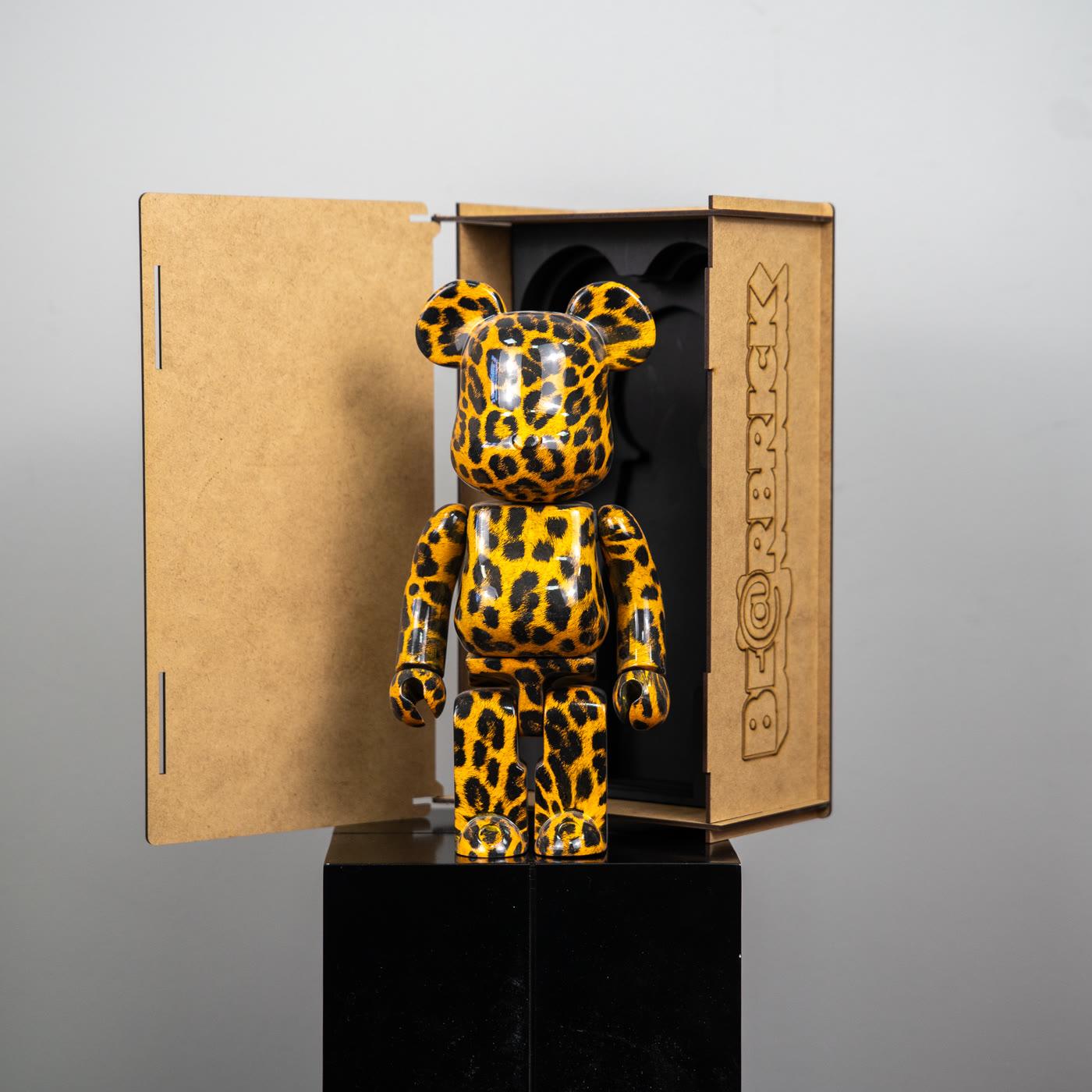
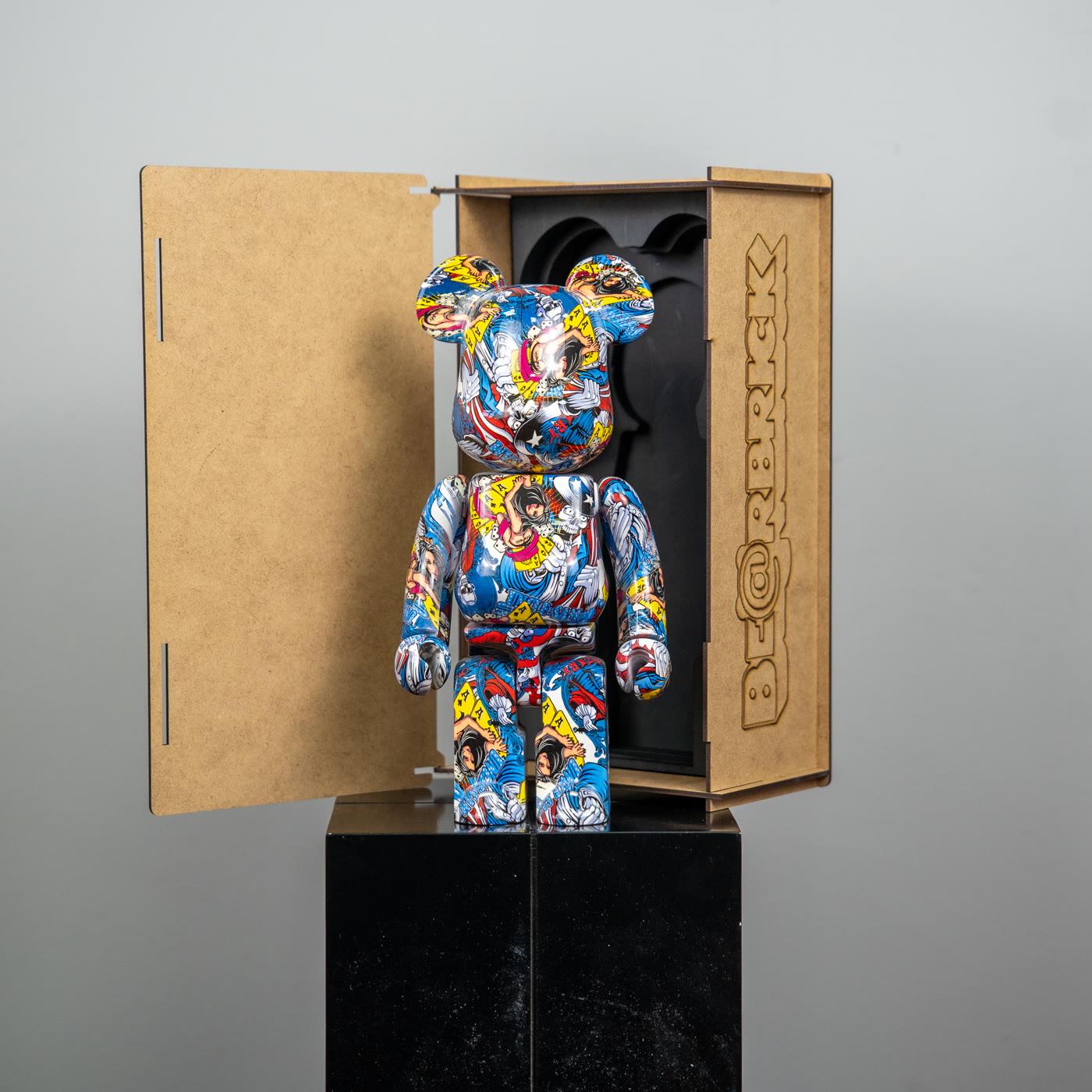
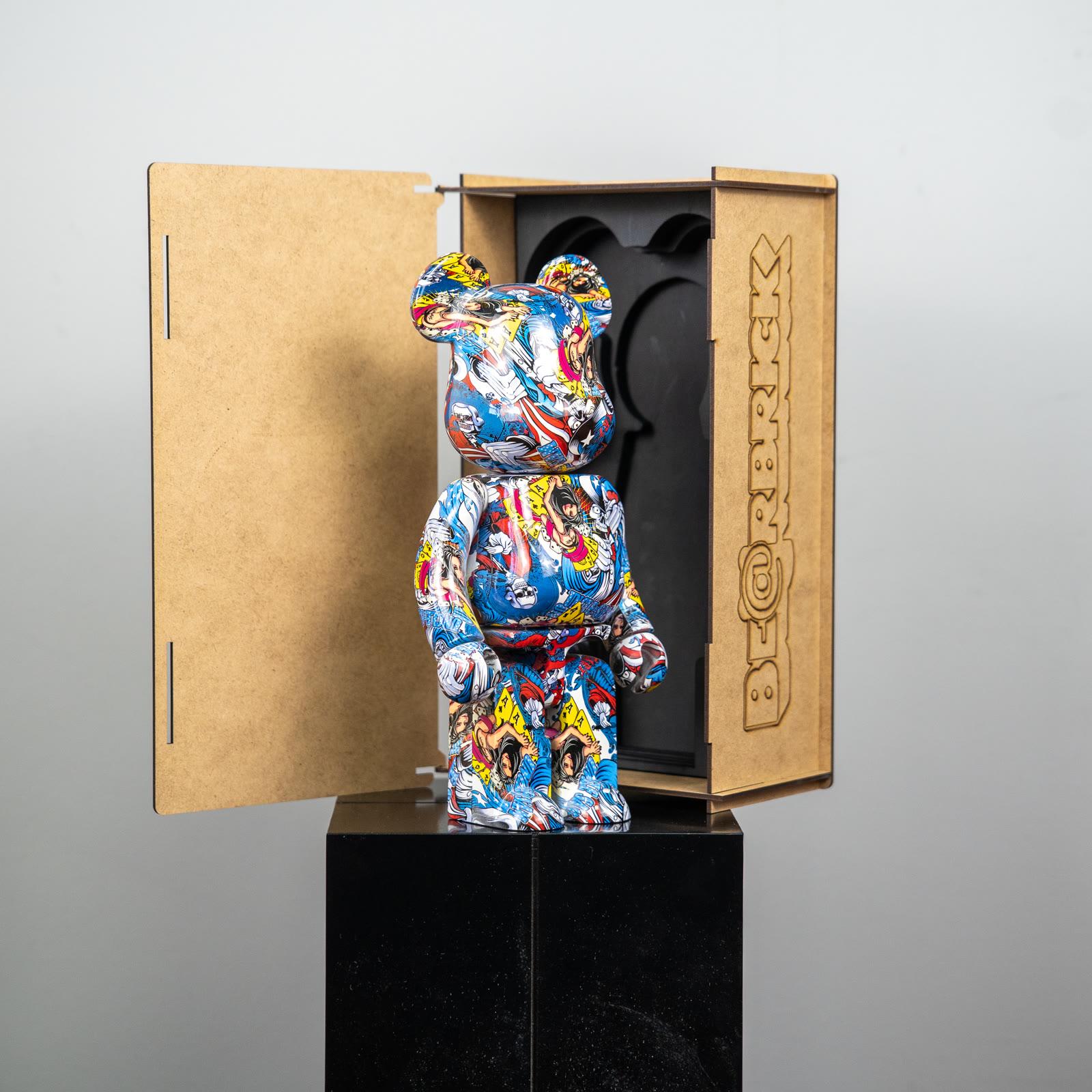
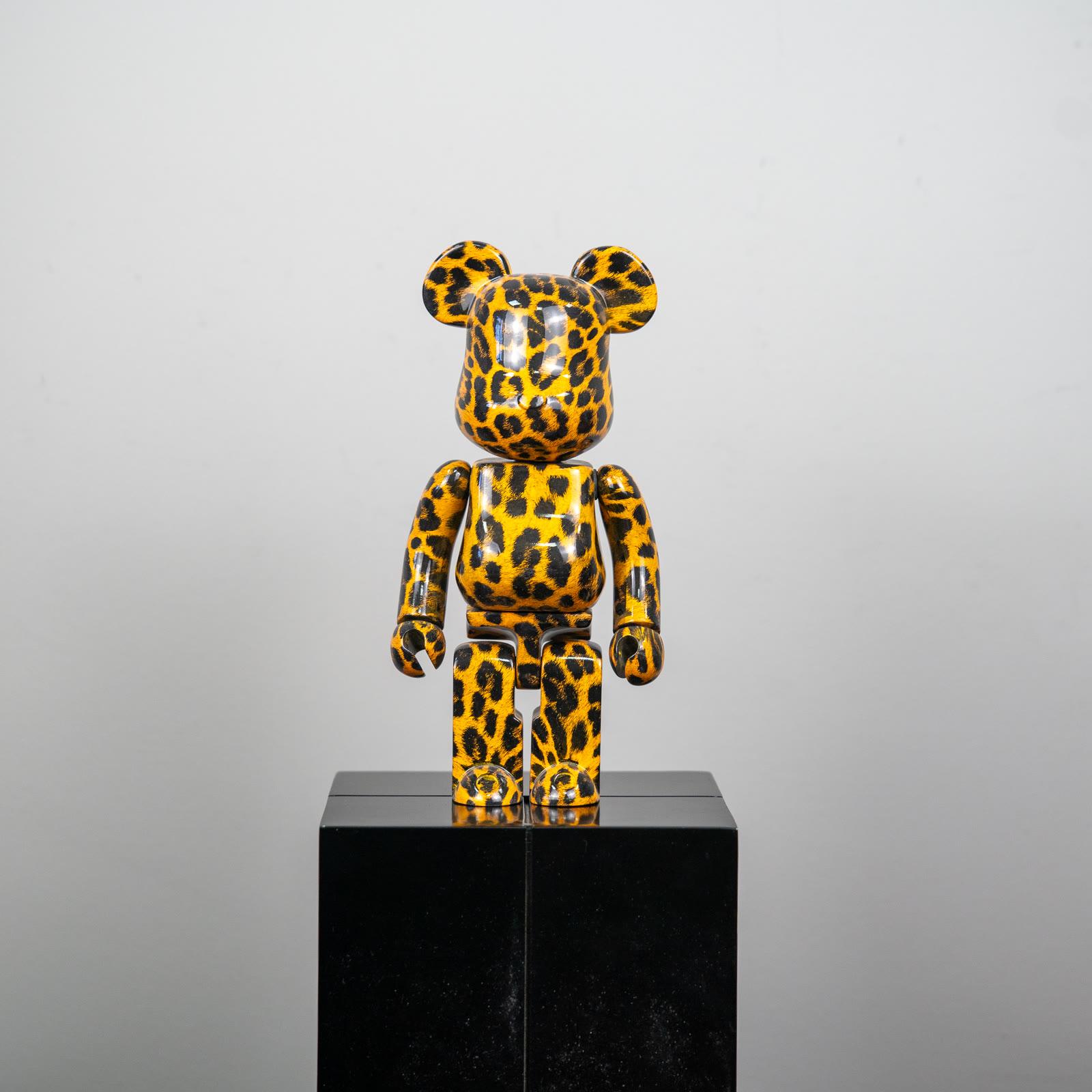
The glossy leopard-print bear figure is one catalog version of that mechanism. An animal pattern carries a rhythm people already know from fashion onto the block body. The comic-print bear figure lays frames, contour, and a dot structure over the same silhouette. Neither is presented as proof of a particular license. The pattern is a decision about the surface.
How did the collecting habit settle in?
The collecting habit settled in because the same form could be seen again and again with a different surface. People did not stop at one piece. A color next to another color, a patterned body next to a plain one, and the row became readable. Repetition started to work like a language, not like a lack.
The second leg was size. In Medicom’s system, 100% is published as 70 mm, 400% as 280 mm, and 1000% as 700 mm. Other percentages exist, and the millimetres in between stay with the current chart. A small piece sits on a table. A larger percentage occupies the room. That difference tied collecting to a spatial decision, not only to a shelf row. Catalog photographs are not labeled with these percentages.
The third leg was social. The piece was an object you could show someone. The box, the photograph, and the row became material for talk. Care is needed here. A box, or any single mark, does not prove what a piece is. The culture grew from the wish to show. The wish to show does not replace a way of verifying.
What did fashion and music add to the form?
Fashion and music added image worlds that were already fluent. A pattern known from clothing, a gloss known from stage light, a graphic known from a record sleeve could still be read on the bear. The figure could stand as a small reminder of those worlds. Art toys, fashion, and music holds the wider version of that crossing.
The addition is not a matter of tying the figure to a celebrity. The addition is that the surface can carry a visual language already in circulation. A leopard spot comes from a runway. A comic frame comes from a printed page. The bear did not invent these languages. It was quoted easily inside the culture because it could fit them onto a cylinder.
The quotation works at home too, though every quotation does not need to build a scene. One patterned figure speaks enough in a quiet room. Adding a second story, a tour, a season, may not tire the piece. It tires the room. Loving the culture does not require turning every surface into a pile of references.
Which stories make the culture larger than it is?
The first story that inflates the culture writes every block bear into the same history. The figure introduced in 2001 is Medicom Toy’s BE@RBRICK. A decorative piece that shares the silhouette is not counted as part of that production. The Popüler Sanat catalog keeps this distinction.
The second story locks popularity to a number. There is no sales count, ranking, record, or invented remark here. A form can circulate without becoming a measurable legend. Why the form travels is told through readability and surface, not through a statistic.
The third story treats the culture as the property of a closed collector circle. The figure matters in that circle. It also stands in a hotel lobby, a shop window, and a quiet living room. The culture is not a club with one door. It is a shared form doing different jobs in different rooms.
Where does a patterned figure sit in this story?
A patterned figure shows the culture’s surface decision at the scale of a home. A leopard print carries fashion’s language in one glance. A comic print recalls the rhythm of popular print through contour and a repeated dot. Both stand in the Bearbrick selection with their own color and finish. No specific hero license is claimed.
In placement, it helps not to make the pattern compete with a second loud object. Glossy yellow-black spots, set beside another high contrast, scatter the room. A comic surface that carries frames wants a distance from which it can also be read up close. Here the culture leaves theory and becomes a viewing distance.
Liking pattern does not mean filling the whole collection with pattern. A plain body, placed beside a patterned one, makes both easier to read. That is an old rule of vitrine composition. The collection is a calm place to see the bear form together with other sculpture.
How do you keep the culture quiet at home?
Keeping the culture quiet at home starts by not exaggerating the job of a single piece. The figure does not have to be a stage, a wardrobe, and a record shelf. Choose the surface you like, measure where it will stand, and see whether the light eats the pattern. The rest is room order, not a manifesto.
History helps that quiet. Once 2001, Medicom, Akashi, and the block anatomy are learned, the name does not swell. A logo, a box, or a hologram does not build an identity on its own. The leopard and comic figures in the catalog are pieces that look toward this visual language. Tying them to a more official past than they have does a disservice to both the culture and the room.
The last line is practical. Start with one figure. Leave it in the same place for a week. If you still want to look, think about a second surface. Culture gathers that way, without hurry, by looking. The journal keeps the other headings in the same tone.