
How do collectible figures stand in a room?
A collectible figure becomes a sentence in a room when it is given real space. It can hold the middle of a console, set a focus at the end of a hall, or work as color inside a dark niche. When it dissolves into a crowded shelf, it becomes an accessory. The difference is the distance left around it.
That distance is a way of taking the object seriously. If something is meant to be looked at, it needs a surface and a background. Crowding makes every piece equally hard to see. A calm placement gives the silhouette back.
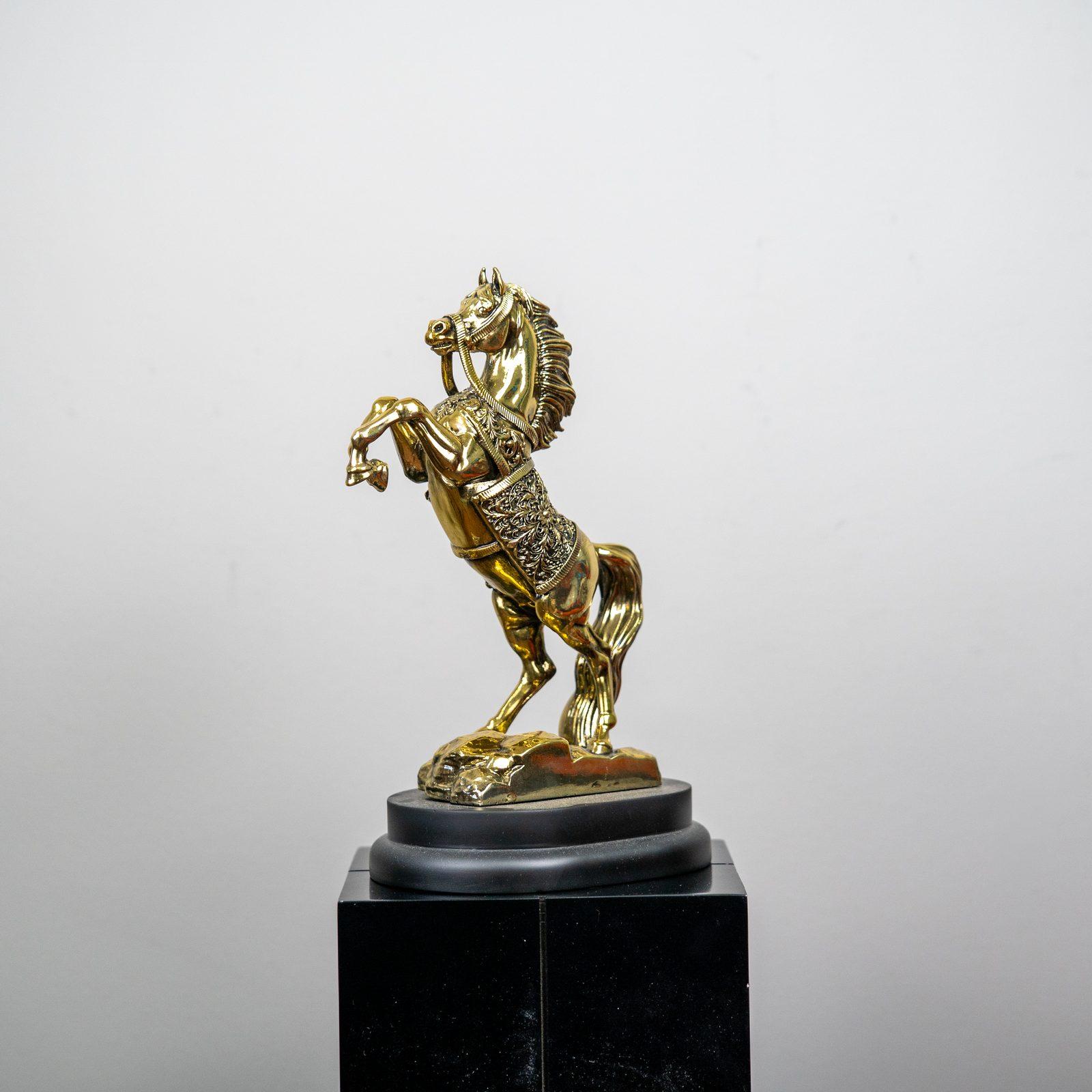
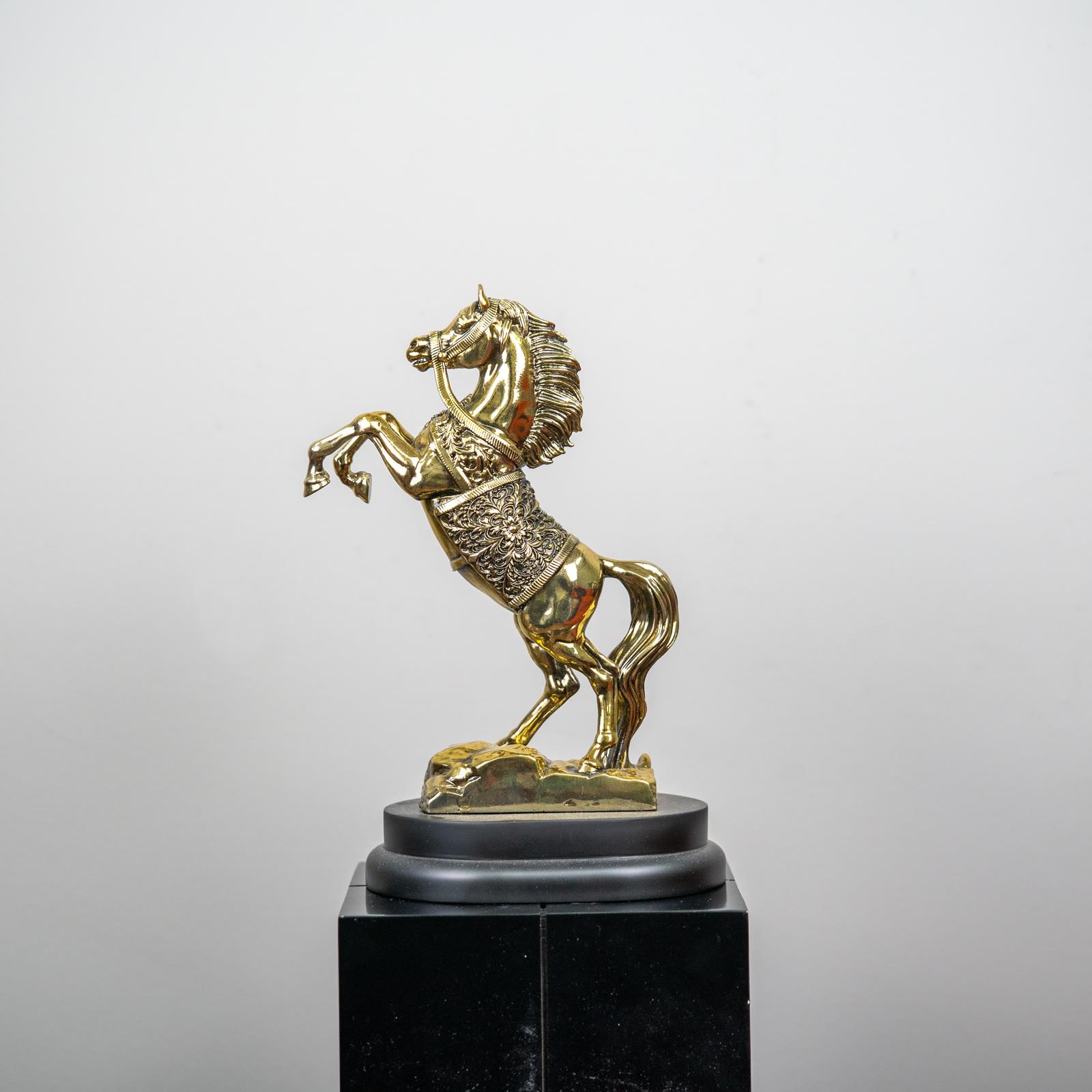
The gold-tone rearing horse is a clear example. The black pedestal lifts the body off the floor. The gold surface gathers light. The piece writes a classical lobby sentence. Lining small objects beside it turns that sentence into a whisper. The same rule holds among decorative objects.
Accessory and object
An accessory is there to complete a piece of furniture. An object changes the furniture’s tempo. As a collectible figure moves toward the second, the room gets clearer. If a bowl, a book, and a figure share a shelf, it should be obvious which one the figure is serving. When everything speaks at the same volume, the shelf becomes storage.
What makes an object an object is a readable edge. If the legs of a rearing horse, the steps of its pedestal, and the wall behind them separate, the piece is working. If they merge, the surroundings need to be simplified.
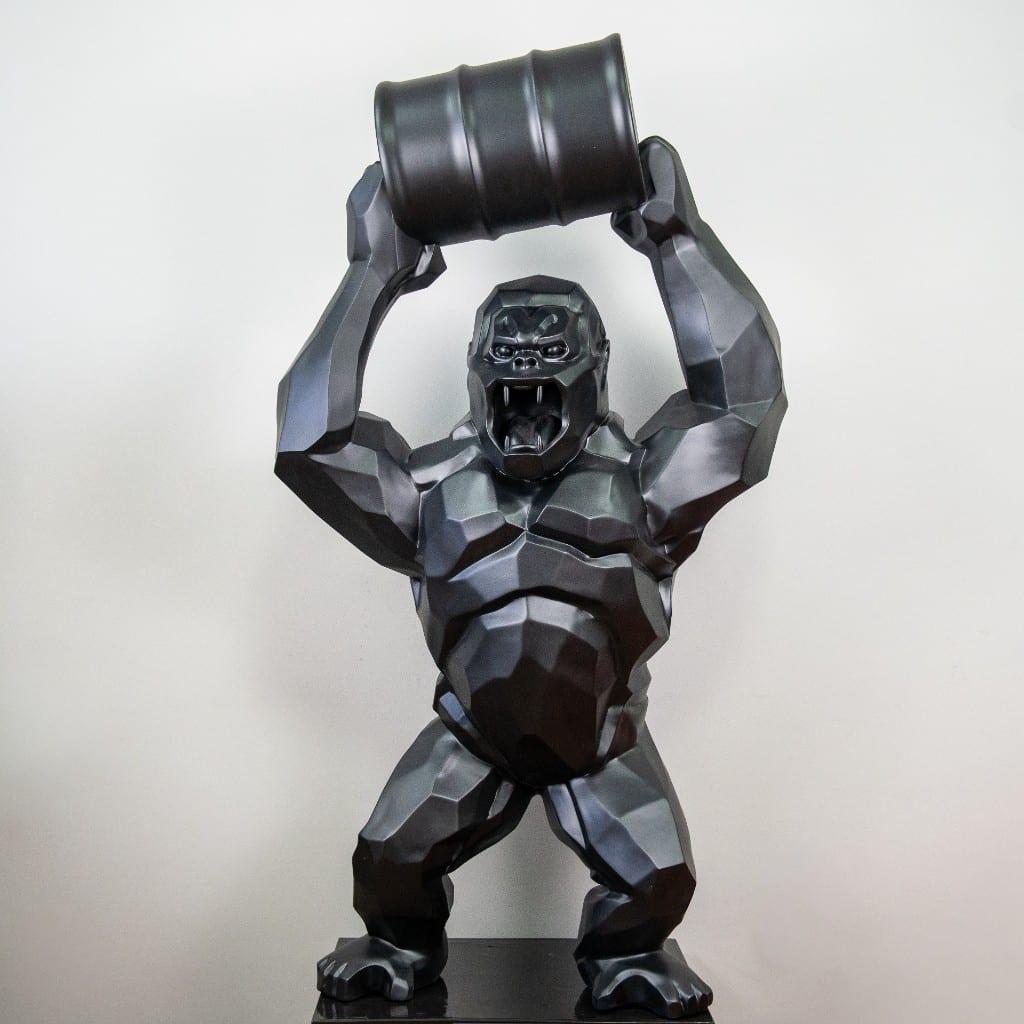
The matte black faceted gorilla writes a different object sentence. An angular body holding a barrel overhead has a rhythm far from the horse’s curve. One is a classical rise. The other is a contemporary mass. Both can live in a room. They do not do the same job in the same corner.
Color, pedestal, and emptiness
Color is the figure’s first relationship with the wall. A gold tone gathers like a jewel on a dark ground. On a pale ground it reads more as a sculptural silhouette. Matte black throws a clear shadow on a light wall. On a dark wall the edges soften, and a focused lamp or side daylight becomes useful.
A pedestal is the object’s shoe. The horse’s black base gives the motion a floor to stop on and be seen. A form set very low can disappear into a rug’s pattern. Hiding the base shrinks the piece. Showing the base lifts the gaze.
Emptiness is the third material. A breath on either side, roughly in proportion to the figure’s presence, is often enough. There is no need to lock the gap to a numbered rule. The eye notices crowding at once. If two contours cut each other, the gap is tight. If the contours stay separate, the gap has begun to work.
Placement misreadings
The first misreading is filling every surface. An empty console can look like an unfinished room. Emptiness is where the figure works. The open area around a horse makes the gold heavier. A filled surface makes the same gold ordinary.
The second misreading lines every figure up at the same interval. Equal spacing is a storage order. In a room, one piece can lead, one can stay quiet, and one can live in another room entirely. Hierarchy is a sequence the eye can rest in.
The third misreading keeps the figure inside a youthful toy corner. A rearing horse can enter a classical living room. An angular gorilla can enter a quiet office hall. Material and stance build a language that does not depend on age. It helps to think about this beside large art objects.
Living room, hall, and desk
In a living room, the figure should enter the line of sight of the seating. Right beside a television, it competes with the screen. On a side table, or in a mantel niche, it becomes a calmer focus. A figure in the living room builds that line in more detail.
A hall is a silhouette job. A person sees the piece from the side and keeps walking. A form with a strong profile works there. The rearing horse has exactly that profile. In a narrow hall, a more vertical and quieter mass is easier. The gorilla’s angular shoulder reads clearly in an entrance that has enough width.
At a desk, the figure should stay out of the line opposite the screen. The eye tires between two focuses across a day. A piece set a little away, beside a bookcase, becomes a breath you look at occasionally. A piece always in the line of sight turns into noise.
A practical order of placement
First set the piece alone on a temporary surface. Look at it through different hours of a day. Morning light warms gold. Evening light deepens black. That look is the simplest rehearsal before a permanent place.
Then reduce the neighbors. If books make a horizontal band, keep the figure outside that band. If a lamp is needed, let the light reach the face and keep the shade from cutting the silhouette. If a rug is busy, move the pedestal onto a calmer patch of the pattern.
Think about a second figure last. It should arrive after the first sentence has settled. A gold horse and a matte black mass can talk if there is real distance between them. Without that distance, both become vitrine clutter. One statement piece makes this decision clearer.
Leave the room with one sentence
A collectible figure is there to give a corner a meaning. A gold horse, a black pedestal, a matte gorilla: each can do the work of a single sentence. Once the sentence is written, every added object should be able to say why it is there.
If it cannot, emptiness is better. Emptiness looks like neglect and is actually the frame. When the frame tightens, the sculpture shrinks. When the frame opens, the same sculpture changes the measure of the room.
Choosing one piece from the collection and leaving it alone for a day teaches more than a full decorating plan. Once the figure finds its place, the room says the rest.