
The object that remains when the rest is gone
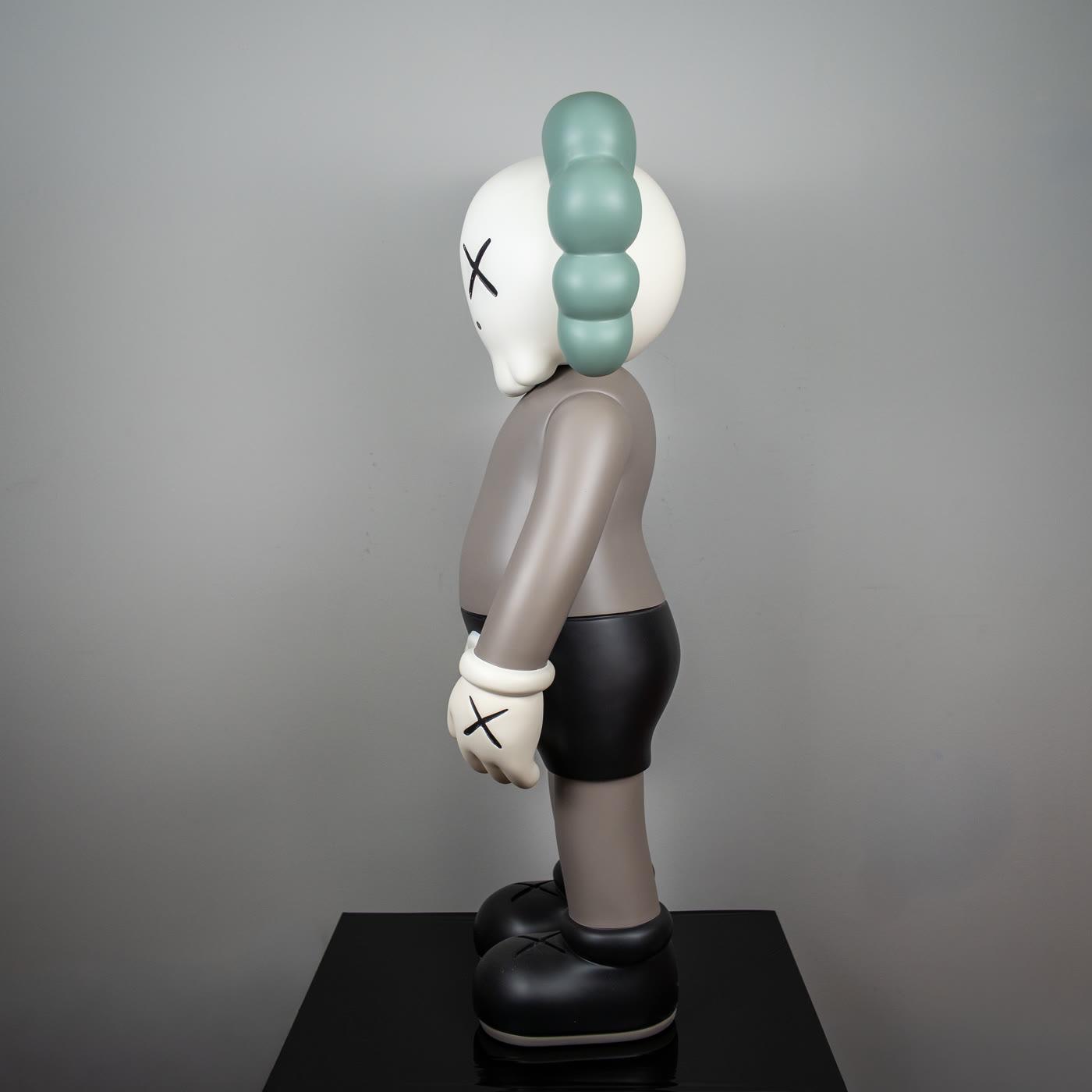
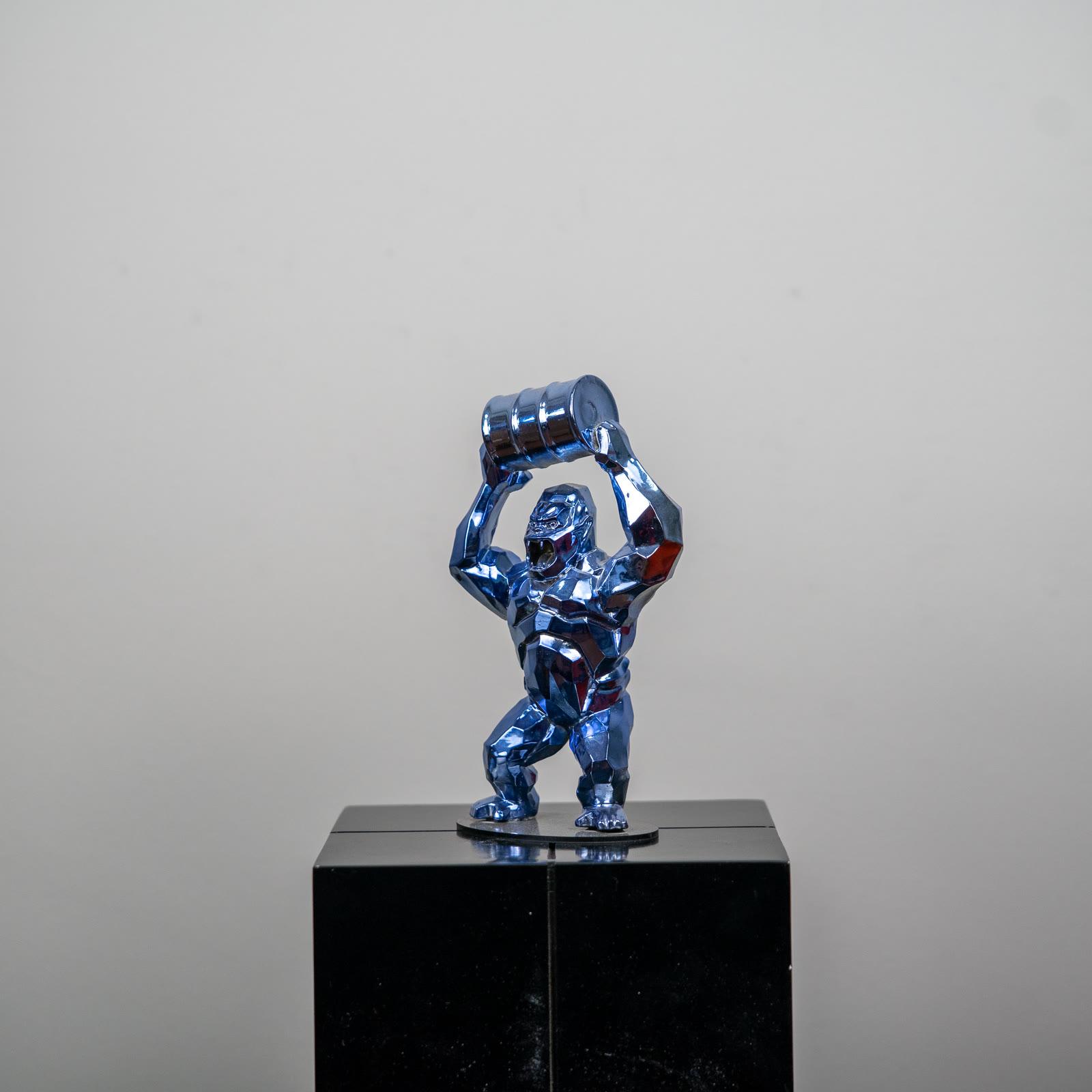
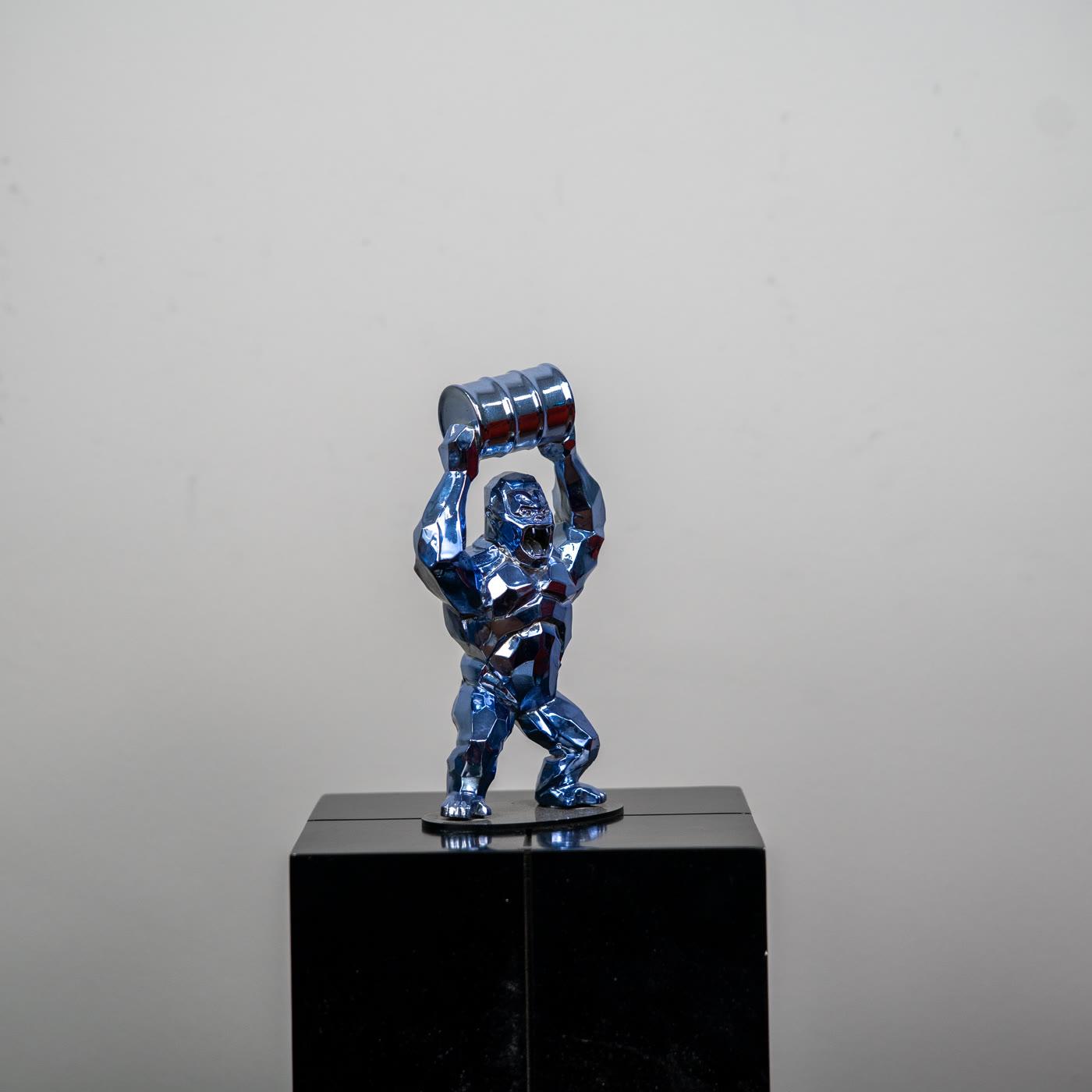
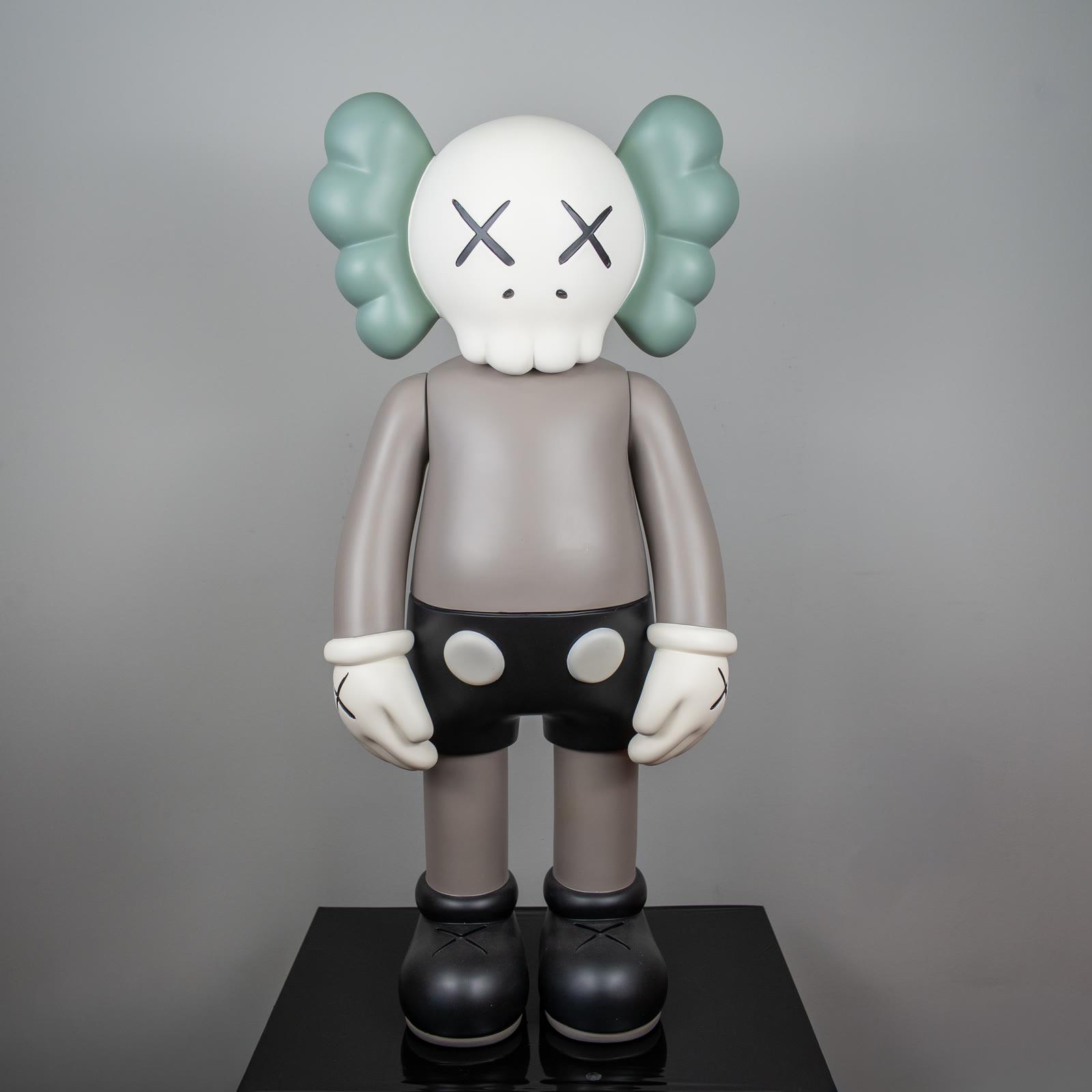
A statement piece is the object you would leave in place if you took everything else out of the room. It does not have to be the largest, the brightest, or the most expensive. A standing sage Companion builds a quiet body with a readable face and ears. A gold-tone rearing horse is a classical vertical on a dark pedestal. A metallic blue faceted gorilla is a mass that catches the room like a mirror. Any one of them can be the focus. All three, piled in one corner, means none of them is.
Context chooses. In a pale living room, quiet taupe can read harder than a chrome gorilla. In a busy shop, the metallic mass can stay standing where a quiet body disappears. Large art objects describes how a big mass breathes. This article says bulk is not a sentence by itself. One piece, one margin of air, one sightline.
Three pieces, three jobs
The sage Companion stands. The ears are sage, the body is taupe, the surface is matte. The face is open. This is a character read at a close and a middle distance. Put it in front of a shouting color wall and the small difference between ear and body disappears. On a light wall, alone, the room looks as if it has greeted someone. Using a KAWS figure at home opens the calm of that silhouette at the scale of a house.
The gold-tone rearing horse carries the gesture upward. The black pedestal gathers the mass at the floor. It builds a vertical sentence in a classical lobby or a plain hall. The relief reads in a soft side light. A bare spot turns the gold into a rain of sparks. The metallic blue gorilla is caught from far away. The barrel needs air above the shoulders. In a tight niche, chrome takes its neighbors in like a mirror and enlarges the noise. In a wide emptiness it can remain one cold spark.
One of them, with air
Choose one of the three and clear around it. Take the second into another room, or into the box. A focus splits when a second focus stands beside it. In the living room, this choice should be the single silhouette visible from the door. Figures in the living room describes that place through the sofa line and the first look. In a hall, the horse wants height. In a working corner, the gorilla can stand outside the camera, on the second glance of someone walking in. The Companion suits the quiet edge of a room where people sit.
Lining all three into the same corner is not showing a collection. It is indecision. The collection can build a sequence in another room. The statement piece does not have to represent that whole sequence. If it tries, the home becomes the vitrine of the archive. Choose one sentence. Let the other sentences wait their turn.
The room speaks before the piece does
If you have a light wall, linen, and wood, the Companion’s matte body can be kin to the room. If you have dark stone, brass, and a vertical emptiness, the horse enters that language. If you have glass, metal, and ceiling light that stays on all day, the blue gorilla gathers the existing glare on its own surface. The reverse is possible, and it asks for more air. Putting chrome in the middle of linen splits the room. Bringing a matte body into a hall of mirrors can leave it faint.
Sun undoes the focus of all three. The bottom of the glass is not a prestigious place. Ultraviolet and heat load matte, metal, and glossy color alike. A black pedestal heats. Blue chrome shines and heats. A sage body can show fade late, and it is not therefore safe. Bring the piece where the patch does not walk. A focus can still be read in shade. If it cannot, the problem is not a lack of light. It is the crowd around the place.
Bulk is the result of a relationship
A statement piece does not mean the tallest piece. It is the piece that separates alone from the door, does not fight the ceiling, and carries the furniture beside it instead of crushing it. The gorilla’s barrel should leave air under a low ceiling. The horse’s head should not vanish in the height of a hall, and it should not stick to the ceiling either. If the Companion is forgotten far below the sofa arm, it is a table object, not a greeting. We are not giving centimetres. The relationship is enough.
A plinth joins the family of the piece. The horse already arrives with a dark pedestal. Setting it on a second box does not lengthen the sentence. It makes the sentence comic. If the gorilla or the Companion needs a plinth, let it be kin to the other wood in the room. A lit box turns the focus into a costume. Do not use light from the floor unless you want it. It hollows the eyes and turns a quiet body into a mask.
Mistakes that keep coming back
The first mistake is thinking the focus is the most expensive piece, or the largest. Price is not the subject of this article. Height is not the subject alone. The second is thinking every room in the home wants a focus. Some rooms stay quiet. A quiet room is also a decision. The third is thinking a focus has to be colorful. Sage and taupe can speak more clearly than chrome on the right wall.
The fourth mistake is treating the three gestures as interchangeable. The fifth is thinking a character recognized from the street is automatically the focus. Being recognized is not the same as fitting the room. The sixth is mistaking a photograph of a hotel lobby for the plan of your hall. Those pictures are not an installation record. The seventh is filling around the focus with small objects after you have chosen it. A filled focus stops being a focus.
Test the choice from one door
Put the candidate in place and take the other two out of sight. Come in from the door. If the eye goes to one place, the choice has held. If it goes to three places at once, you have not chosen yet. Sit down. If the piece climbs on top of the conversation, it is too close or it is shouting. Stand up. If it is still legible from the door, the distance is right.
For a week, do not add a new ornament. If you are still looking at the same piece, the room has accepted the sentence. If you are not, take a neighbor away before you change the piece. Walking the pieces is for seeing the three gestures side by side. It is not for ordering all three and building them into the same corner. Read the KAWS selection and the sculpture line separately. Then leave one of them.
One sentence is enough
A statement piece does not have to shout. The Companion greets. The horse rises. The blue gorilla is caught from far away. If your room wants one of those three jobs, leave that piece alone. If it wants all three, you are still building a list, not a room.
Come in through the same door tomorrow. If the first look goes to a single silhouette, the sentence is built. If it does not, you need a barer wall, not a larger piece. The collection will grow. The focus does not have to grow with it. If it does, every corner of the home becomes a vitrine. One corner is enough.