
What do large art objects do indoors?
A large art object gives the first glance, on entering, to a single form and sets the rest of the furniture back. What makes it work is not a list of sizes. It is the sightline, the clearance around it, and visual weight. Pop art’s lesson about scale is a neighbor: when something you know gets larger, the way you stand in front of it changes.
This page does not assign centimetre heights to pieces in the selection. Height is discussed against a door, a sofa back, and a ceiling. The more systematic account of fit is in scale that fits. Here the question is how a large form holds a room.
As a figure grows, placement grows with it. Large-scale figures keeps that family together. A piece becoming the sentence of a room is close to the idea of a single statement. Read together, volume looks like a responsibility, not a boast.
What visual weight means
Visual weight is not the kilogram on a scale. It is how much room the object seems to occupy. A dark matte mass looks heavy. A metallic surface, because it reflects, can look either wider or lighter.
A gold silhouette jumps forward on a pale wall. On a dark ground it settles back onto its base.
Faceted planes gather weight at the edge. A rounder form spreads weight toward the middle. A rearing animal draws a longer line than a seated mass, because legs and neck reach into open air.
If that line starts to race the ceiling, the object swells. If it does not, it remains a sculpture.
Pop art graphicizes this weight: one color, little detail, a gesture readable from far away. When a large object carries the same graphic clarity, the room works a little like a poster. When detail multiplies across the surface, the reading slows.
Both are legitimate. They do not both have to be the main event in one corner.
Path and clearance
A large object needs somewhere to walk. The arc of a door, a chair pulled out, a cupboard opened all enter that space. Pushing the piece into a corner does not save floor.
The corner cuts the form and narrows the path. Being seen from a step back is an easier placement than being stuck to the wall.
Clearance is the thing that should increase as the object grows. A small figure disappears on a crowded shelf. A large form on a crowded floor locks the room. Taking neighboring things away is not a trick to make the object look bigger.
It lets the room breathe. Breath is a condition of use, not a luxury of empty houses.
A low ceiling fills up quickly around a vertical gesture. A high ceiling can lose the same gesture, and a base or a darker ground calls it back. These relations can be set without naming a unit of measure.
The eye can compare the top of the object with the door frame in one look. That comparison is enough.
Two silhouettes, two temperatures
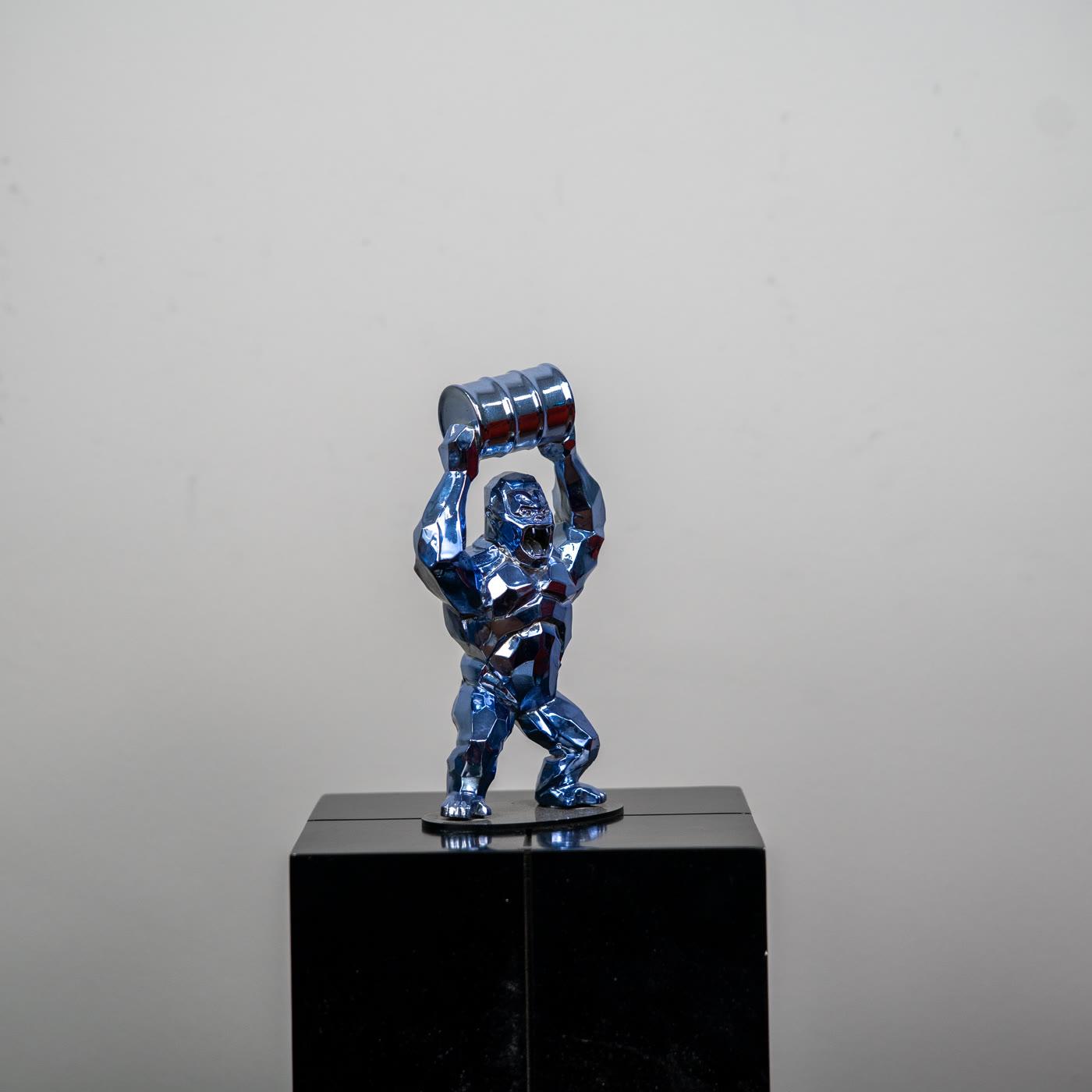
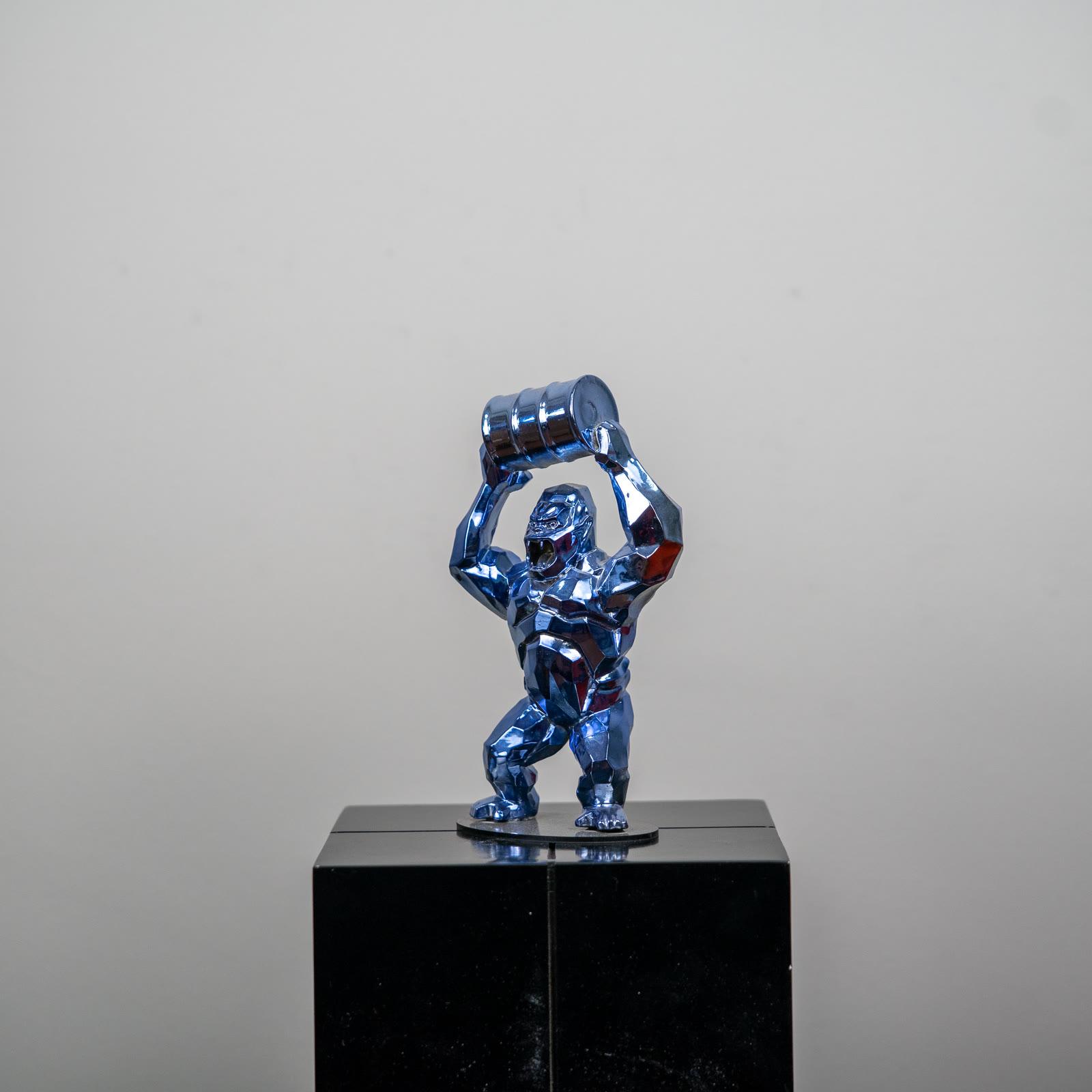
The metallic blue faceted gorilla carries a contemporary, graphic temperature. Planes break the light. The blue sits near pop art’s commercial color: more mirror than flat paint, and still readable from far away as one color.
The overhead gesture reaches toward the ceiling. The room has to leave room for that reach.
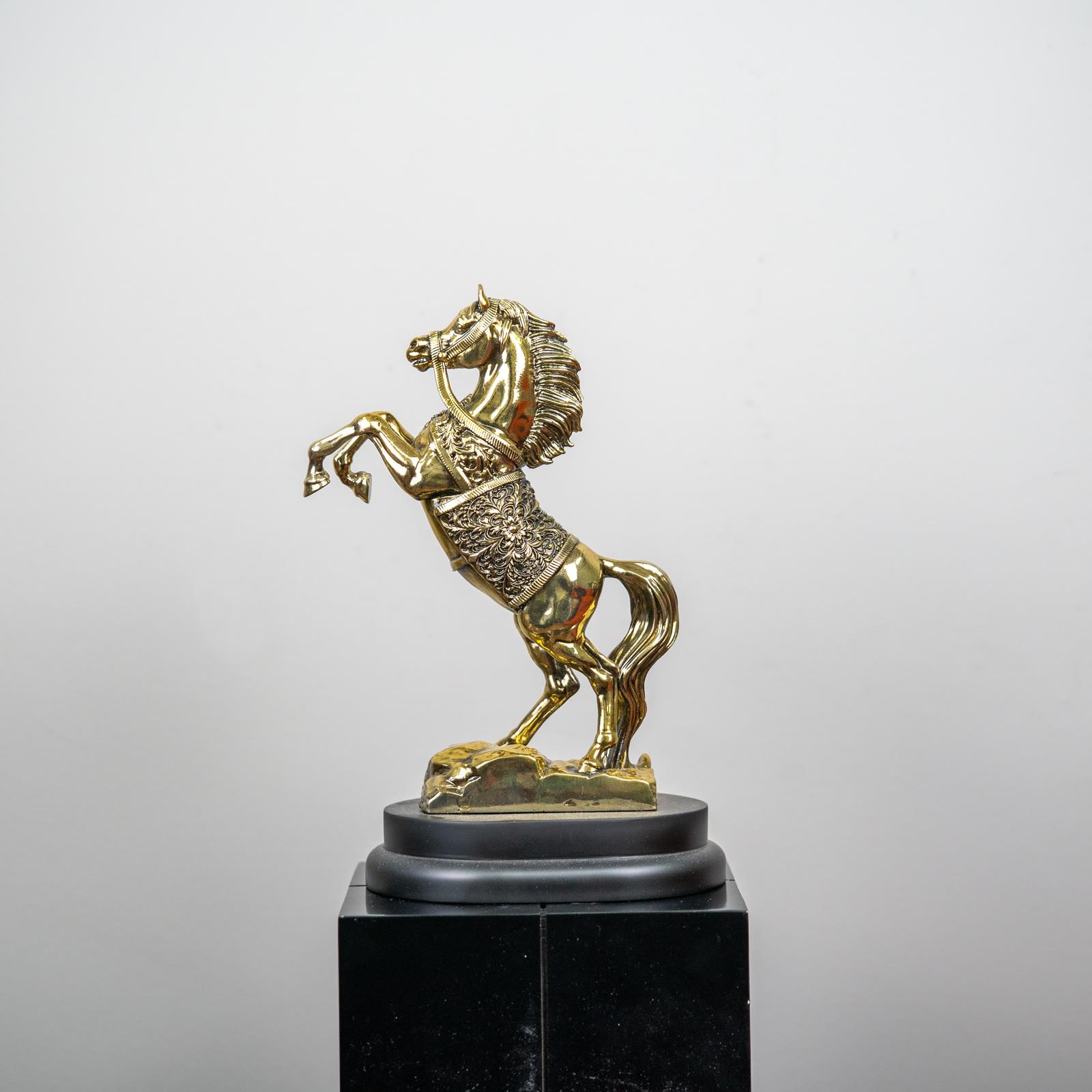
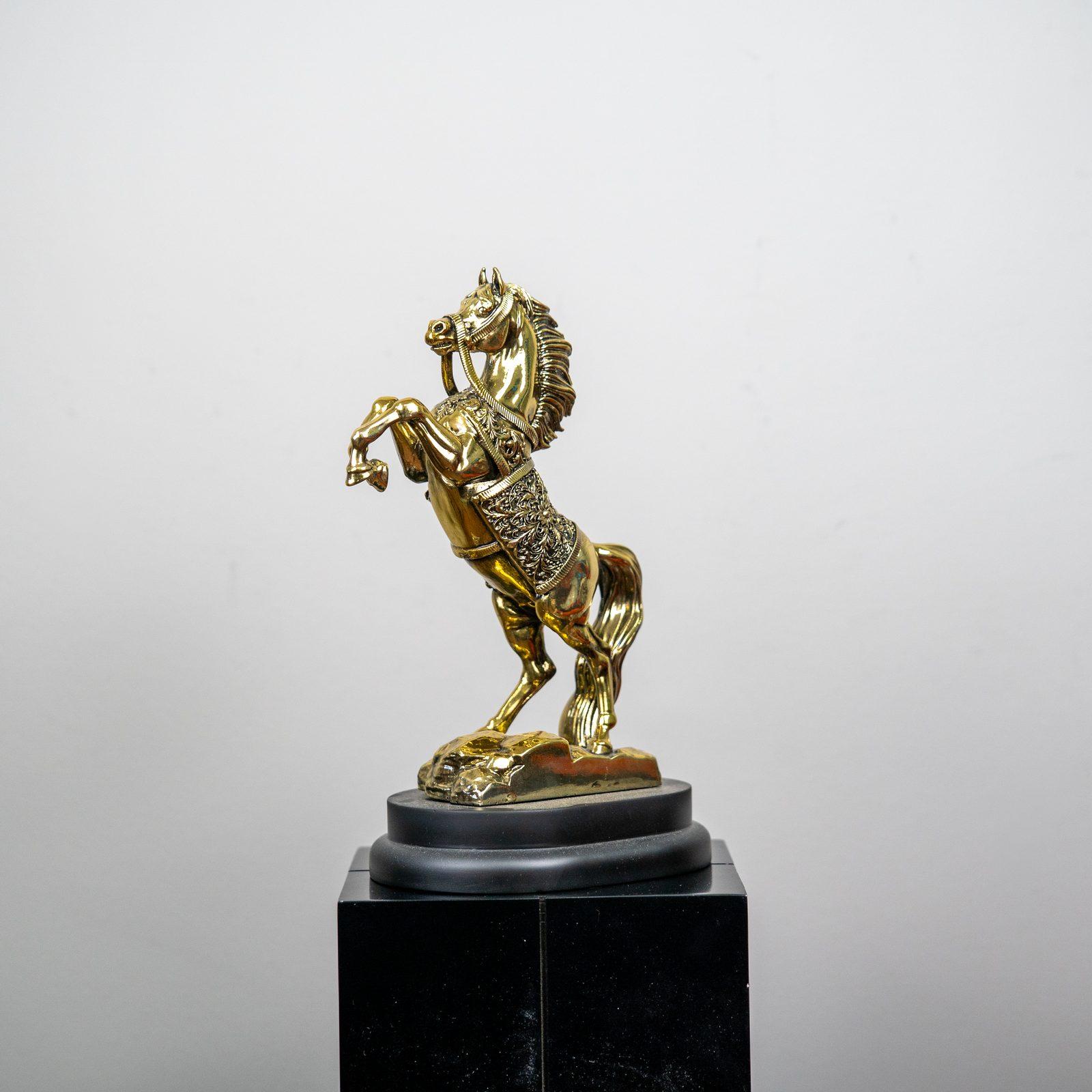
The golden rearing horse speaks from another tradition. Raised surface, a dark pedestal, and a body lifting upward draw a line of classical luxury. It does not resemble pop art’s flat color.
In the conversation about large objects it is still a neighbor, because the room owes it clearance and a sightline too. The two languages can share a home if they do not cut each other’s sentence in the same corner.
Choosing one does not exile the other. The blue mass is easier in a more graphic hall. The gold horse is easier on a heavier ground.
The selection is for seeing the stances side by side. Which one speaks at the same temperature as the rest of the room becomes clear after a walk around the actual space.
Mix-ups about scale
The first mix-up says bigger is automatically more serious. Seriousness comes from clearance and from where you put the thing. A large form jammed into a narrow hall looks blocked, not serious. The second mix-up says large objects belong only in lobbies.
A corner of a home can do the same work if it does not close the path. A lobby is not a required stage.
The third mix-up treats the large piece as a substitute for empty space. The relation runs the other way. As volume increases, the quiet around it needs to increase too. The fourth mix-up expects metallic blue and gold, together, to look richer.
Two strong temperatures shade each other. One of them going quiet is what makes the other rich.
The fifth mix-up assumes the empty studio in a photograph is already waiting at home. A studio is built to give the object room. A home is built for other work. Placement begins by closing that difference.
Inventing a measurement does not close it. Walking does.
What to check before it lands
Walk from the door to the place you have in mind. If the path narrows, if something projects at shoulder height, or if a door opens exactly there, the place should change. Then look from where you sit.
If the form falls directly in front of a screen or a window, the two race. Shifting one of them is enough.
Think about finish on its own. Metallic blue reflects the colors around it. A shouting poster opposite will be carried on the sculpture as well.
Gold is calmer on a dark ground and more ceremonial on a very pale one. See which you want in daylight and again in the evening.
One large piece stays more readable than two. Take the second to another room, or to a more distant axis. The essay on scale continues this as a matter of proportion.
The weight of a single piece explains why the decision is finished with fewer things, not more. The practical summary is a clear path, a quiet ground, and air above.
A short closing
Indoors, a large art object works as a way of seeing, not as a chart of sizes. Visual weight, somewhere to walk, and the way a finish reflects either build that seeing or break it.
A blue faceted mass and a gold horse rising carry the same responsibility at two temperatures. The pages on fit, on large figures, and on a single statement divide that responsibility so it can be read. At home, one walk around the room is the summary of all three.