

Why does scale matter?
Scale is the design decision that sets the voice a figure will have in a room. The same character can whisper on a desk, write a sentence on a console, or become a mass in a hall. The form stays, and the meaning changes. Scale is one of the piece’s first decisions.
Small is not trivial, and large is not automatically more serious. A small piece can hold the whole tempo of a desk. A large piece can merely narrow a passage if the air is wrong. What matters is the proportion between that presence and the room.
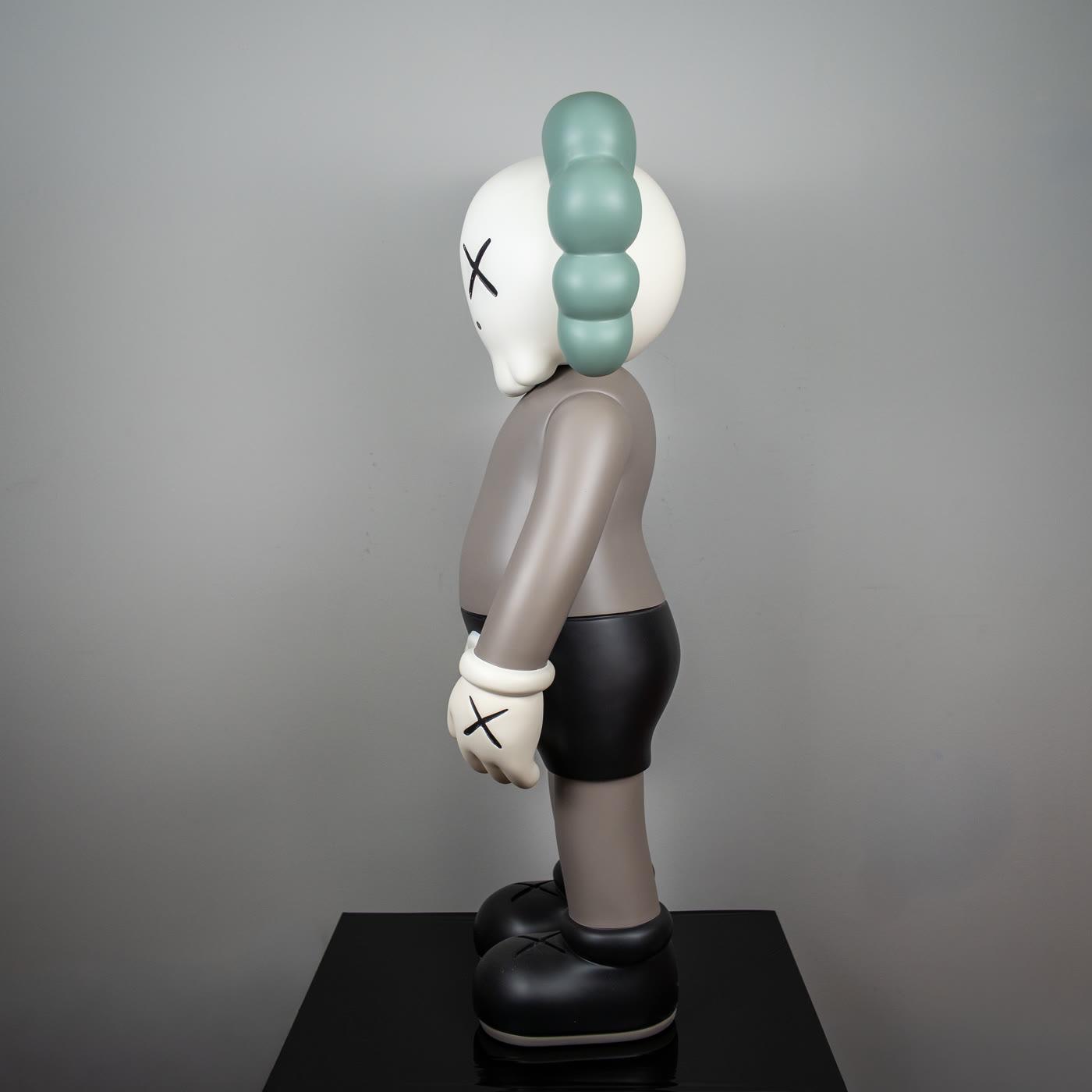
The Companion with sage ears asks the question with a quiet silhouette. A standing body, the color of the ears, and a short detail read both from across the room and from close up. Where you place it comes before the question of how many units it is. Choosing the right scale begins with the same question.
Scale as a design decision
When a designer changes the scale, the piece is not merely enlarged. The rhythm of the joints, the distance of the face, and the share of empty space change too. A figure that fits in the hand is read by turning it. A form that stands on the floor is read by walking around it. Two ways of looking are two experiences of the work.
This decision cannot be separated from color. A matte surface multiplies shadow at a large scale. A glossy surface gathers like a jewel when small, and begins to reflect the room when large. The same paint does two jobs at two sizes.
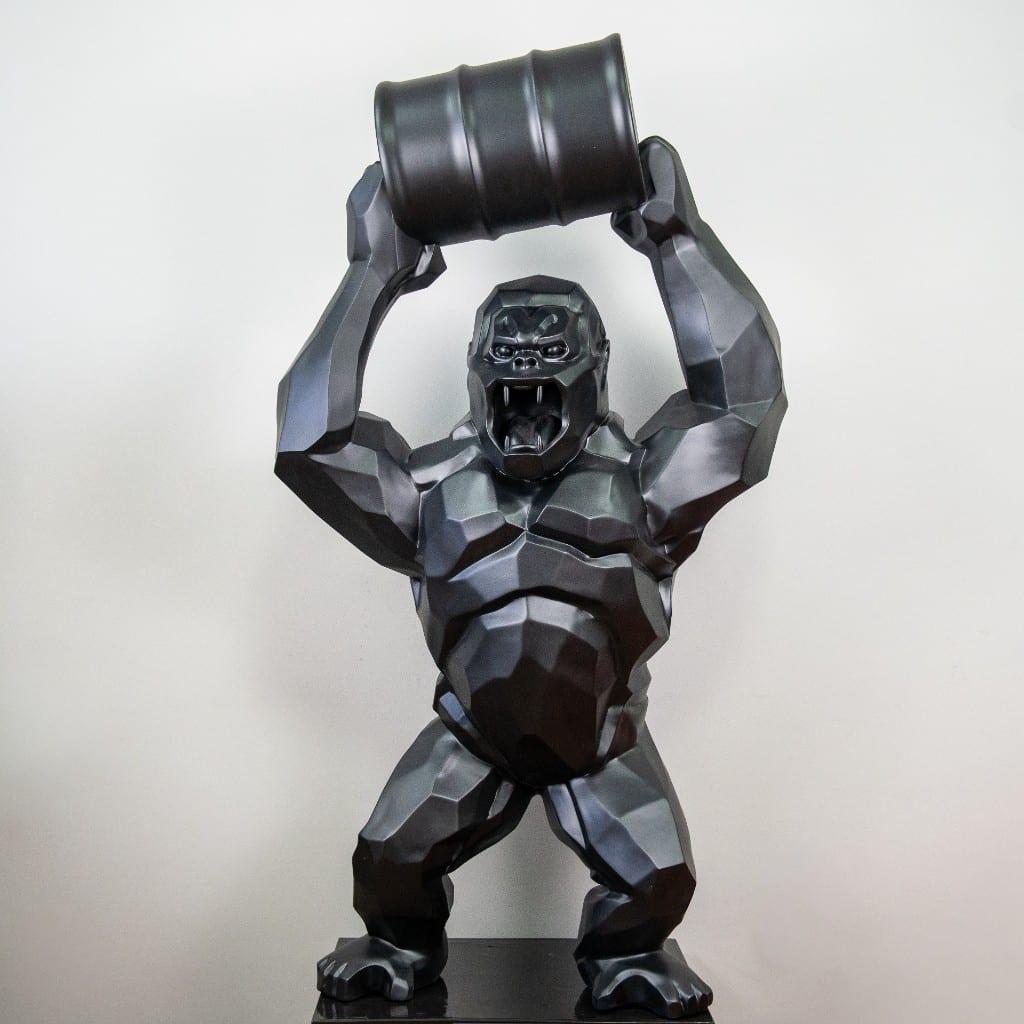
The faceted matte black gorilla shows the sculptural side of scale. An angular shoulder and a barrel overhead read only when there is air around them. Wedging the piece into a row of shelves cancels the design decision. The piece was thought together with the air it occupies.
What Bearbrick percentages describe
In Bearbrick conversation, a percentage is the manufacturer’s own system. Medicom publishes 100% as 70 mm, 400% as 280 mm, and 1000% as 700 mm. The chart gives the platform a shared language. Buyers should confirm the current chart with the manufacturer’s own source. Charts get rounder each time they are retold.
Those millimetres should not be read as the size of the pieces in the Popüler Sanat selection. The percentage system belongs to Bearbrick’s own family. A figure in our edit may sit inside that system or outside it. The space a piece will occupy should be stated for that piece. Another product’s chart does not stand in for yours.
Memorizing a percentage does not replace measuring a room. The difference between 400% and 1000% can be the difference between a shelf and a hall. The depth of your wall, the swing of your door, and the gaze from where you sit are more concrete than the numbers. A closer reading sits in Bearbrick sizes.
Confusions about scale
The first confusion puts every large figure in the same family. A platform’s percentage system and a sculpture’s own volume do not come from the same chart. The air a gorilla occupies and the stance of a Companion are two design decisions. Forcing them onto one number blurs both.
The second confusion trusts the scale in a photograph. A close crop makes a small piece look monumental. A wide angle makes a large mass look mild. A book, a door handle, or a hand beside the figure makes the photograph more honest. If that reference is missing, the measure should be asked in words.
The third confusion treats scale as status. Larger does not mean a more complete collection. Three consistent small pieces on a desk can build a clearer way of looking than one giant stuck in a hall. Status is the right use of emptiness.
The room and the figure
The room is the figure’s invisible pedestal. A low ceiling cuts a vertical form early. A narrow hall squeezes a mass whose shoulder meets the wall. A wide, quiet floor can carry both a Companion and a more sculptural form. Carrying them does not mean stacking them on the same spot. Each one asks for its own breath.
Eye level is part of scale. A piece you look at while seated is comfortable a little below the eye, or level with it. A piece you pass while walking greets you when the shoulder line is near. A top that sits too high speaks only to the ceiling.
Light enlarges or reduces scale. Day from the side lengthens the shadow and makes the piece feel wider. A single spot from above turns the form into a vitrine object. When you choose the measure, you also choose the direction of the light.
Looking by comparison
Thinking about two forms side by side teaches more than memorizing a number. The Companion works through a stance close to a human silhouette and a quiet change of color. The faceted gorilla turns an animal’s mass into an angular language and holds a barrel overhead. One can live in a niche. The other stays closer to the floor.
The question of which is larger should come after the question of where each one stands. If the niche is tight, the sculptural mass will not fit there. If the floor is crowded, a quiet standing figure is a gentler focus. Comparison is a rehearsal of placement.
How large forms behave in a room continues in where to place a large figure. The lesson there is the same: walk, watch the door, sit, and look again. The chart becomes useful after that round.
Choosing the scale
The right scale is the one the room can carry, the one the eye can rest on, and the one that does not break the piece’s design decision. A Companion can whisper at that scale. A gorilla can speak more heavily in another corner of the same house. Both do not have to speak in every corner.
Percentages and millimetres are a platform’s shared language. Confirm the current chart, then do not put that chart in place of your own piece. Your question is simpler: how much air does this form want, on this wall, in this light?
When you choose from the collection, do not leave scale as a footnote. Make it the first sentence. If that sentence settles, color and surface say the rest.