
How do you display figures?
Figures are on display when the arrangement gives the eye a place to rest. The arrangement is not a full shelf. A pedestal, a repeating shelf rhythm, one piece standing alone, or a group held by color: these are four separate ways. Apply all of them to the same corner and the ways erase one another.
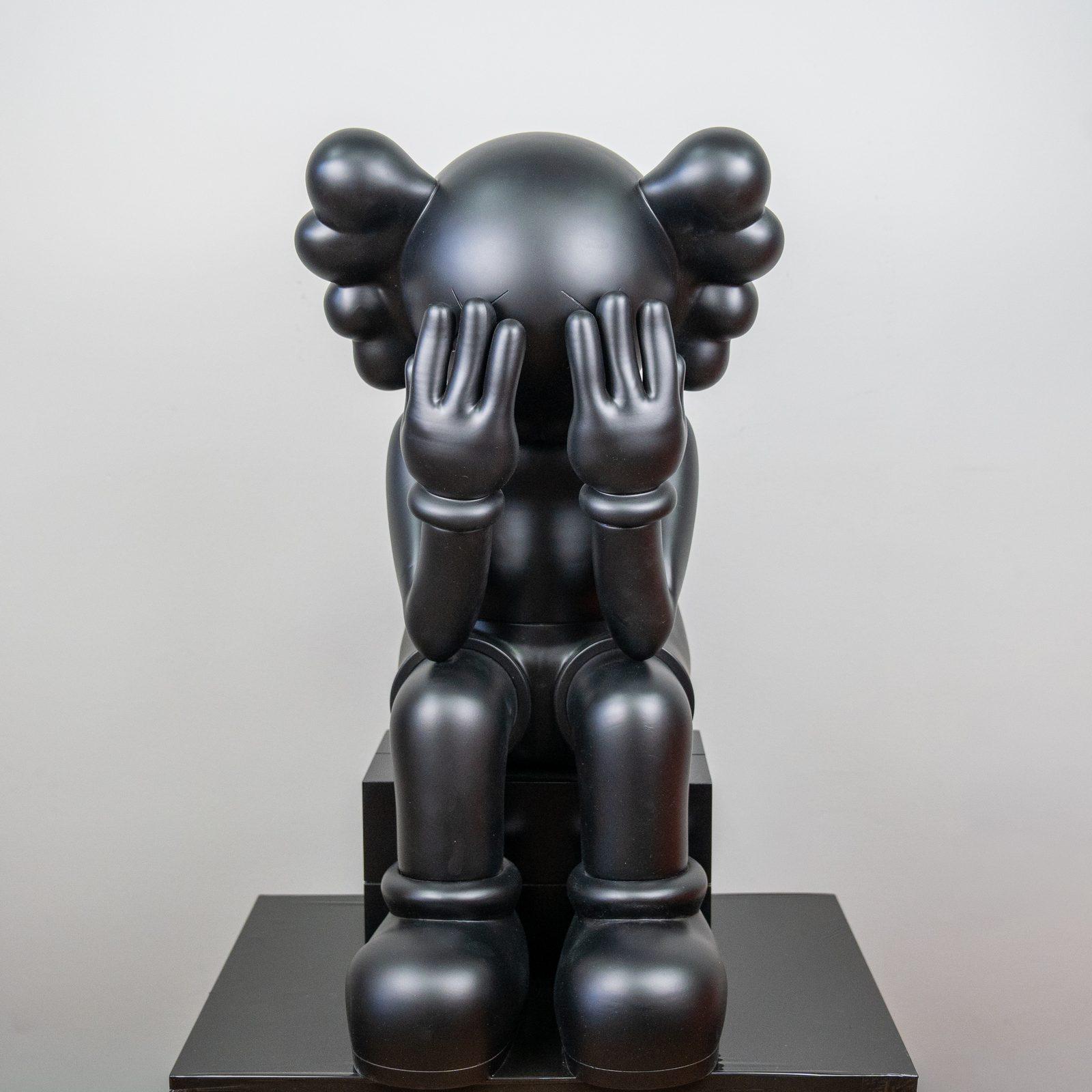
Which way is yours depends on the surface of the piece and the emptiness of the room. Glossy white can stand like a sculpture on a pale ground and work alone. A matte black pose wants a deeper focus in a dark niche. Before you line the two up, ask which way each one wants.
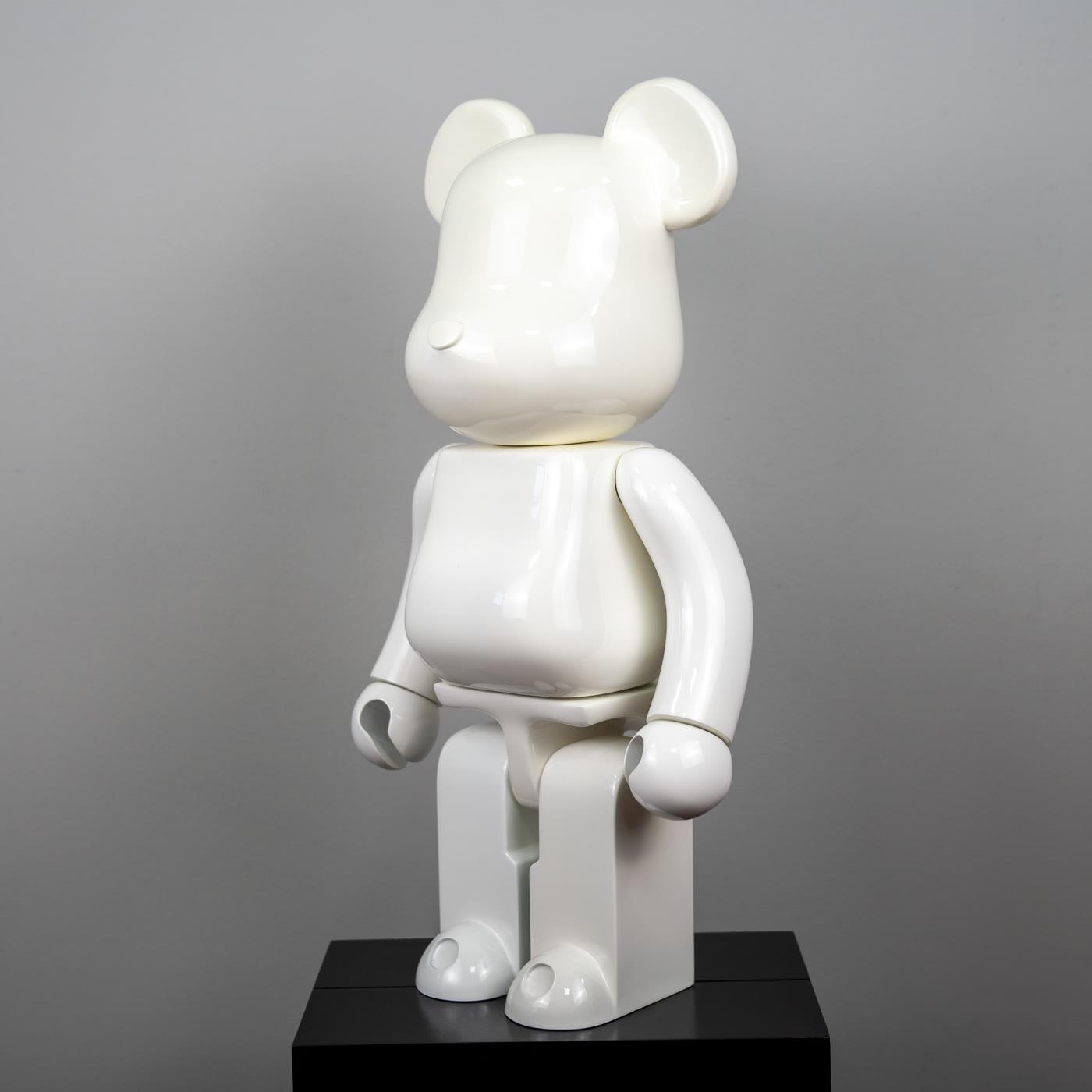
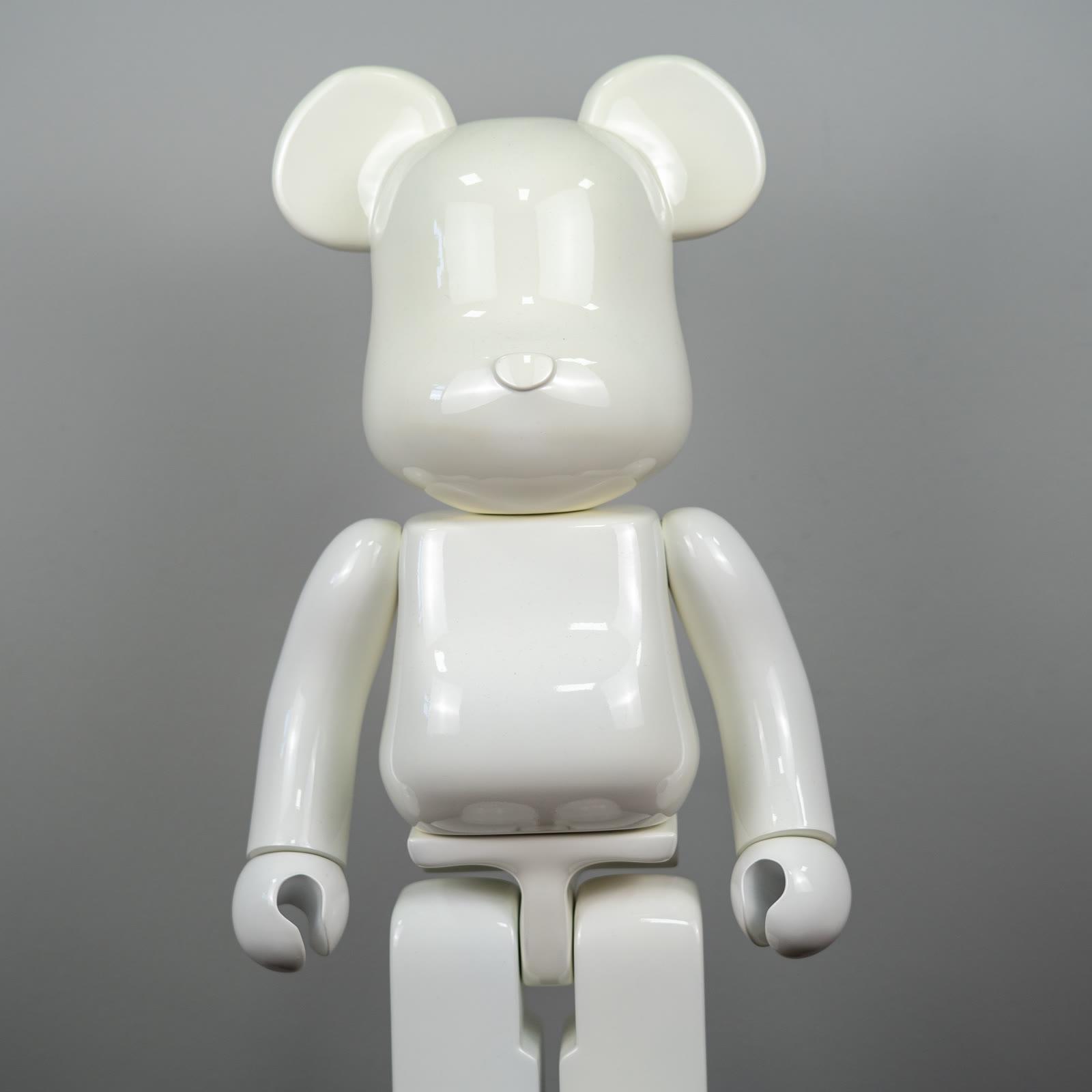
The glossy white Bearbrick is the quiet end of this piece of writing. One color, a high gloss, a familiar silhouette. It can rise on a pedestal or join the rhythm of a shelf. Other pieces in the collection sit closer to one of the same four ways.
A pedestal lifts the piece off the floor
A pedestal separates the figure from the pattern of the floor and from everyday objects. A low, wide plinth carries a large form. A slim, taller stand brings a small figure toward the eye. Neither has to be ornate. A boundary matters more than decoration.
The color of the pedestal should not compete with the piece. Under a glossy white bear, a dark and plain ground clarifies the silhouette. A continuation of the same white glues the form to the wall. Under a matte black piece, stone or pale wood makes the shadow readable.
Not every piece needs a pedestal. When everything is raised, nothing is raised. One or two pedestals in a room are enough. The rest can stay on the shelf’s own surface, or on the table.
Shelf rhythm
Shelf rhythm does not mean equal spacing. One piece can sit forward, one a little back, one alone in a bay. The eye likes repetition and tires of exact repetition. What builds the rhythm is a kinship of gaps. Every gap does not have to match. Every gap should breathe.
If books make a horizontal band, the figure should not disappear inside it. Where the band ends, a single piece can make a vertical accent. If the accent is scattered into every bay, the shelf returns to a storage row.
Depth is rhythm too. Lining every figure on the front edge of the shelf puts them in a queue. Setting one back by the thickness of a book lets the shadow fall separately. That small retreat turns a crowded shelf into a display.
One focus
One focus asks a piece to finish its sentence. A console, a niche, or the end of a hall is enough for the job. Every object placed beside it should add a word to that sentence. If the word is unnecessary, emptiness is better.
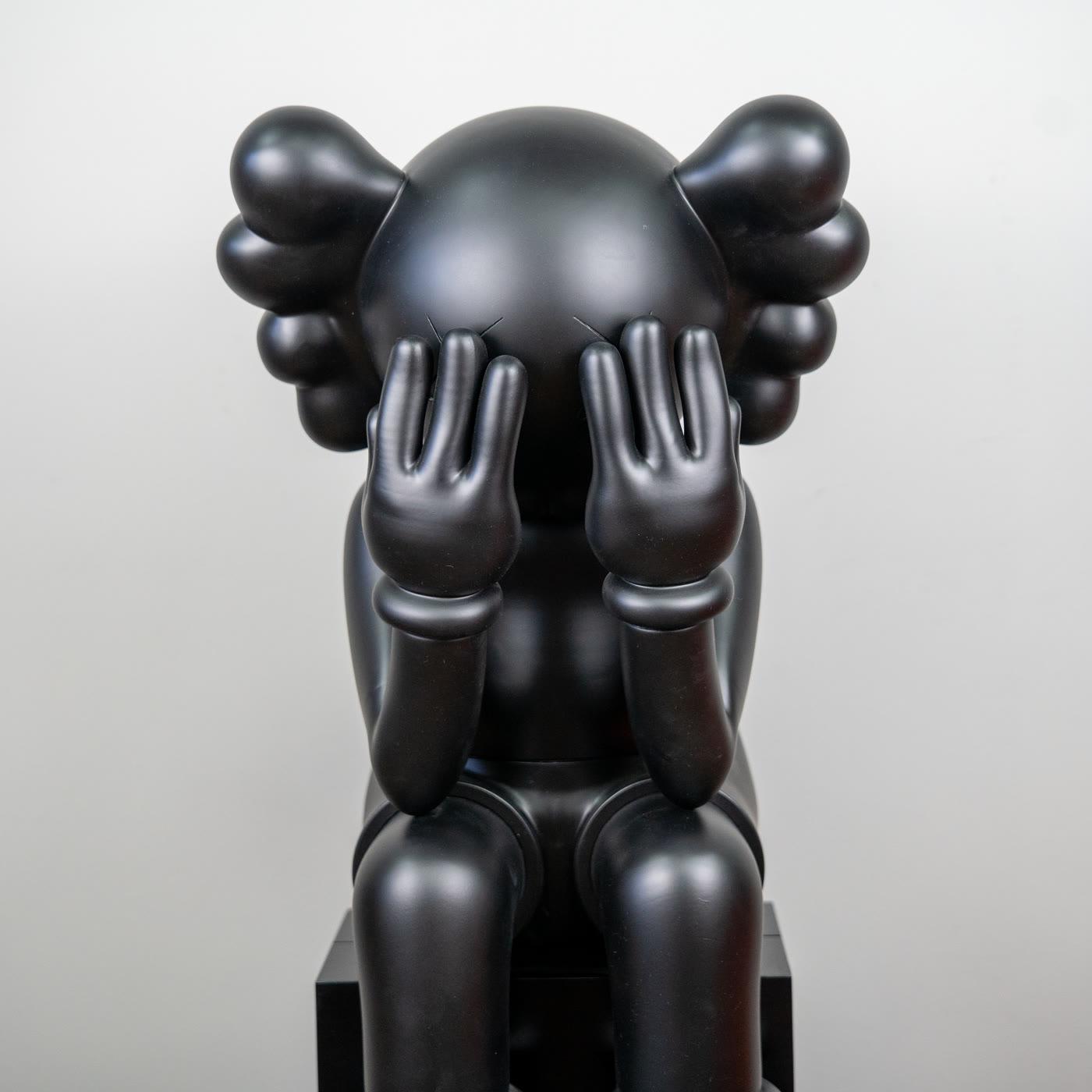
The matte black Passing Through is strong as a single focus. The pose is already in motion. The surface is quiet. On a dark wall, light from the side draws the silhouette. A second moving form beside it drops the suspense of the pose.
Glossy white does the same job at a higher volume in a pale room. It gathers light and enlarges the emptiness around it. Making each of them a single focus in a different room builds a calmer house than placing them shoulder to shoulder on one shelf.
Grouping by color
Grouping by color is not the same as lining up one brand. Matte blacks make one family. Pale, glossy surfaces make another. When a family stands together, the eye rests. A row in which every piece tries to be its own mascot tires the eye.
Leave a difference inside the group. Three blacks can be three stances. If one stands, one holds a pose, and one is more sculptural, the group stops being a stain. Color unites. Stance separates. The two work together.
Leave an empty bay between groups. If a black group and a white group touch, both become an exercise in contrast. A book, a gap, or another room between them lets each group finish its sentence. That is the domestic version of a gallery wall. It continues in gallery aesthetics.
Light, and the limit of the four ways
All four ways stay unfinished without light. A pedestal with no visible shadow looks like a box. Shelf rhythm flattens under a light stuck to the ceiling. One focus disappears in the dark. A color group muddles under a bulb of the wrong warmth. Lighting is the continuation of placement.
Direct sun washes glossy white and tires the surface over time. The same sun shows dust sooner on matte black. A curtain, side light, or moving the piece one step inward is enough in most homes. There is no need for a museum claim.
If the collection grows, all four ways may not fit in one room. Then the idea of a room for the collection helps you separate them. Pedestals in one room, shelf rhythm in another. Confusion starts when you try to prove all of them on a single wall.
Try the four ways in order
The first way is the pedestal. Lift the piece onto a temporary box or a thick book. If the gaze rises, consider a lasting plinth. If it does not, set the piece back down.
The second way is shelf rhythm. Take three pieces off the same line. Set one a step back, and leave one alone. If the row looks like storage, open the gaps.
The third way is one focus. For a day, remove everything beside the piece you like most. Notice whether you miss the neighbors. If you do not, that piece can stay alone.
The fourth way is color. Bring two or three pieces of the same tone together and separate the rest. If the group calms down, the palette of the house has appeared. If it does not, the problem is not color. The stances are too alike.
Keep the display plain
Display is not showing more pieces. It is letting fewer pieces be seen more clearly. A pedestal, a rhythm, one focus, and a color group are four tools of that clarity. You do not have to use all four. Using one of them well is enough to keep a house from becoming storage.
A glossy white bear and a matte black pose are two sentences. Raise one. Give the other a niche. Put a little air between them. The display begins in that air.
Light and the room complete these four ways in the rest of the journal. The piece itself waits in the collection. Choose the way first, then set the piece on that way.