
A room builds a sequence, storage piles
A collection room is not a pantry with shelves in it. It is a room with a sequence. You come through the door, the eye goes to one piece, then to the next, then it stops. Not everything you own has to be visible. Keeping things away is half of display. A few pieces are lit. The rest rest in shade or in the box. A room you cannot sit down and look in is storage, whatever you call it.
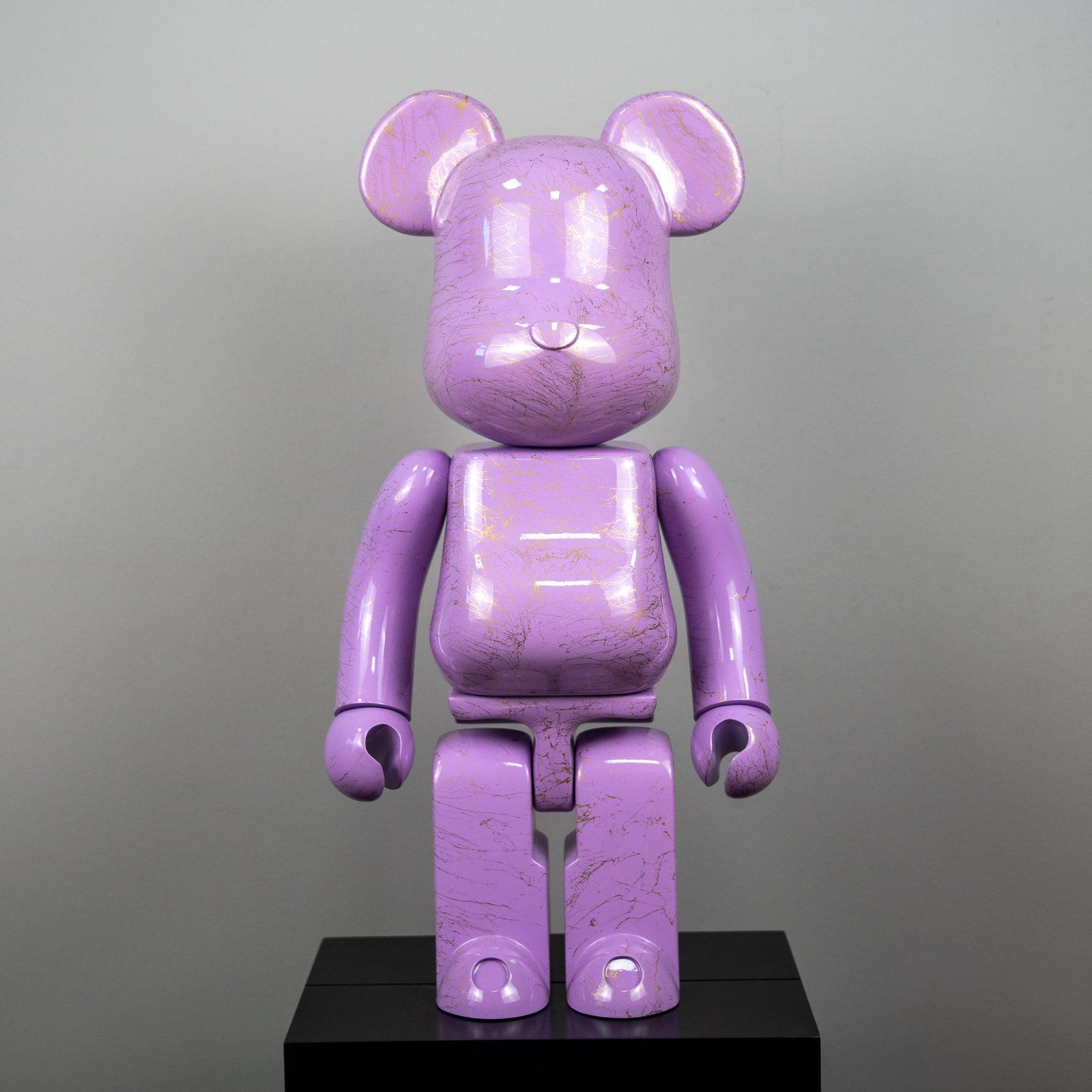
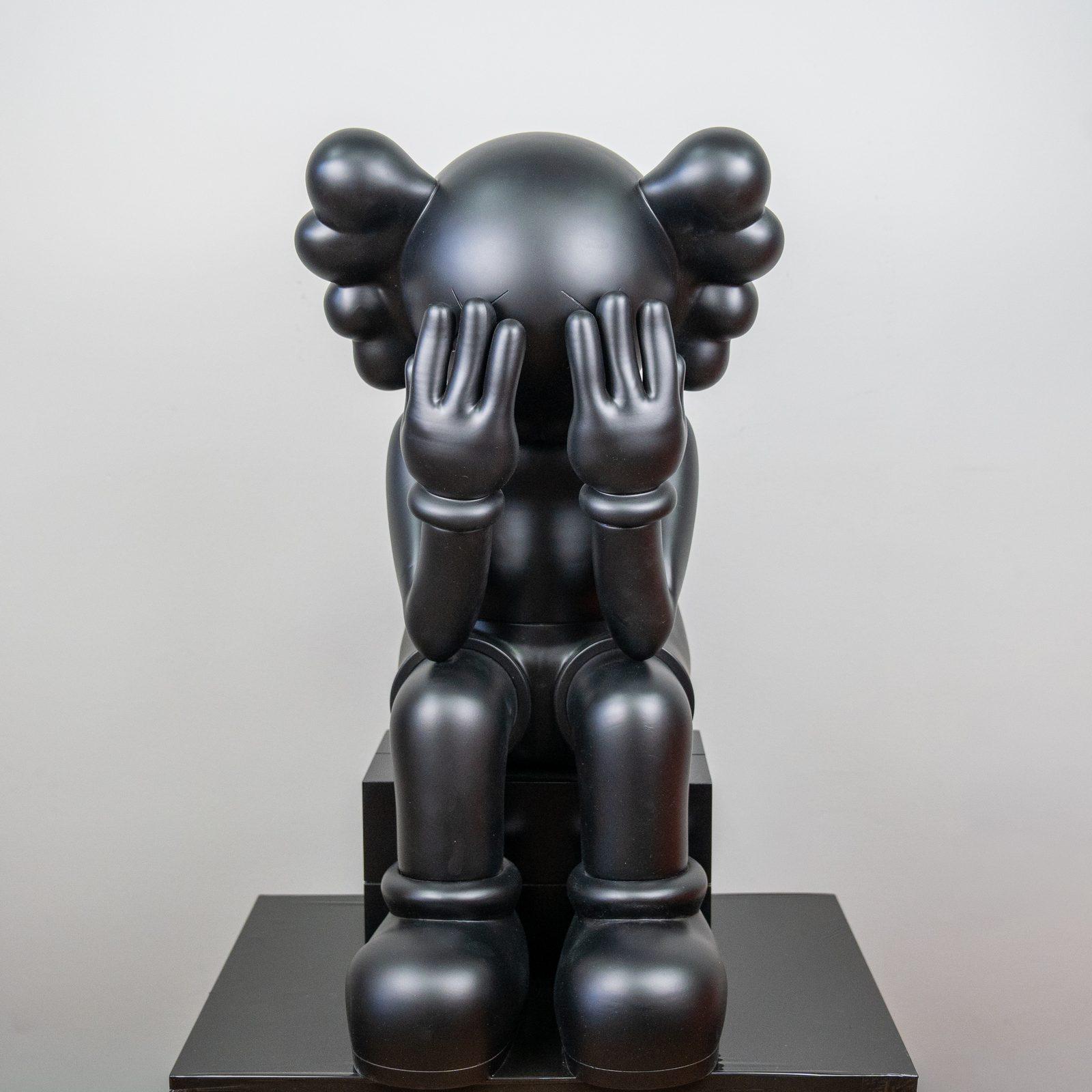
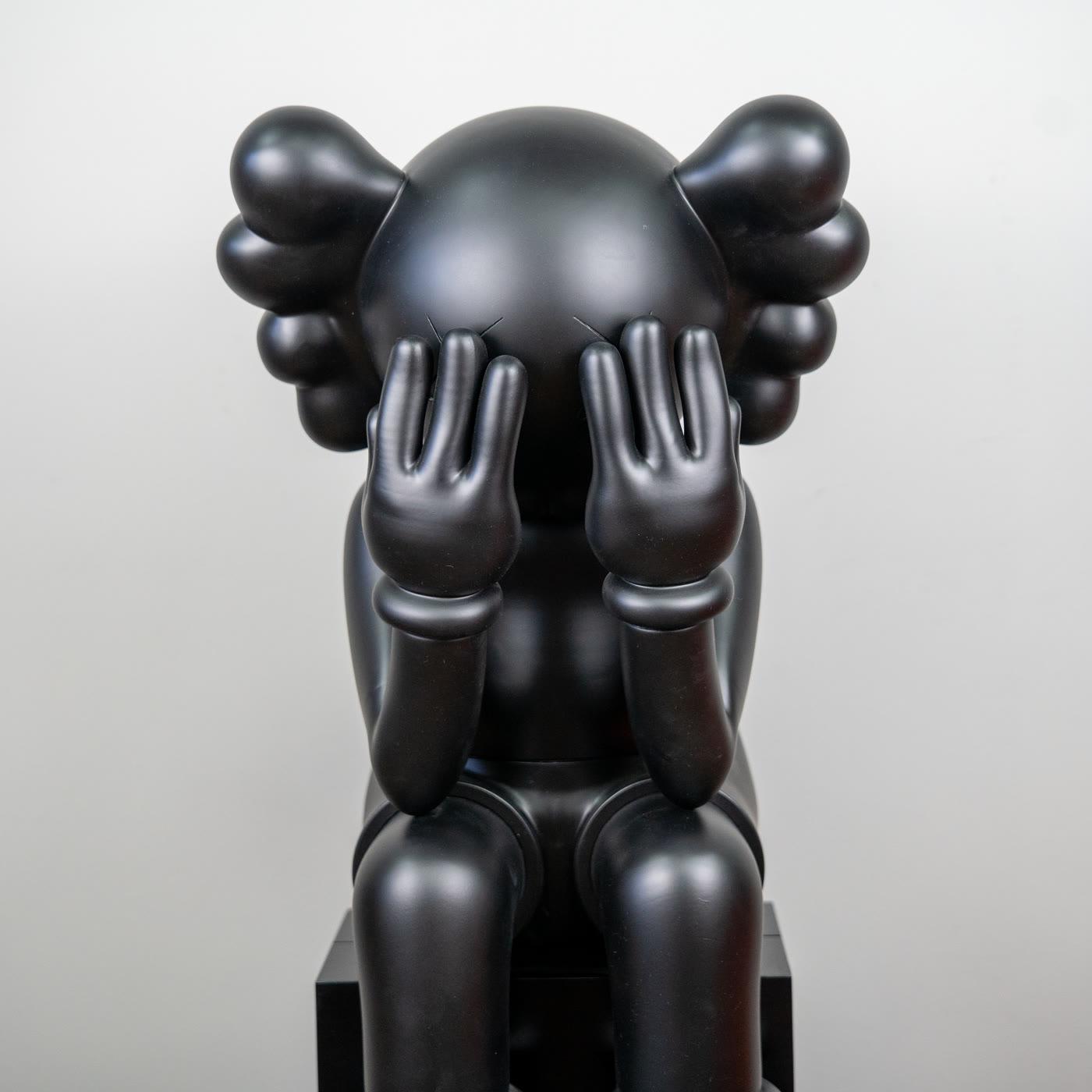
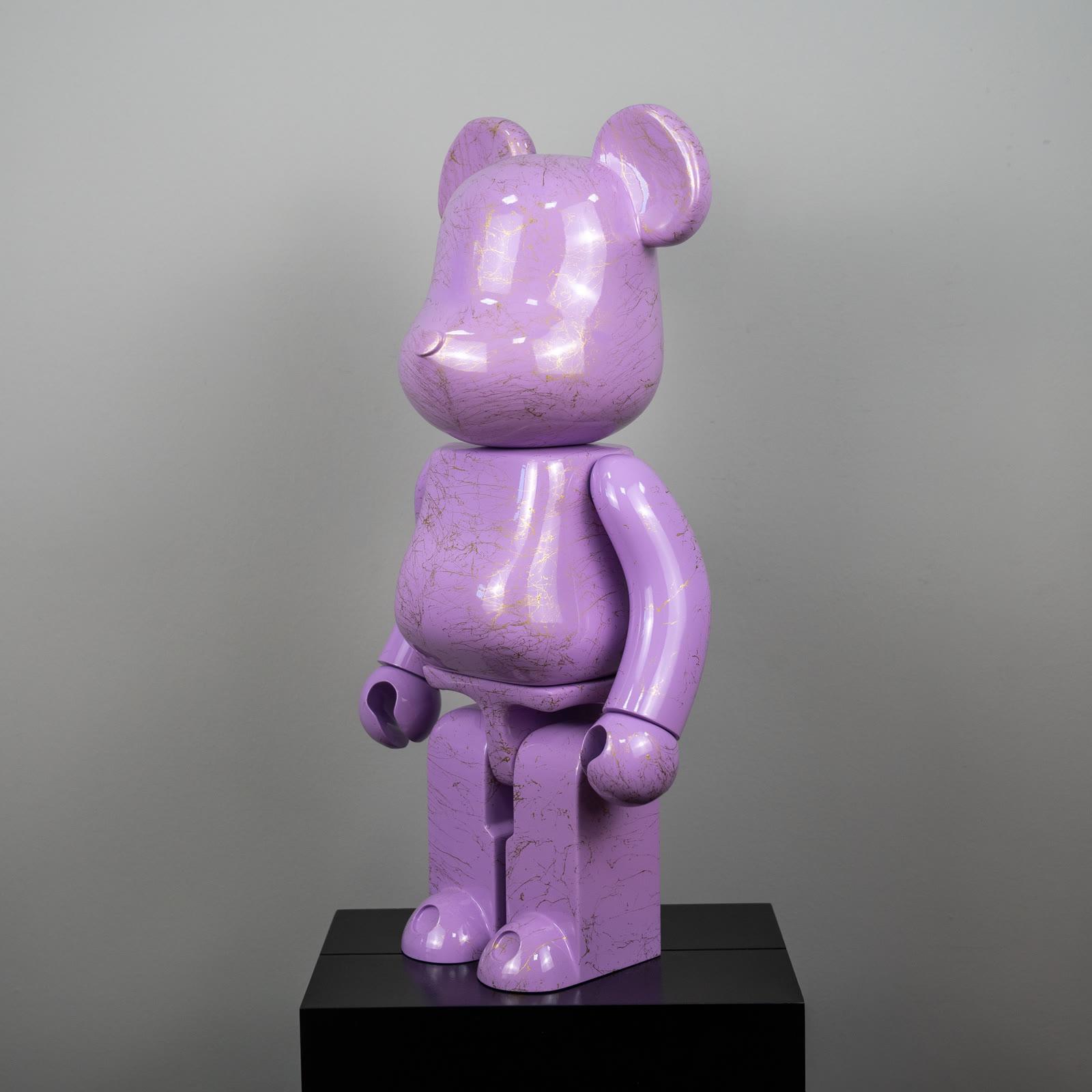
A glossy purple bear with a gold marble pattern can be one color event. A matte black figure that covers its face belongs at the quiet end of the sequence, not beside that color as a pair of samples. Lining them up on the same shelf turns the room into a shop drawer. Starting a collection describes how to begin without putting everything on the wall at once. This article is about holding the room once that beginning has grown a little.
Choose what will be seen
Take things away first. Three or four pieces you want to look at this season are enough. The rest can stay closed, away from dust and sun. An empty bay on a shelf is not a lack. It is the breath of the sequence. A full shelf tires the eye and makes no piece memorable. The empty bay is the frame around the piece you will remember.
Group by noise. Glossy marble patterns shout together. Matte blacks stay quiet together. Do not equalize them on the same sightline. The purple marble bear reads when it enters the room as the only purple event. Add a second marble pattern and a third, and purple stops being a pattern and becomes vitrine noise. Matte black Passing Through is then either a pause on another wall or it goes back in the box. Both of them do not get to be the hero.
A room you cannot sit in is storage
A chair, a bench, a threshold where you can stop. If none of those exist, the room is passed through, not visited. A collection should not be a corridor consumed in three standing seconds. The height your eye meets when you sit is the real display height. Far above that is a storage shelf. Far below it is the line you hit while sweeping. Put the chair a little to the side, not dead opposite. Looking straight on turns the room into a waiting lounge.
Leave the walking line empty. The swing of the door, the drawer, and the place where boxes come down are not a plinth. If a child or a pet comes into this room, the lowest shelf should not be the piece you love most. The piece you love is where you see it when you sit. The rest can rotate.
Do not light everything equally
Equal light wants to mean equal importance, and it gives importance to nothing. Light two or three pieces. Let the others live in the general light of the room. Lighting a figure describes how gloss shows the lamp and matte shows the form. A purple marble pattern becomes a line in a soft side light. Matte black keeps its silhouette under flat light from above, and becomes a mask under light from the floor. If you do not want the mask, do not put the lamp on the floor.
2700–3000K is a warm range many homes already use. It does not have to be the law of this room. A warmth that does not fight the rest of the room is enough. Do not treat daylight as a spot. A glass corridor is a poor address for a collection room. Ultraviolet and heat slowly undo the sequence on the shelf. Do not line what you chose from the collections along the sill. A wall deeper inside the home is a longer life. Glass is not a guarantee.
Shelf, wall, and a single plinth
Not every piece deserves a shelf. Some stand alone on a plinth in front of a bare wall. Some occupy one bay, apart from the neighbor. Ways of displaying sets those options side by side. Using all three on every wall of a collection room produces a crowd. Let one wall be a single plinth. Let one wall be a short shelf. Let the third wall stay empty. The empty wall is the breath of the room.
A box and its foam are not the enemy of the display. A box still closed, or closed again, is the home of the piece that is outside the sequence. Do not line those boxes up as if they were the exhibition. A box in a cupboard, out of the sun, sitting level, is a legitimate archive. Mistaking the archive for the room returns you to the first mistake.
Mistakes that keep coming back
The first mistake is thinking a collection room is a cupboard with shelves. The second is thinking every piece deserves equal light. The third is thinking everything you own should be visible. The fourth is thinking purple and black complete each other on the same shelf. One is an event. The other is a pause. Side by side at the same height, both stay half finished.
The fifth mistake is treating this room as a copy of an interior someone else photographed. Those pictures are not an installation record. Your door and your window are another room. The sixth is treating the front of the glass as the most prestigious place. Prestige arrives together with fade. The seventh is calling the room a gallery without a place to sit. Galleries know about benches.
A sequence you can build in an evening
Bring everything out, then put two thirds away. If what remains includes one color event and one quiet piece, give them separate walls. Put the chair down, come in from the door, and sit. If the eye does not stop anywhere, take something away. Do not add. Aim the light at two pieces and leave the rest to the lamp of the room. Put nothing on the shelf the sun patch walks across.
A week later, sit in the same chair. If you are still looking at the same piece, the room is built. If you are bored, change the sequence. Do not fill the wall. Popüler Sanat does not keep an installation list. It talks about how a piece will stand in your room. Instead of sending measurements, say where the door opens and which wall has the window. A short note is enough for that description.
Fewer pieces, a look that can sit
A collection room is not the whole collection. It is the sequence you want to look at this week. A purple marble pattern can be the event in that sequence. A matte black seated pose can hold the pause on another wall. They do not race at the same eye level. Light chooses a few. The sun chooses none.
Come in and sit down. If the look rests somewhere, the room has done its job. If it climbs every shelf equally, you are still in the archive. Take something away. A box is not shame. It is the archive. The display is not an inventory of what you own. It is the sentence you want to look at today.