
Let the light describe the form, not the lamp
Lighting a figure is not a matter of stacking more lamps on it. A glossy surface shows the lamp itself. A matte surface shows how the planes turn. Light from the side, soft and a little high, describes the form in most homes. A range around 2700 to 3000 Kelvin is a warm, gallery-adjacent band many interiors already use. It is not a law. If the rest of the room is cooler, you do not need to make the piece the only warm spot. Consistency comes before the number.
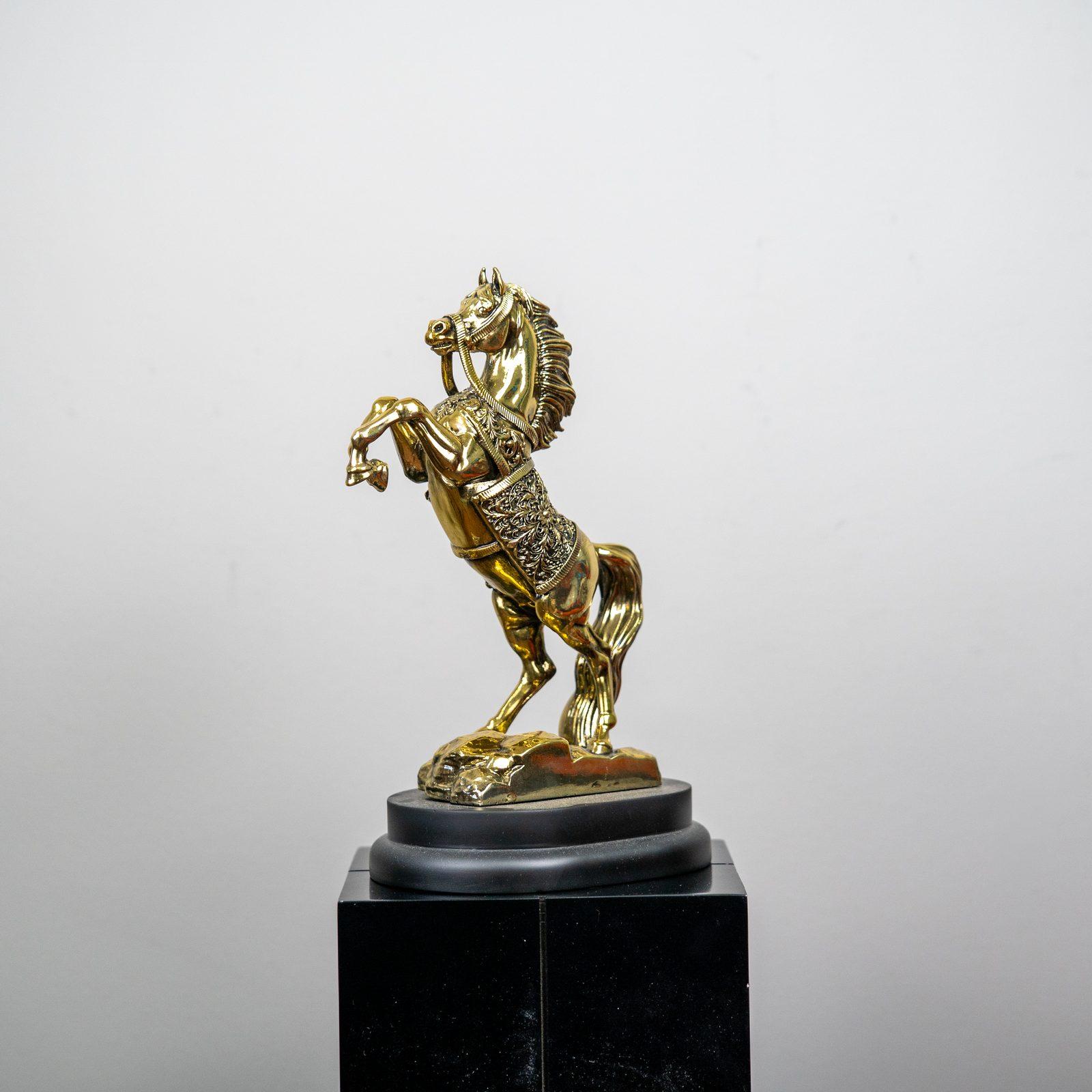
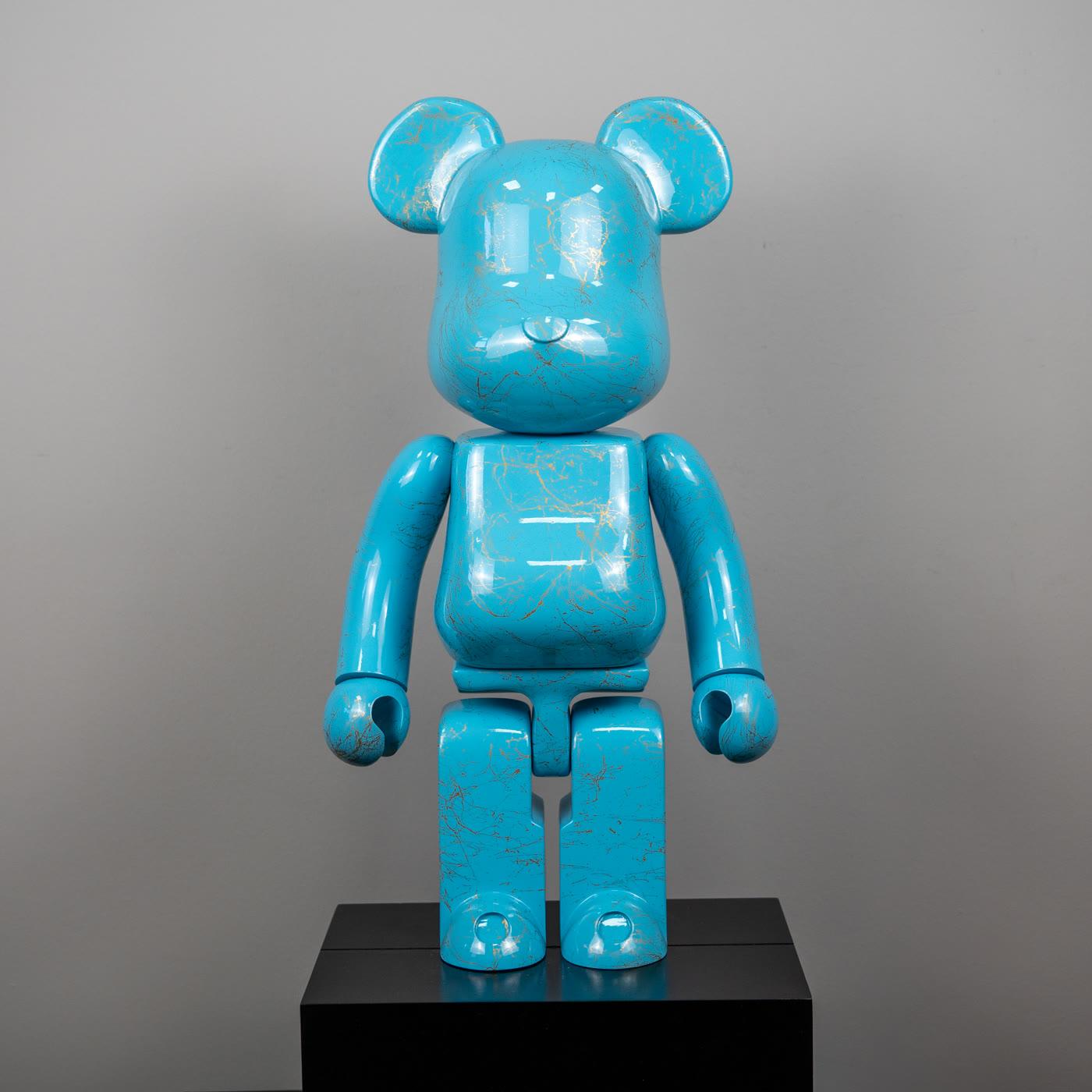
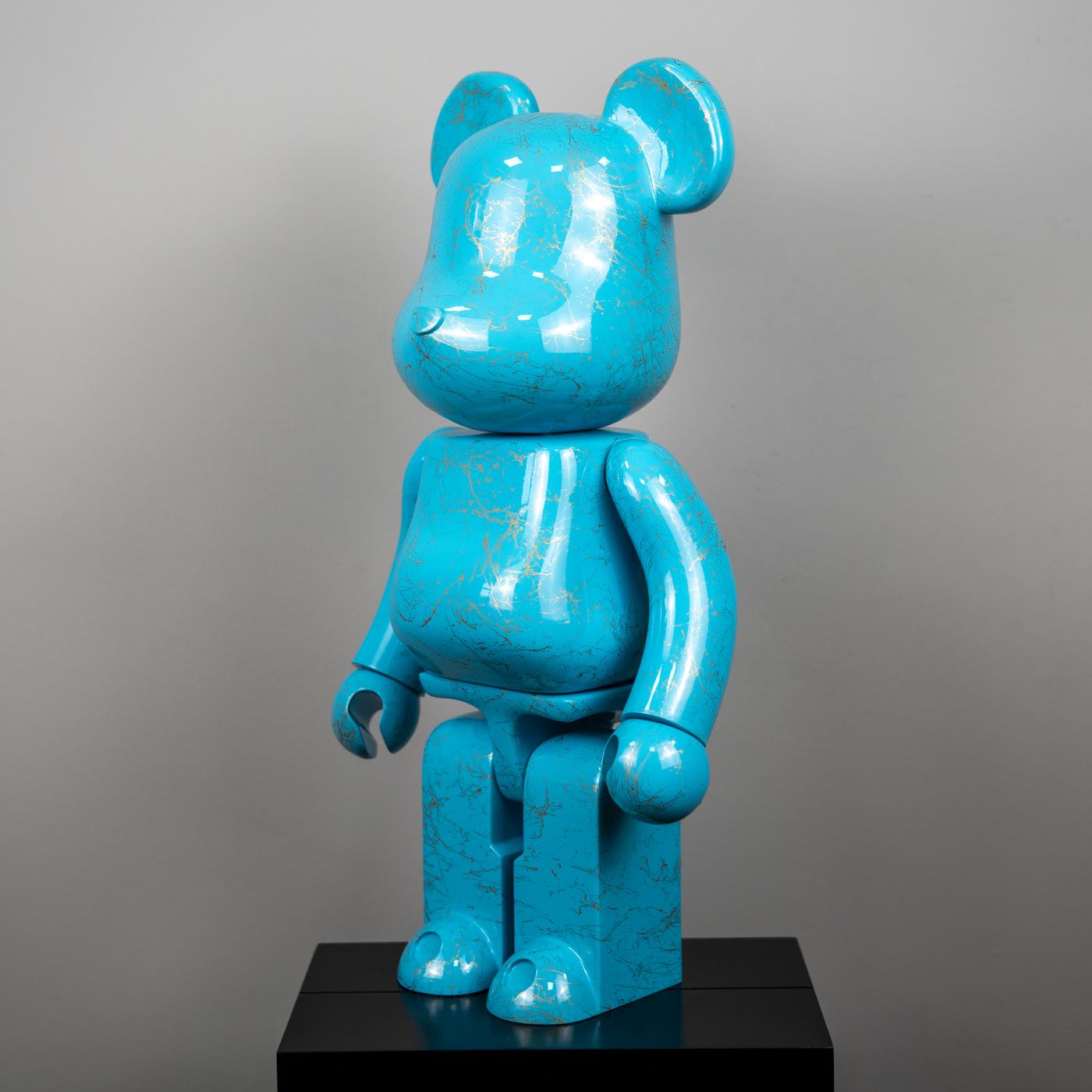
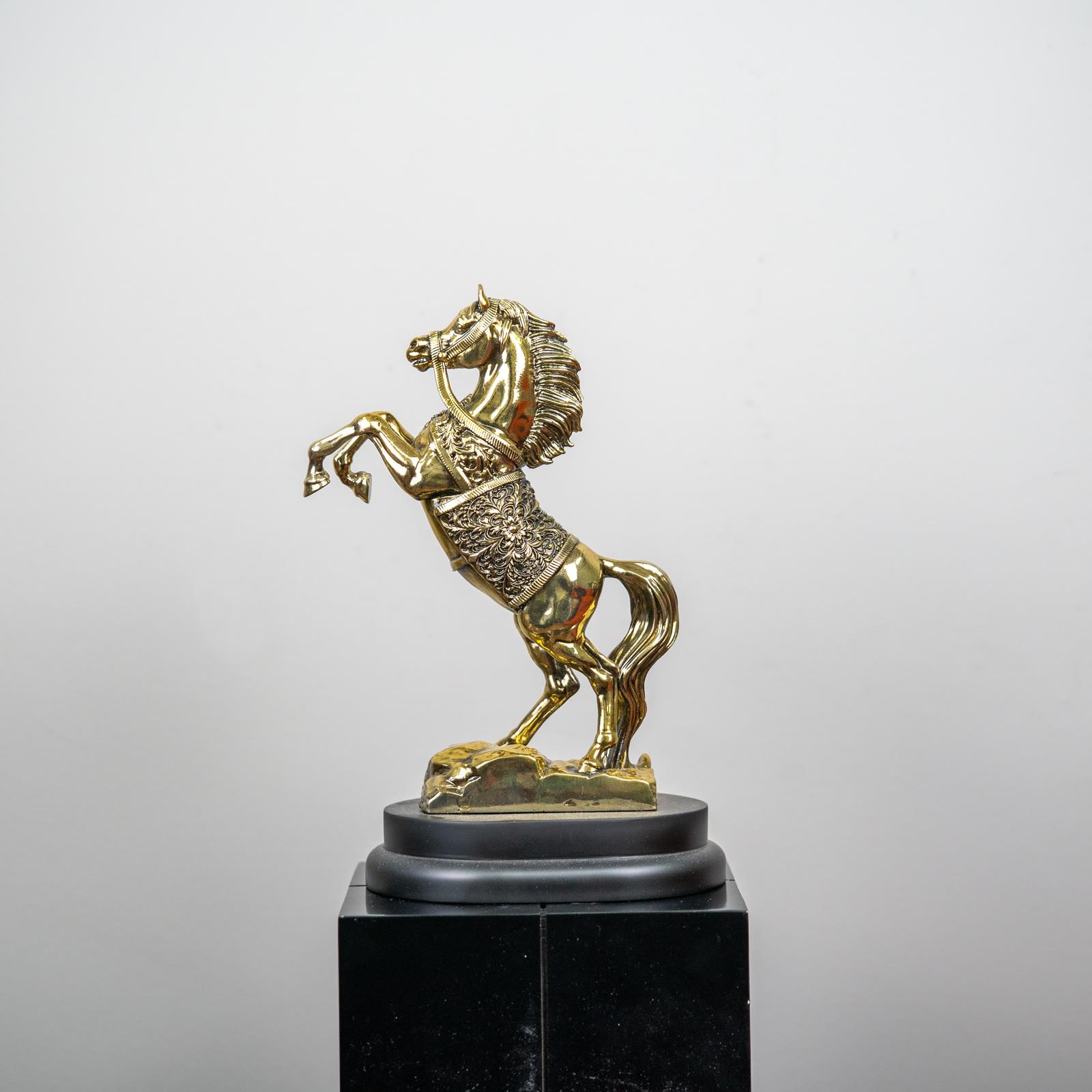
A hard beam from the floor hollows the chin and the eye sockets and turns the figure into a mask. If you want that, it is a separate intention. It is not the default. A gold-tone horse looks as if it wants hard sparks in the metal. A glossy turquoise bear wants its marble pattern to be read. Both of them are clearer from a broad, soft source than from a flat blast straight on. We are not recommending a brand. The direction of the light does the work, not the name on the fitting.
A mirror on gloss, a plane on matte
On a glossy face, do not let the brightest reflection land on the place you want to read. The relief on a horse’s chest, the marble pattern on a bear, the hands of a character: if the reflection eats those, the piece becomes a lamp catalog. Move the reflection to the edge, the shoulder, or a part of the base that is not metal. You try that by taking the lamp a little to the side and a little up. A single spot in the middle of the ceiling often puts a hole in the middle of the forehead.
On a matte surface the problem is not the mirror. The problem is light that arrives flat and flattens the form. Side light separates the planes with shadow. A very steep side light turns every recess into a dark pit. The middle path is a soft wash in which the eye can see both the ridge and the hollow. A gallery habit applies here too: the object should not be the only event in the light. It should be kin to the light of the room.
A gold horse and a turquoise marble pattern
The gold-tone rearing horse is a metallic mass on a black pedestal. Gold takes a hard spark from a small source. A wide shade, or soft light bounced from the wall, lets the raised armor be read. A bare spot shows its own bright point, not the relief. The pedestal is dark, so it can swallow light. Do not leave the place where the legs meet the base in total darkness. That is the sentence where the sculpture meets the ground.
The turquoise marble bear is glossy, so it mirrors the room. The marble pattern can sit like a stain under flat frontal light. Light from a slight side turns the marble pattern into a line. That lamp does not replace daylight. Daylight is variable, and it carries ultraviolet and heat. The load of the sun is a separate subject. An evening lamp does not compensate for it. Keep the piece out of the daytime patch, and turn the lamp on at night.
A warm range is a preference, not a code
2700–3000K is a warmth that does not drop all the way to candlelight and does not run off into office white. Many homes already live in that band. A piece can look good there. It does not have to. If the whole room is cooler, somewhere near a 4000K habit, a single warm spot on the figure makes it look like a stuck-on label. Either keep the room warm together, or leave the piece in the color of the room.
A smart bulb that changes temperature does nothing if it points the wrong way. Direction first, then the number. A dimmer reminds you that you do not have to light the night like a museum. A lower level makes it easier to live in the same room as the piece. A vitrine light at full output turns the living room into a shop corridor. Want that only if you want it on purpose.
When light from the floor becomes a mask
A spot on the floor pushes light from the chin toward the eyes. The sockets go dark. The underside of the mouth and nose takes a hard shadow. On a character figure that produces a mask reading you did not ask for. On a horse it can light the belly and leave the back in the dark. If theatre is the intention, build the stage and choose the neighbors for it. If it is not, lift the lamp off the floor.
A single narrow beam from above is another cliché. A dot on the top of the head, darkness on the shoulder. A broad wash does the work of a narrow point. If you use more than one small source, let them come from the same direction. Two hard lights from opposite sides make two shadows and split the form. Ways of displaying treats light as part of placement, from the shelf to the wall. Light is not an accessory added afterward.
Mistakes that keep coming back
The first mistake is believing more light is always better. More light on gloss only means more mirror. The second is believing light from the floor is automatically dramatic and therefore right. The third is treating 2700–3000K as a rule. The fourth is giving matte and gloss the same lamp from the same place. They do not describe the same form.
The fifth mistake is treating daylight as a free and harmless spot. The sixth is believing a bulb brand will museum-ify the piece. There is no brand here. There is direction, softness, and kinship with the rest of the room. The seventh is building a night projector in front of the window and leaving that same place to the sun by day. The two loads stack.
Try the lamp for one evening
Take a shade you already own and set it beside the piece, a little above eye level. On gloss, see whether the reflected patch sits in the middle of the face or at the edge. If it is in the middle, slide the lamp. Do not raise the power. On matte or on metal relief, see whether the planes separate. If they do not, take the light further to the side. Do not start from the floor. If you like the mask reading, then, and only then, go down on purpose.
Do not turn off every other lamp and judge the piece by this source alone. The piece will live with the light you actually live with. If it is still readable with the other lamps on, the placement is done. If it is not, change the direction of the neighboring light. Do not add a second spot first. Glossy and metallic pieces in the decorative selection give this test away quickly. A matte piece looks kinder, and it still tires under flat light.
Let it be the same piece in the evening
Good light is not an imitation of daytime sun, and it does not have to be night-time theatre. The relief on the horse can be read. The turquoise marble pattern is a line, not a stain. The eye socket is not hollowed out. The color temperature is not fighting the rest of the room. That is enough.
Come in through the same door tomorrow evening. If the first look goes to the piece and not to the lamp, the light has done its job. If it goes to the reflection of the lamp, move the source to the side. When the collection grows, do not hang a spot on every shelf. Light two or three pieces. Let the rest rest in shade. A display is not equal brightness for everything you own.