
What an object is doing in an office
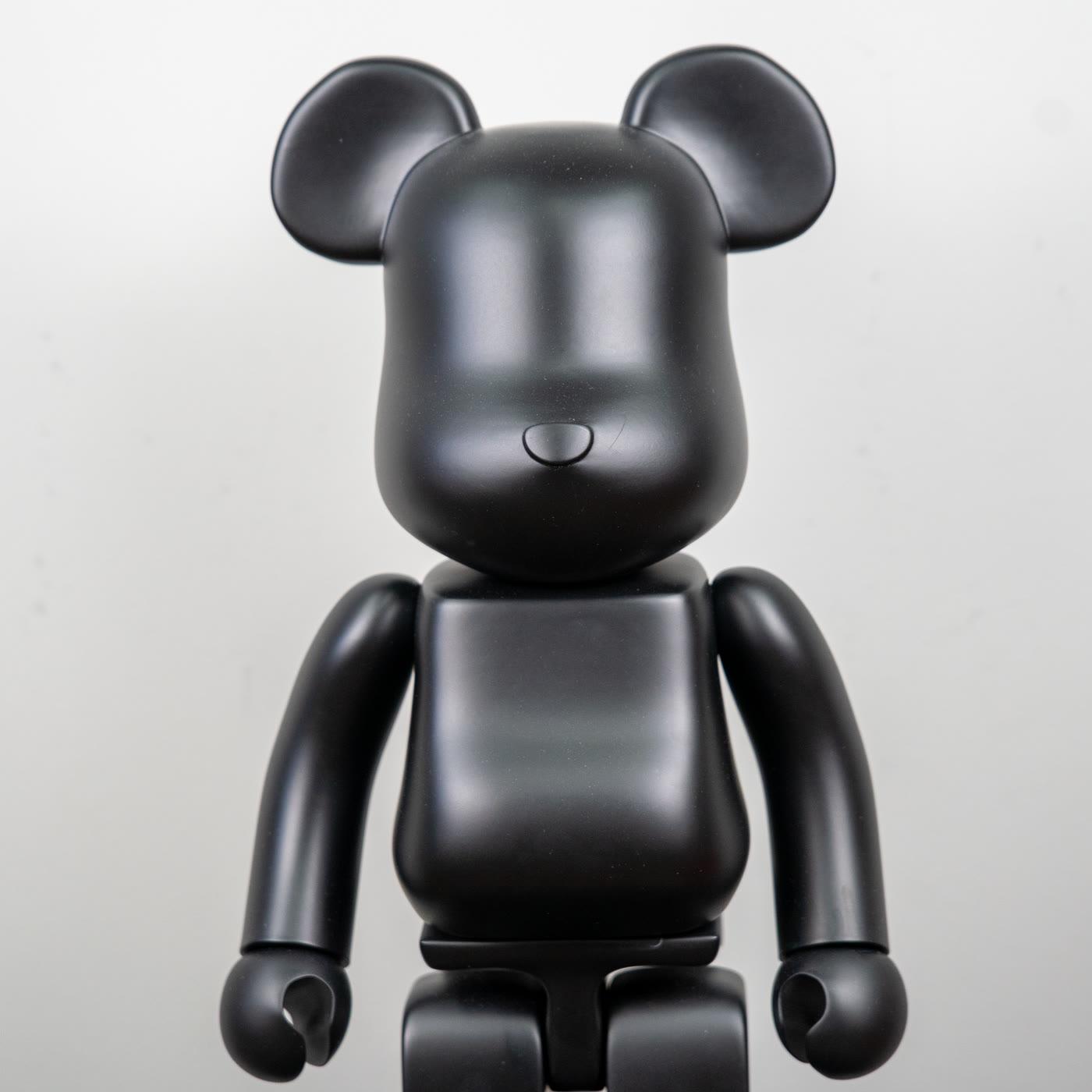
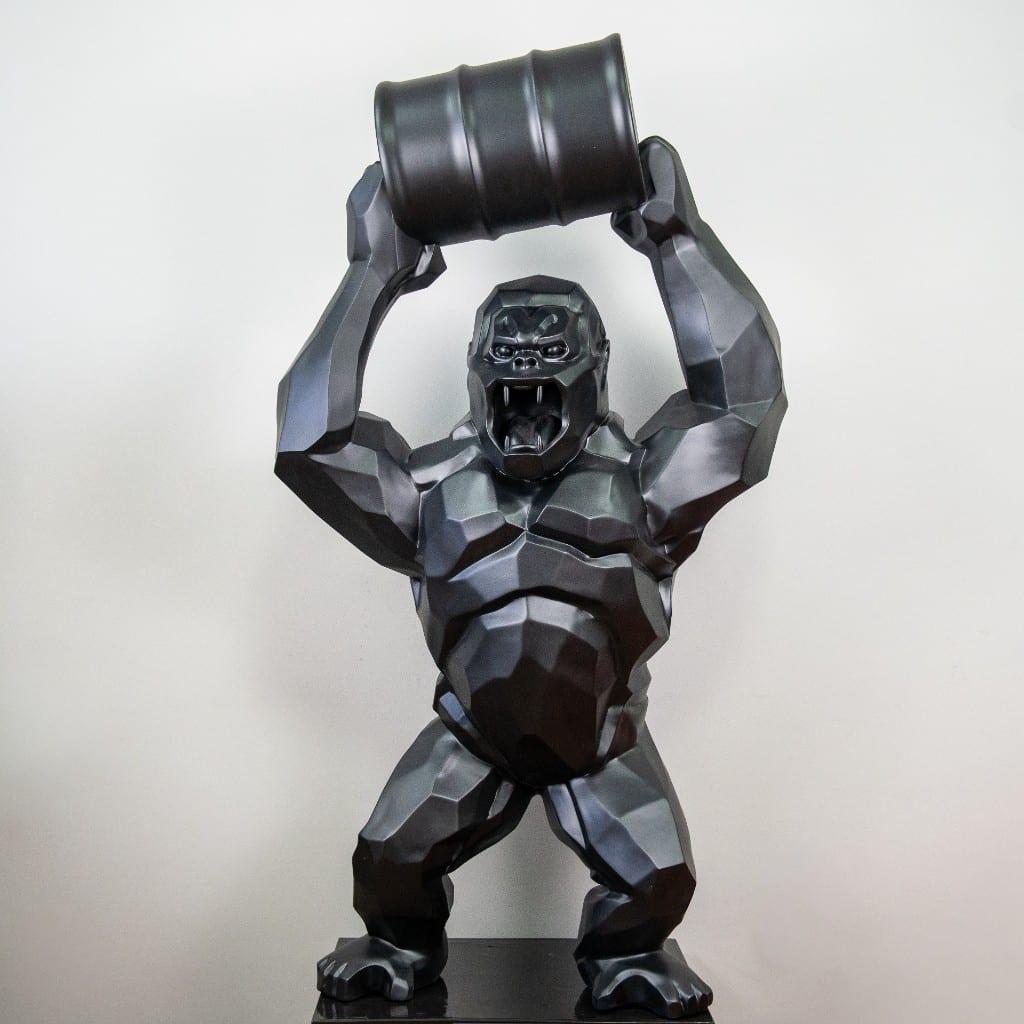
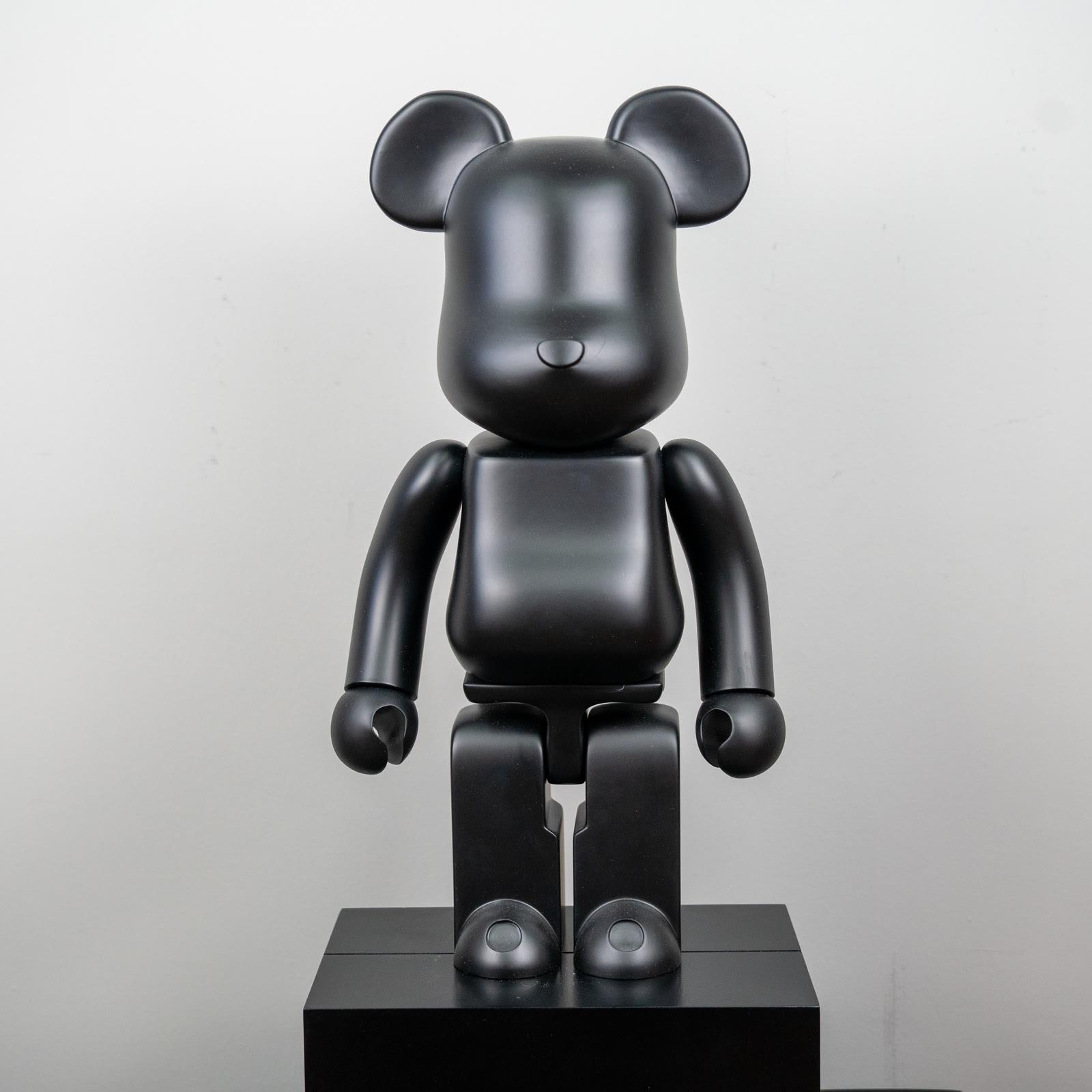
A pop art object works in an office when it is calm enough for a workday and specific enough to be remembered from the door. A shelf of bright toys does not prove that anyone here is creative. A matte black bear does not throw the ceiling lights back into the room. A faceted matte black gorilla holds a corner as a single mass. Neither one shouts. One reads up close. The other reads as you walk in.
The desk, the meeting, and the screen share the room. The object should not step in front of any of them. The right piece is forgotten while you work and noticed once when a guest arrives. Pop art here is not wallpaper. It is one finished thing. If the office is about to become a showroom, that is a separate decision, and figures in shops and showrooms is where that threshold is described.
Matte surfaces and workday light
The matte black bear is a silhouette without glare. Form is read through shadow. That is an advantage in an open office, a glass-walled room, and under ceiling lights that stay on all day. A glossy surface becomes an unwanted mirror in the screen and in eyeglasses. Matte black behaves like a dark suit: serious, plain, and still a character when you look closely.
Do not stick it directly behind your head, at head height. On a video call, a giant head beside your shoulder becomes the subject of the meeting. Keep the piece outside the frame, on a side table or at the end of a console that faces the door. People who enter can see it. People on the call do not have to. If the light is flat from above, matte still holds the form. A hard beam from the floor hollows the eyes and turns the figure into a mask. Leave the lamp off the floor unless that is the effect you want.
One mass and an empty wall
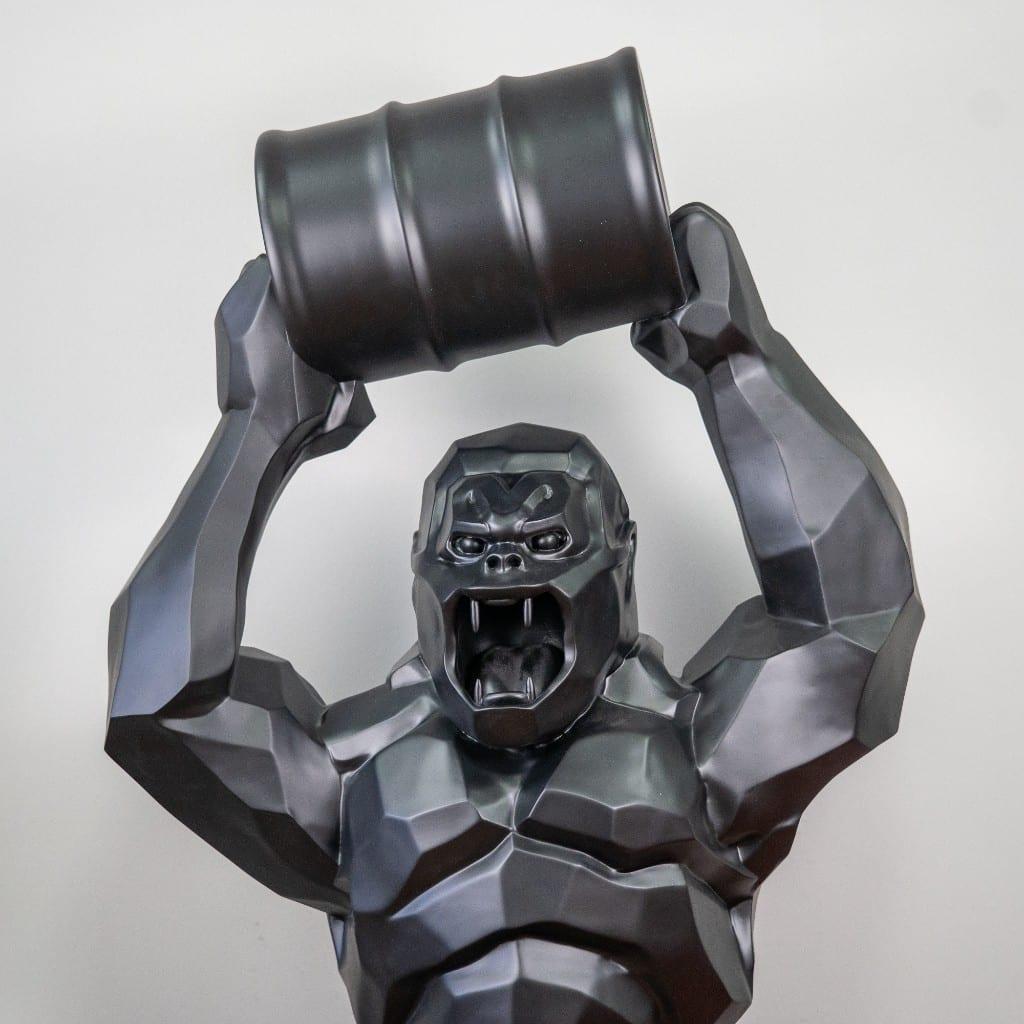
The matte black faceted gorilla holds a barrel overhead. The gesture takes air above the shoulders. Do not wedge it inside a low bookcase. A corner, with a margin of bare wall, is enough if it arrives on the second glance of someone walking in. Low-poly planes break light face by face. A matte finish does not advertise that break. It simply makes the mass clear.
Putting both the bear and the gorilla on the same sightline turns them into samples. Keep one in the working room and the other in a waiting corner. Leave the rest of the wall empty. That is the useful part of a gallery habit: unused surface around the object. Posters, awards, and notes eat that margin, and the sculpture becomes furniture.
Desk, ceiling, and the walking line
Scale is not a centimetre here either. Look at the depth of the desk, the pressure of the ceiling, and the walk from the door to the chair. On a narrow desk a large mass fights the keyboard and the notebook. On a wide reception console the same mass can look measured. If the ceiling is low, do not spend the air above the barrel. If the ceiling is high, do not leave the piece on the floor far from the door, where it appears only when someone is already on top of it.
The walking line in an office is less forgiving than in a living room. Someone late for a meeting clips the corner with a bag. Do not place the piece where the door swings, where cables pool at a socket, or on the shelf that shudders with the printer. Choose a surface that is stable, wide, and clear of the day’s tools. If you use a plinth, let it be kin to the other wood in the room. A random carton undoes a room that is trying to be serious.
Mistakes that keep coming back
The first mistake is treating pop art in an office as a joke shelf. Unopened boxes are a stockroom, not a welcome. The second is believing color is automatically creative. Color works when the rest of the work is quiet. The third is assuming matte black is invisible. In the right light a silhouette stays in the mind longer than a bright color, because the room is not competing with it.
The fourth mistake is filling every client-facing surface. The fifth is copying a living-room placement into the office without a change. Home has an evening lamp. The office has ceiling light that stays on, a screen, and hurry. How a KAWS figure sits indoors describes a different character language. The pieces in this article are the matte black bear and the faceted gorilla. Do not force them into the same corner or the same job.
A short check before you commit
Leave the piece in the spot you have in mind for one working day. Look from the door before the morning meeting, and look from the screen in the afternoon. In both views it is either a calm point or an obstacle. If it is an obstacle, move it. Dust it dry and soft. Office cleaning often means glass cleaner and a general spray. Do not put those bottles on the sculpture. Matte marks, and a stain from the wrong chemistry becomes more visible, not less.
If the afternoon sun lands on the corner of the desk, move the piece out of that patch. A film on the glass is not a guarantee. Heat is not something that only happens outdoors. If you are still looking at that corner a week later, the placement has held. If you are not, the object is either too crowded or in the wrong room. A short note is enough to ask which piece is in hand. You do not need to send the floor area. Say where the door opens, and whether the desk faces the screen or the window.
What someone should see as they walk in
A reception is one sentence. Let the subject be either one matte bear or one dark gorilla. Both at once become a conjunction, and the sentence falls apart. If the wall is bare, the floor is calm, and the cable is out of sight, the object does its job. Once people sit, it should not climb on top of the conversation. If it is still legible from the door when they stand, the place is right.
If the office is also a vitrine, keep the piece from standing in front of what you sell. The sculpture catches attention, then the material speaks. Break that order and the visitor remembers the sculpture and forgets the work. In a home office the rule is plainer: leave the work surface easy, and give one edge, where the eye rests, to a single piece.
Is it still right when the day ends
A good office object still makes sense when you lock up. It is not clipped as you pack, it is not constantly in the camera, and it is not waiting in the last patch of sun. The matte black bear is a close, quiet sentence. The faceted black gorilla is a mass you can read from the door. Choose one.
Come in through the same door the next morning. If the eye still finds that silhouette, the office has accepted the piece. If it does not, you need a barer wall, not a new color. When the collection grows, do not carry every new figure onto the desk. This room is looked at for a full working day. One sentence is enough.