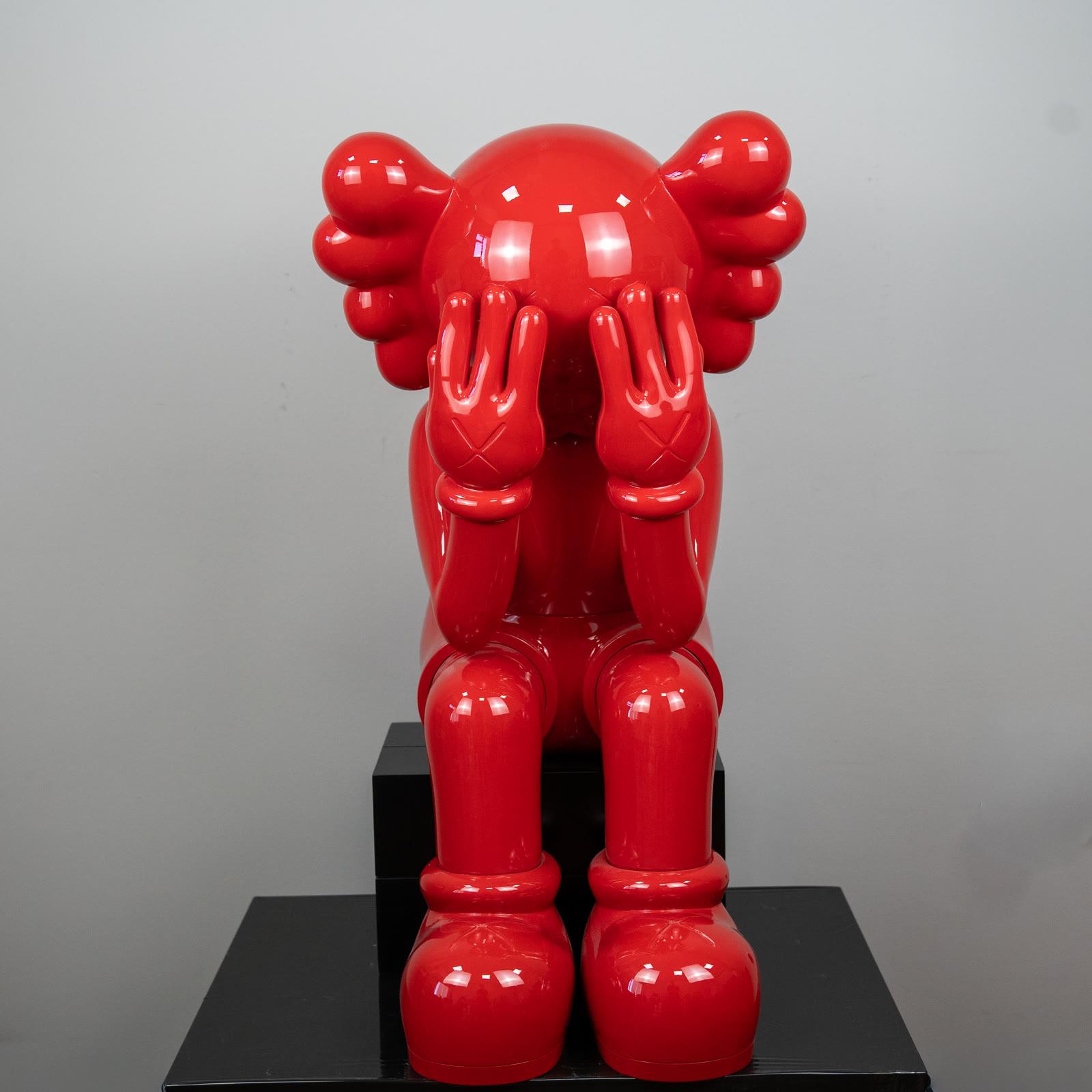
What this aesthetic does indoors
Indoors, the KAWS aesthetic reduces a familiar body to a plain mark and measures the room by that plainness. The Companion's rounded, skull-like head, X-shaped eyes, gloved hands, shorts, and boots do not announce a theme. They announce a tempo. The tempo is slow, because the face does not emote in detail. It flattens feeling into a sign. Critics and viewers have read the X as erasure, as the cartoon's closed eye, and as expression turned into a sign. These are readings, not a slogan. The indoor equivalent is practical. If the wall, the shelf, and the light join the same simplification, the figure stays in its place.
The effect is not painting the whole house as a character. Placing the figure is a more practical door. The question here is how that placement changes the rest of the room. Built well, the KAWS aesthetic lowers neighbouring colour, reduces pattern, and makes emptiness visible. Built poorly, it becomes a corner costume: brick stickers, neon, a crowd of posters. Costume lowers the character's seriousness. The seriousness comes from a plain mark of the street and of sculpture. A home does not add more marks in order to enlarge that one. It empties the space around one mark.
Calm colour, a clear silhouette
The silhouette carries the aesthetic. Colour supports it or fights it. Sage, taupe, matte black, and broken white keep the silhouette like sculpture. Glossy red turns the silhouette into a focus. Both sit inside the KAWS language. One whispers. One builds a single sentence. The room shows which it can carry by its palette. Linen, oak, and warm grey like the whisper. A wide white wall and little furniture carry the sentence of red. Wedging both into the same corner spoils the whisper and the sentence.
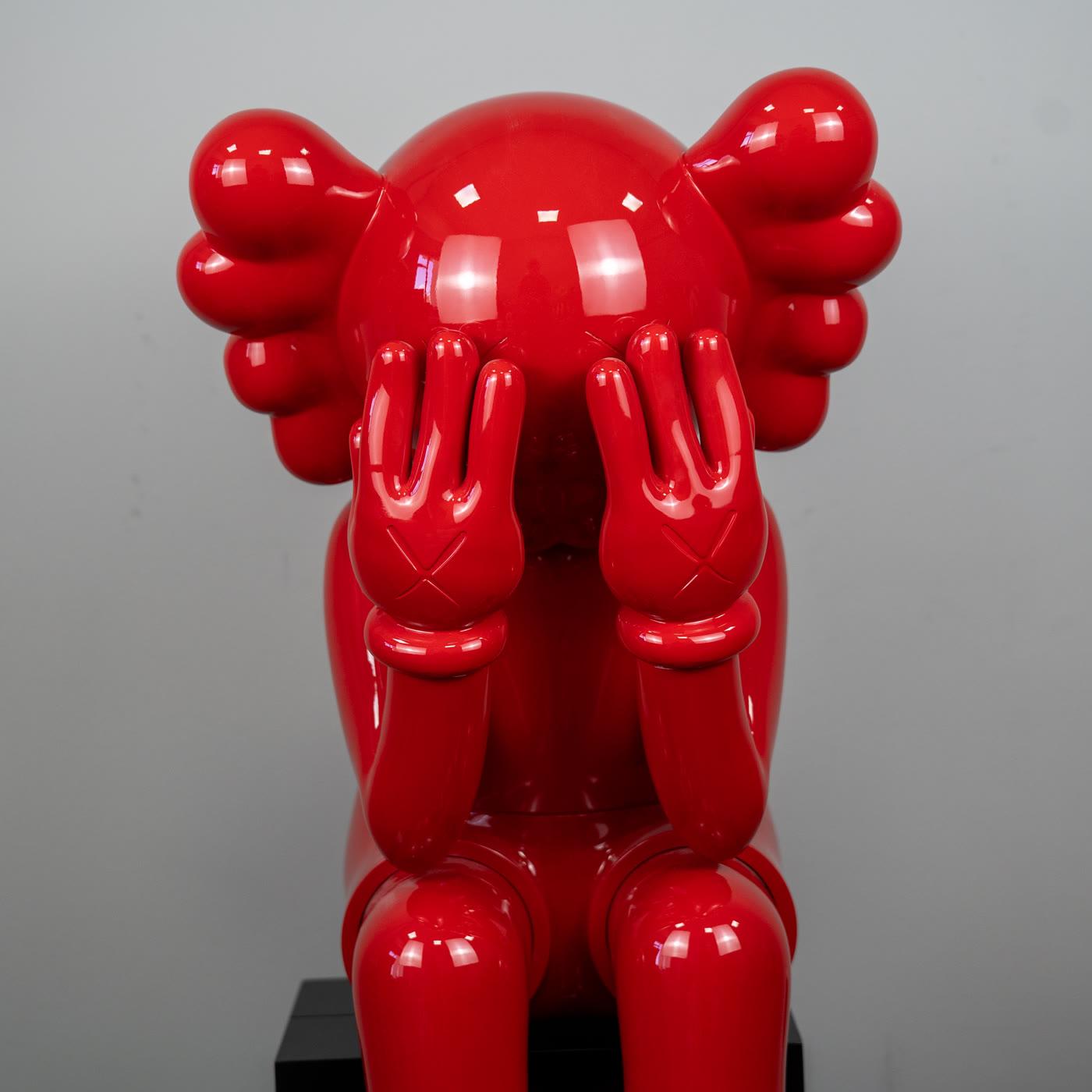
The Passing Through pose adds a quiet on top of colour. The figure sits, and the hands cover the face. The name of the pose is not a quotation. The posture slows the room's tempo once more. A standing greeting belongs to the hall and the entrance. A seated closure belongs where the living room rests. The aesthetic does not impose a recipe of feeling here. It leaves a choice of stance. Whatever quiet you place beside that stance becomes the character of the home. The figure does not build the whole atmosphere alone. It builds the clearest point of the atmosphere. The rest is colour that does not betray that point.
Glossy red and matte black
The glossy red Passing Through is the brave state of the aesthetic. It sits, the hands cover the face, and the surface carries light. It comes close to being the one clear colour in the room. Placing a second saturated colour beside it turns bravery into a crowd. A light ground holds the red like a jewel. A dark ground pulls it further into night. That can be right too, provided the figure does not disappear. If the light is soft and slightly from the side, the gloss builds a halo without shouting like a mirror. If the window opposite is busy, the red carries that movement as well. Whether you want that is part of the aesthetic.
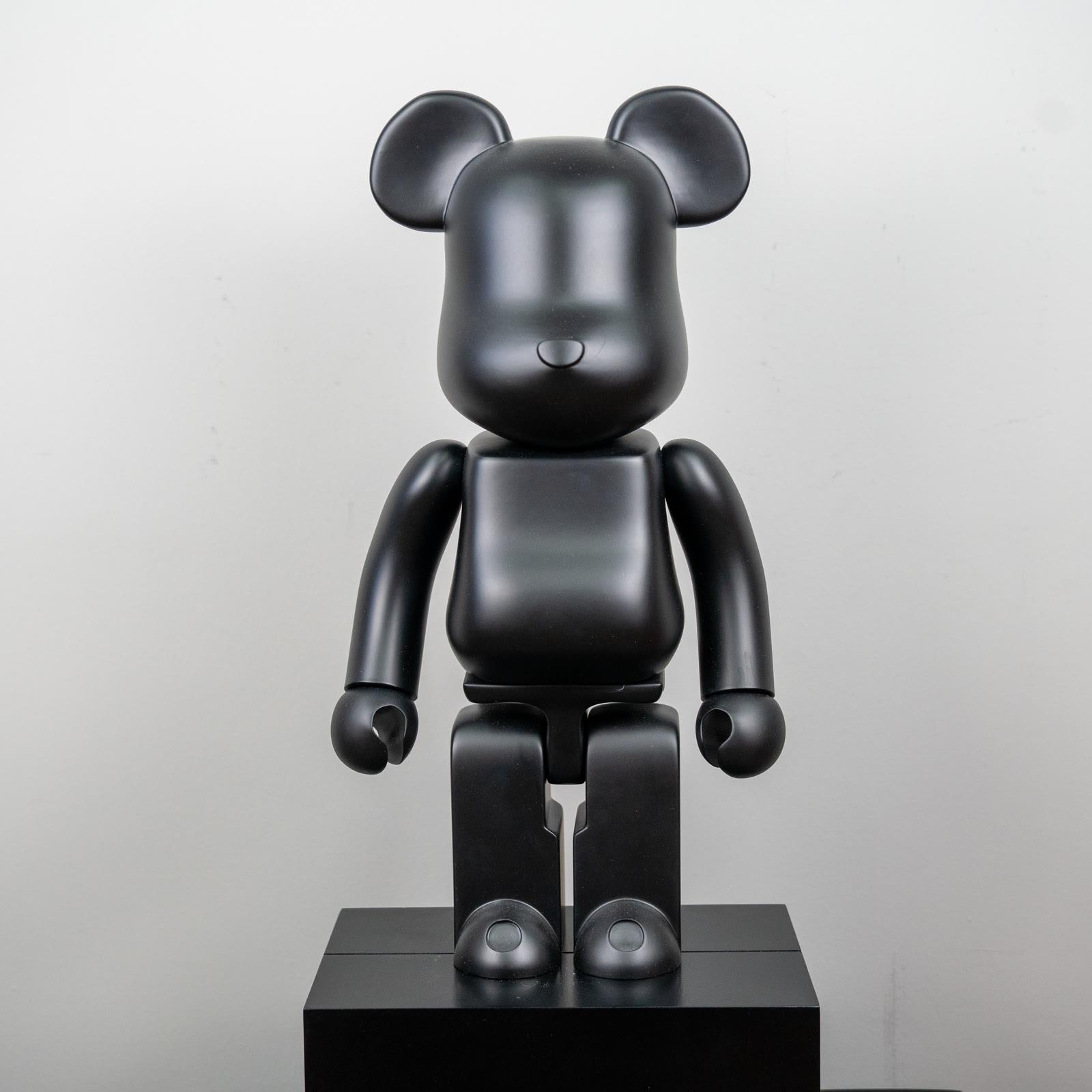
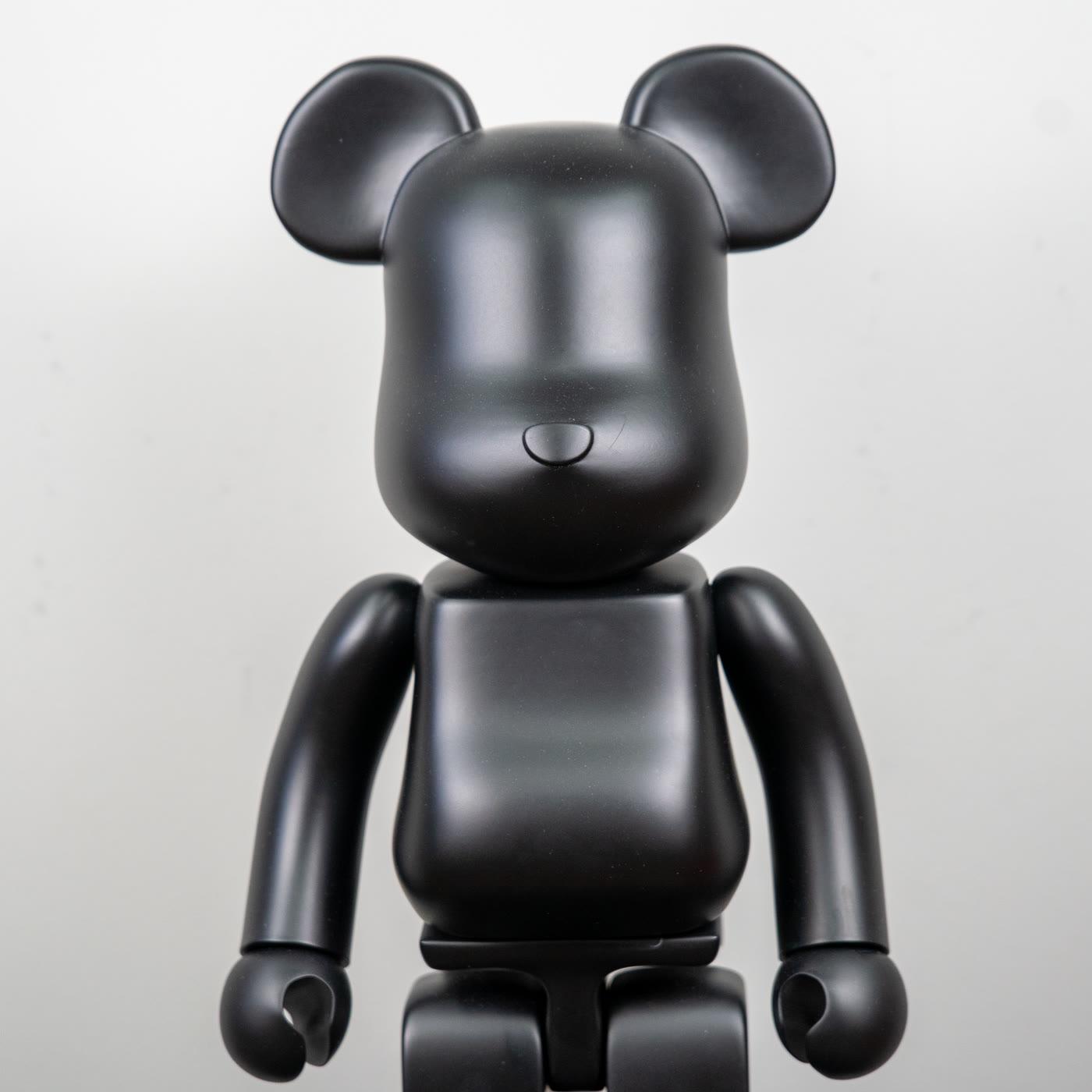
The matte black Bearbrick is another body, and it can speak from the same family of quiet. It is not the same artist as the Companion. Matte black, on both, brings forward the edge of the light and the share of emptiness. If they are to stand together, there should be a breath between them. If a skull-like head and a bear silhouette dissolve into the same darkness, the distinction disappears. A light ground saves that distinction. Bearbrick keeps its own aesthetic. KAWS keeps its own mark. What they share is a refusal of shouting colour. What they do not share is the shape of the head. An interior can love both. It should not make them one blot.
A gallery feeling, a home's warmth
A gallery aesthetic is emptiness, a neutral ground, and the work left alone. A KAWS figure calls this feeling easily, because its face is already as plain as a gallery wall. A home's warmth is keeping that plainness from turning cold. The grain of wood, the crease of linen, a single warm lamp, make gallery white livable. A complete white cube turns a home into an exhibition hall and makes sitting difficult. A complete theme room buries the figure inside a costume. The interval is between the two: calm around the figure, and the rest of the room something you can touch.
Warmth is not a count of accessories. One wool, one wood, one paper is enough. Adding ten small objects on top spoils both the gallery feeling and the home feeling. If the Companion's boot meets the floor, a ground on which that meeting is visible is part of the warmth. If a carpet pattern swallows the meeting, what you have is clutter, not warmth. The aesthetic does not give a moral lesson here. It states a preference. The preference is to be little enough that you can hear the figure's sentence, and much enough that you want to stay in the room. That place between little and much looks slightly different in every home. The principle stays.
A minimal palette
Minimal colour is a natural neighbour of the KAWS aesthetic. Three tones are enough for most rooms: a ground, a figure, a warm in-between. The ground can be light grey or broken white. The figure can be sage, taupe, matte black, or one glossy red. The in-between is oak, linen, or a warm metal. A fourth saturated colour swells the palette. A swollen palette turns the X into a sticker. The mark remains a mark only if its surroundings are calm. This does not demand a colourless home. It demands that colour happen once, and be well chosen.
Repetition is part of the palette too. The X at the eye and the X on the hand are the only repeat in the room, and they are enough. Multiplying the same mark on wallpaper puts the character in the service of a pattern. A minimal palette leaves the repeat inside the figure's body. Outside the body, the repeat is in emptiness: a breath of the same width, to the figure's right and left. Breath is not a colour. It still completes the palette. Filling it does more harm than adding the most expensive colour. Emptiness is this aesthetic's unseen pigment.
What not to multiply
What should not be multiplied is clear. A poster wall builds a second popular language beside the figure and makes the X compete. Brick and spray texture costume a street origin. Five characters on the same shelf turn the grammar into a window. Direct sun tires glossy red and fades a matte surface. A figure passed to every guest reduces the aesthetic to a trial stand. Each of these is born of good intention. Good intention crowds a room. The aesthetic knows how to hold good intention a little back.
There is also a multiplication of status. Counting a catalogue piece as an original sculpture, a licensed edition, or an authorised sale. The figures at Popüler Sanat are finished collection objects that carry this silhouette and this pose. Telling them larger than they are tightens the room as well. A piece can build an atmosphere without a museum claim. That ease is part of the aesthetic. A claim that is not at ease shouts even on the plainest wall. A plain wall works together with a plain sentence. The sentence is this: it is a collection object, it carries a character language, and it lowers the tempo of the room.
The rest of the room
Once the figure is placed, the room is looked at again with it, not according to it alone. The sofa can stay where it is. The carpet can pull back the pattern that ran all the way to the boot. The lamp can move to the side instead of coming down hard from above. The curtain can cut the long sun of the afternoon. These movements look small. Together they take the aesthetic out of costume and turn it into a habit. The habit is being able to pick out the roundness of the head each day as you come through the door. If you cannot, the surroundings change, not the figure. When the surroundings change, the figure suddenly sits in its place.
The close is not a shopping list. A glossy red seat wants a focus. A matte black neighbour wants quiet. A sage greeting wants the calm of a hall. All three do not belong in the same corner. The KAWS page and decorative objects hold these choices side by side. They do not stick them to the same wall. Do not stick them either. One room, one tempo, one mark. When it is left without locking the meaning of the mark, without taking the pose for a confession, and without swelling the palette, the KAWS aesthetic matures at home. What matures stands without shouting. That standing is the whole promise of this aesthetic.