
What a figure is doing on the floor
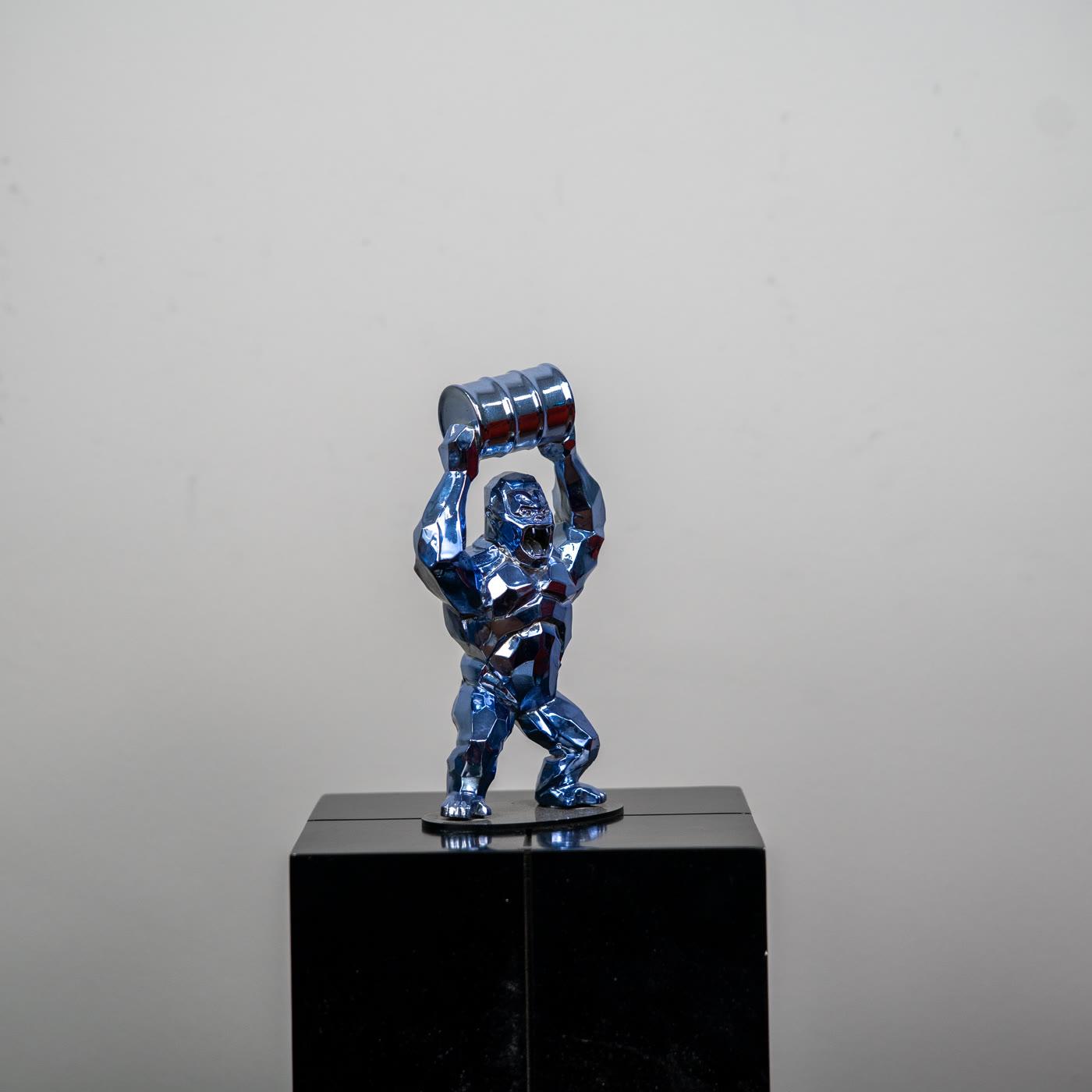
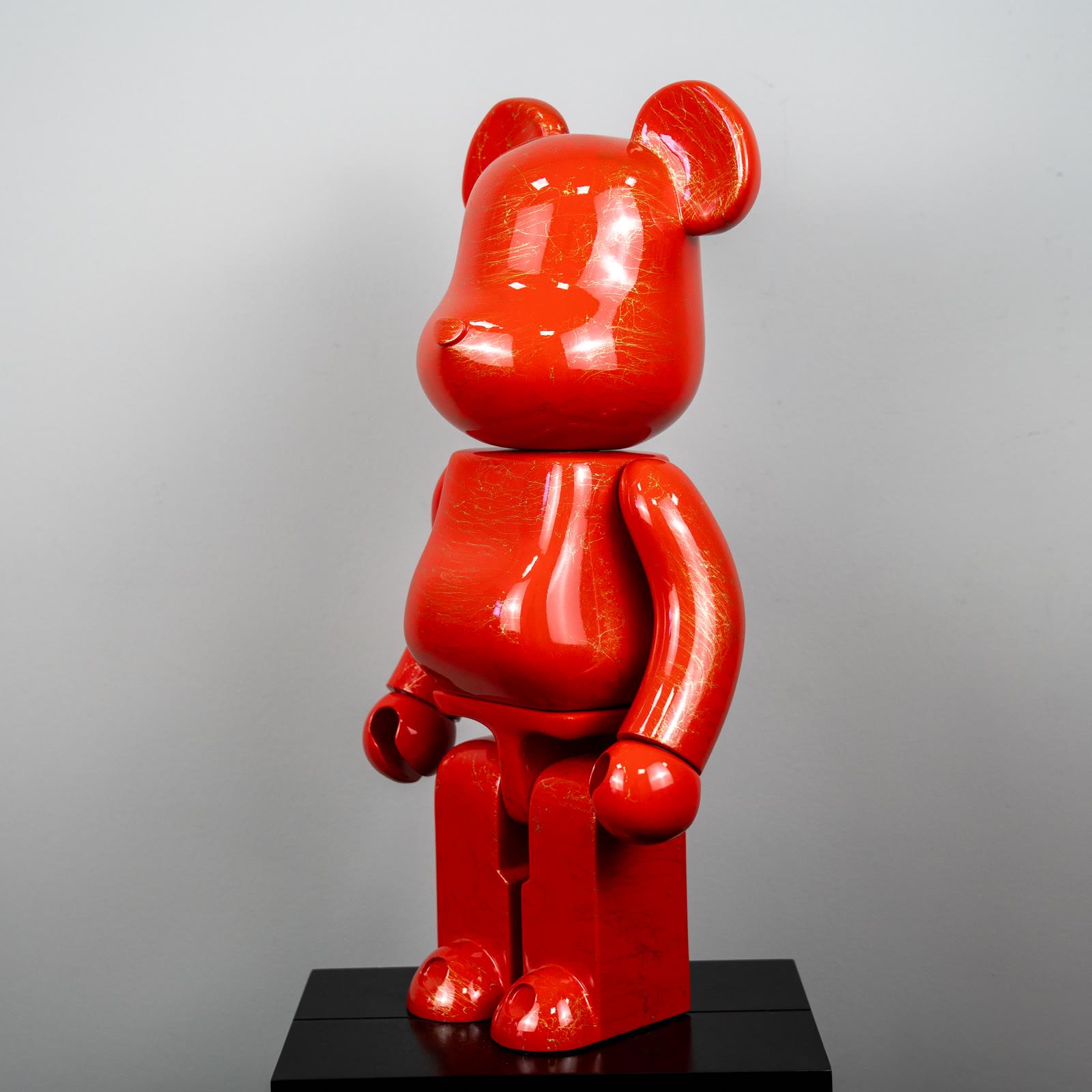
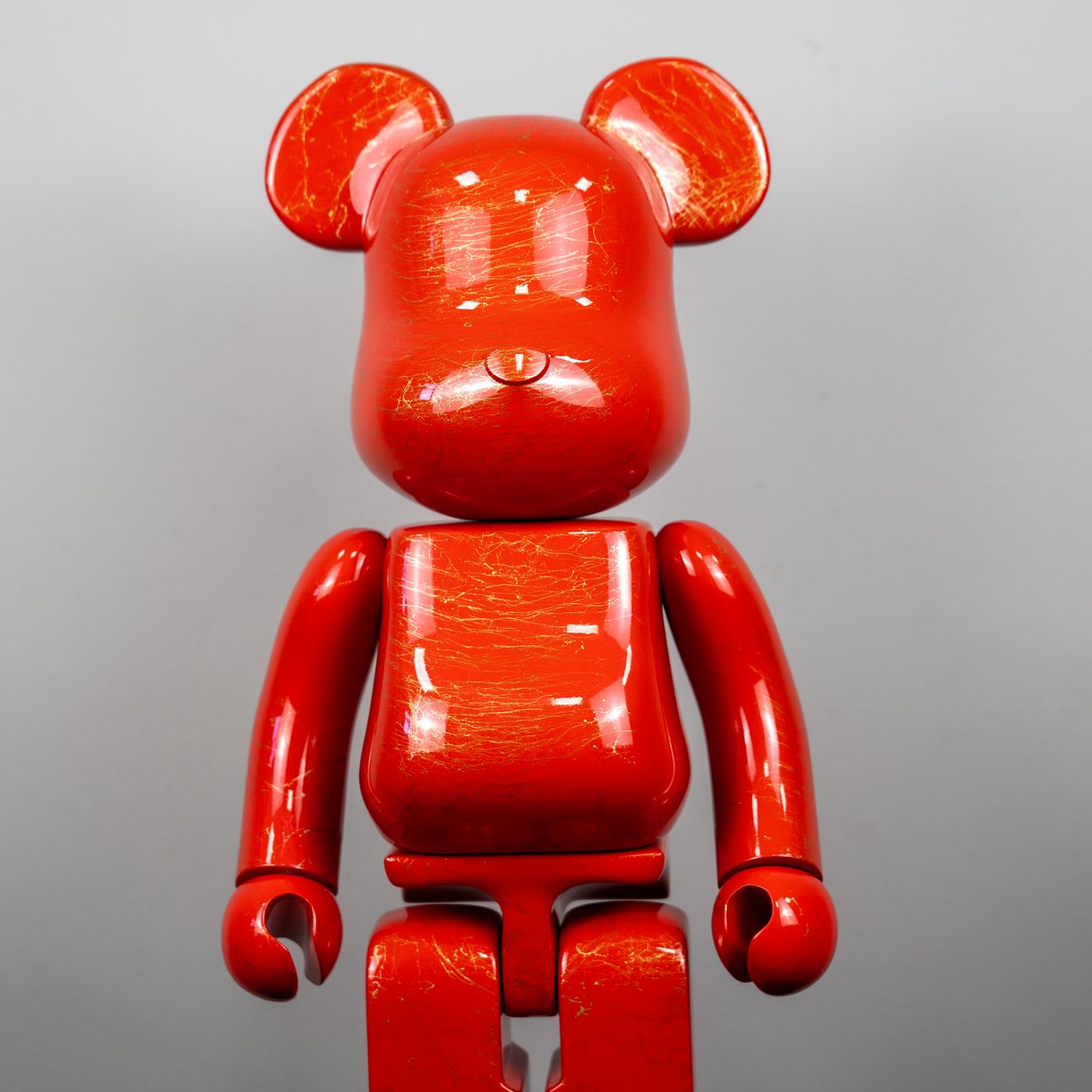
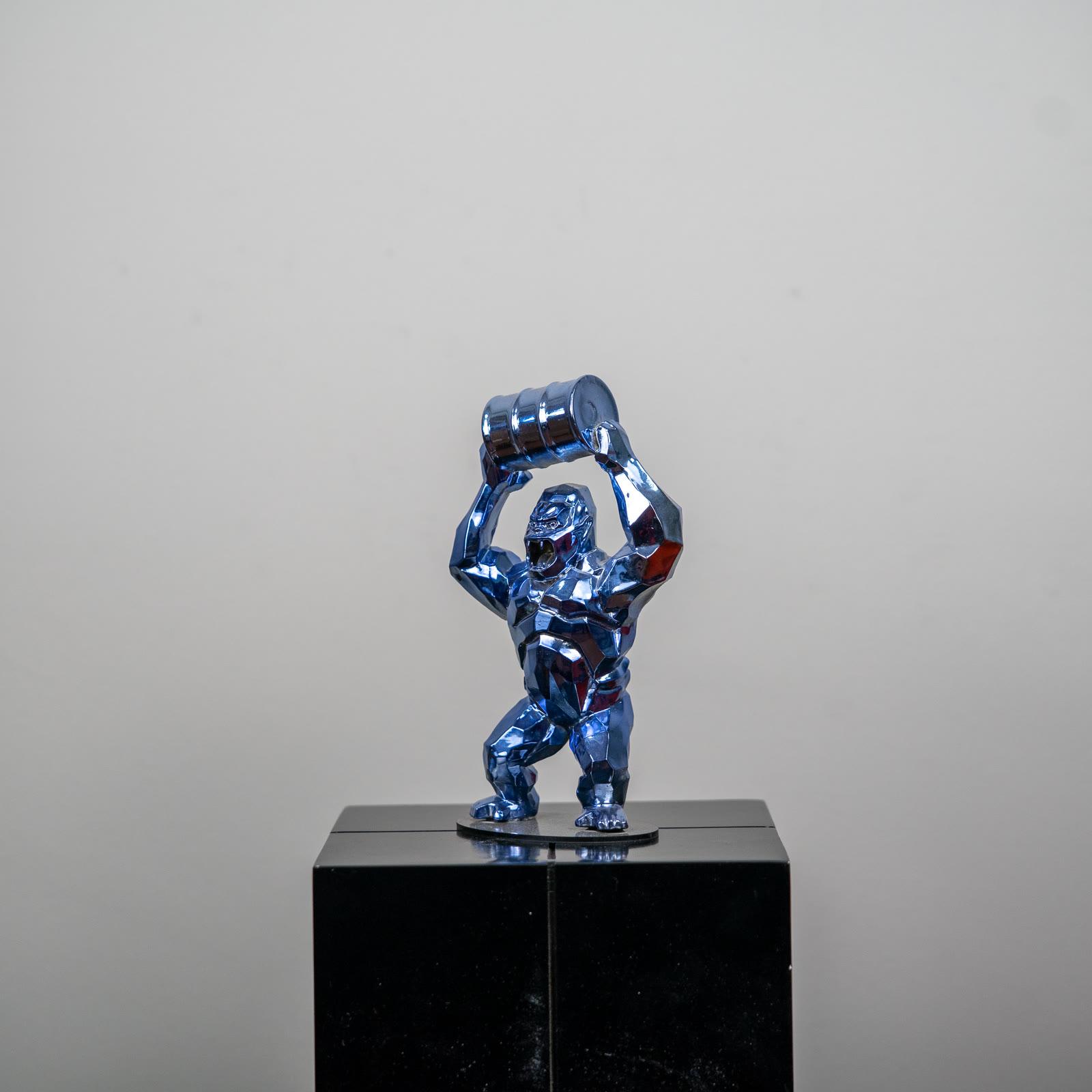
In a shop or a showroom, a figure should stop the eye for a second and then let the thing you sell speak. At the entrance, on the sightline to the counter, or at the end of a run of product, one metallic or high-color piece does more than a wall of toys. A metallic blue gorilla is caught from across the floor because it carries the room’s existing light on its surface. A glossy red bear with gold marble pattern is a color stop for a smaller plinth.
This is not a list of shops we have fitted. It is a way to decide. Every door, every window, and every counter line works differently. The moment the figure stands in front of the product, the visitor remembers the sculpture and forgets what you sell. Keep the order: a pause, then the goods. When an office turns into a vitrine as well, pop art in the office describes that threshold from the working room.
Entrance, counter line, in front of the goods
Three places work. Not all three at once. The bare wall beside the entrance is the first straight look. The wall behind the counter is the second look, the one people use while they wait. A plinth at the end of a product run finishes the walk like punctuation. Do not give all three jobs to the same sculpture. One piece holds one job.
A sculpture placed in front of the product blocks the shelf and narrows the path. A figure piled on top of the actual goods, inside a glass case, makes the same mistake at a smaller size. The sculpture is either alone on its plinth, or it is not there. A clothing rail, a mannequin, and a price card should not be its neighbors. If something must stand nearby, the gap should be wide enough that you can read two separate sentences.
Metallic blue and a red marble pattern
The metallic blue faceted gorilla carries a mirror-like surface. Existing shop light can point to it from across the room without an extra spotlight. That suits an entrance and a tall showroom corner. The barrel gesture needs air above the shoulders. Do not lay it in a low display box. The surface scratches. Bright metal gives away dust and fingerprints faster than a matte piece.
The red marble bear is a shorter sentence. Glossy red and a gold marble pattern can stop color on a counter-height surface or on a small plinth at the end of a run. Stacking it with the blue gorilla on one pedestal turns two signals into a single pole. Let the large mass hold the entrance. Let the red piece hold a breath further in. Choosing a focus piece is the domestic version of that split. In a shop the rule is stricter: the signal does not replace the goods.
A shop window is a load, not a light
A street window is not free stage lighting. What comes through the glass is not only visible brightness. It is ultraviolet and heat. Double glazing, film, or a laminated pane may reduce some of that. None of it is a guarantee. Heat still builds in a closed window bay. A glossy red surface can show fade to the eye sooner. Metallic blue still takes on heat regardless of how blue it looks. A black piece would not be safe either.
Do not sit the piece on the glass line, inside the afternoon patch that walks across the floor. Pull it to the back of the window, out of the direct patch. Do not let the same face point at the street every day. Turn it on a rhythm you will actually remember. Do not invent a scientific interval. A piece in the window ages faster than a piece in the stock room. Accepting that is part of the placement. The daylight decision at home is the same physics: distance, rotation, and glass that does not promise protection.
Ceiling, counter, and viewing distance
In a shop, scale is built from the ceiling, the length of the counter, and the distance where people first stop inside the door. In a narrow boutique a huge mass crushes the rail. In a tall showroom the same mass can look measured on an open floor. We are not assigning centimetres. You learn whether a piece is large or small for this room by whether it still separates as one silhouette from far away. Large-scale figures opens that relationship for homes and lobby-like rooms. A shop adds one difference: the customer does not stop, they walk. A walking look misses small detail nearby and takes a single mass from far off.
If the red bear stands beside the counter, it competes with a messy surface. Invoices, tape, and a card terminal should not be its neighbors. The blue gorilla should not disappear into floor stickers and the doormat. Let the plinth be kin to the other furniture. A lit box turns the piece into a costume. Skip light from the floor unless you want it. That beam hollows the eyes and makes the figure read as a mask.
Mistakes that keep coming back
The first mistake is believing more figures mean more energy. A crowd is noise. The second is making the sculpture compete with the product. If it competes, the product loses and the sculpture loses its context. The third is treating window sun as lighting. The fourth is moving the piece for every campaign and each time sliding it closer to the glass.
The fifth is mistaking a photograph of a shop, ours or anyone else’s, for your plan. Those pictures are not an installation record. Your door, your circulation, and the direction of your window are another room. The sixth is leaving the piece under a projector all night and at the bottom of the same glass all day. Theatrical light is a separate intention. The default intention is that the goods can be read.
A short check before you open
While the shop is closed, come through the door, walk to the counter, and stand at the till. At each point the sculpture is either a signal or an obstacle. If it is an obstacle, move it. Do not add a second sculpture. The surface should be stable. A corner that gets hit when the rail is changed is not a candidate. Dust with a dry microfiber and almost no pressure. Glass cleaner, alcohol, and a general degreaser do not belong on the piece. Bright metal and glossy red remember a grain of grit as a scratch.
Staff should not pick the piece up while they talk about price. Fingerprints stay on metal, and they stay in a red marble pattern. Once a week, change which face points at the glass, and note that you did. If a month later the color still looks even, the placement is not losing to the sun. If one face has dulled, the piece is too close. Do not believe you can polish it back to a former value. Pull it back. Choosing a second signal from decorative pieces is healthier than trapping the first one at the bottom of the window.
What they remember on the way out
A good showroom figure leaves one image on the way out and does not erase the name of what you sell. The blue gorilla can be the sentence at the door. The red bear can be the color breath further in. They are not the same pole. Sun at the bottom of the glass is an enemy of both.
Look from the same door at the next opening. If the eye hits the sculpture and then moves to the shelf, the order is right. If the eye stays on the sculpture, pull it back, give it air, and let the goods come forward. A collection here is not a stock display. One signal is enough. The rest belongs on the shelf.