
What does a large bear figure do in a room?
A large bear figure takes space like a small piece of furniture and gathers the gaze to one point. In Medicom Toy’s size system for the BE@RBRICK, this largeness is spoken of especially through the names 400% and 1000%. The published correspondences are 280 mm and 700 mm. About 28 cm stands on a console. About 70 cm, on the floor or a low plinth, comes toward the gaze of someone seated.
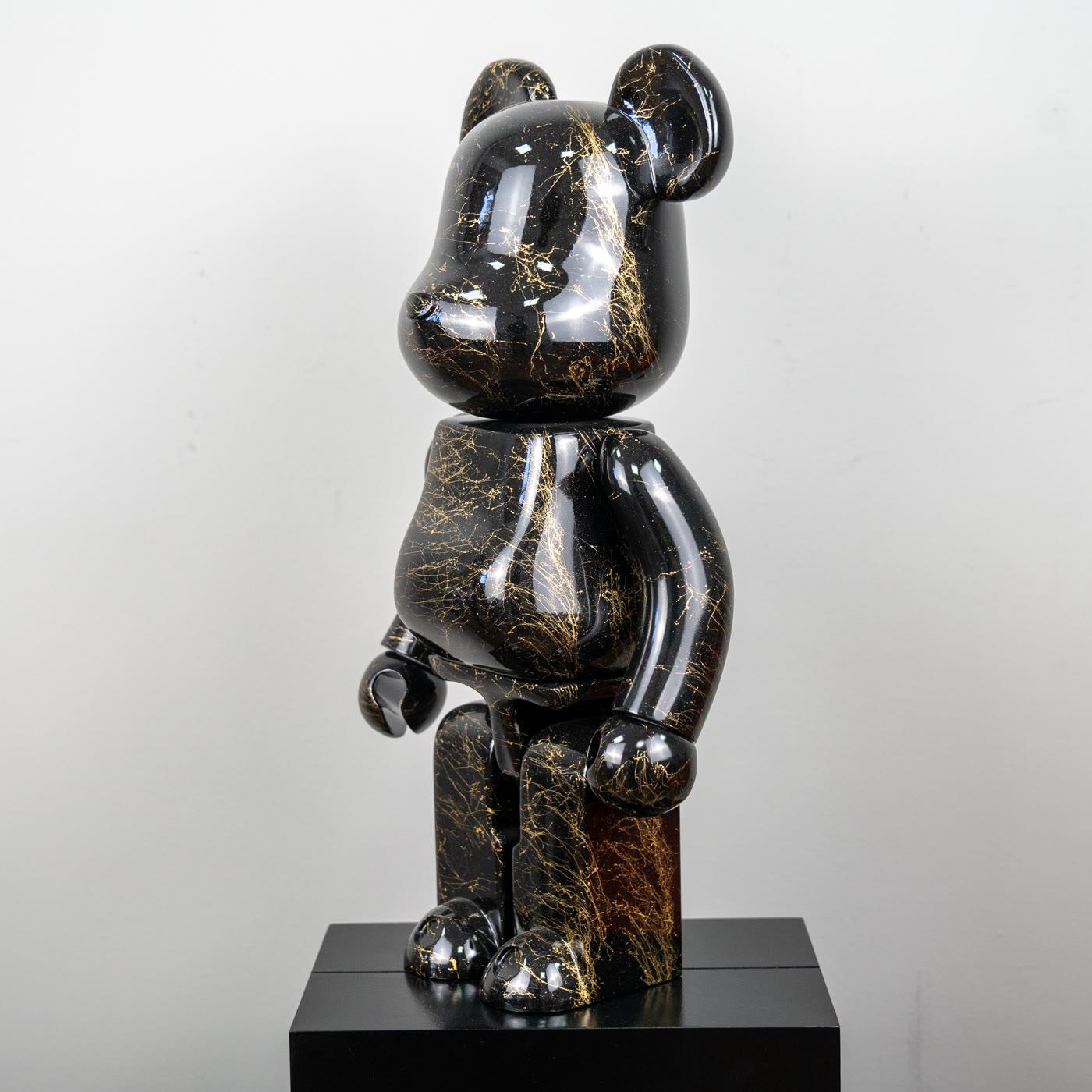
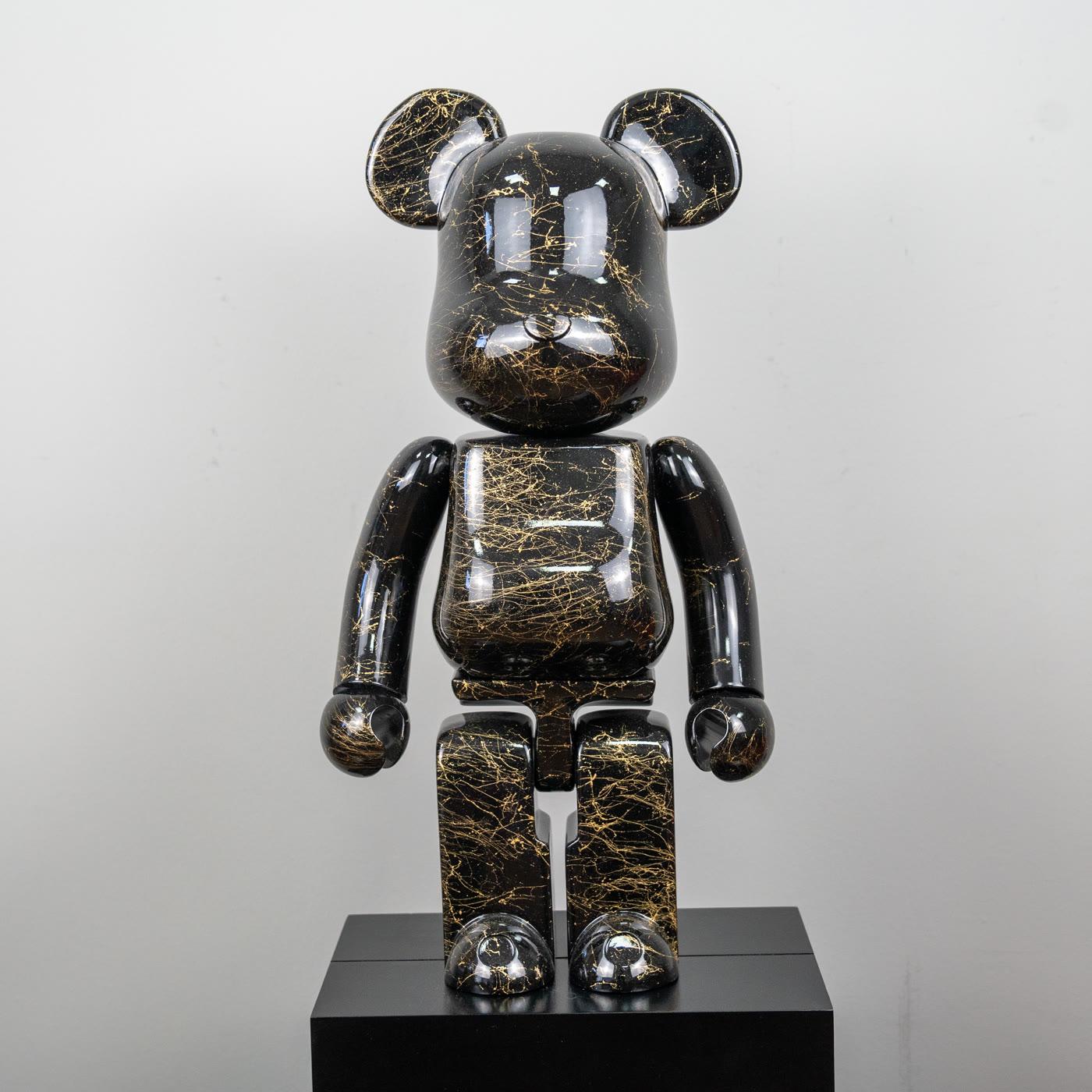
These numbers are not the measurement of every photograph that looks large. The images that accompany this article at Popüler Sanat are not read as 400% or 1000%. The black marble bear figure shows how a dark, reflective mass stands. Its own centimetres are asked for without assuming a percentage. Large-scale figures holds the same question of occupied space beyond the bear form.
The silhouette is familiar: a cylindrical torso, round ears, block limbs. As the height grows, that familiarity leaves charm and becomes a decision about the room. If the ears meet the ceiling, the form is cut. If the arms reach into a path, the figure becomes an obstacle. Large is not the more impressive one. It is the one that asks for more air.
Why is visual weight more than the millimetres?
Visual weight is more than the millimetres because color, gloss, and solidity show the same centimetres as denser or lighter. Glossy black gathers light into a thin line and makes the body read as a heavier mass than it is. On a light wall that density stands like sculpture. In a dark corner the figure becomes a hole, and only an edge of light separates it.
280 mm, which is 400%, can be a shelf object in a light color and a focus in a dark one. 700 mm, which is 1000%, builds a stance on the floor even in a light color. Dark and glossy, it can divide the room. So when a large percentage is chosen, the question is not only height. It is also how the surface swallows light. The right scale widens this sum together with the neighborhood.
Weight is not only visual. If a large mass tips, it harms itself and what is around it. A level floor, a base brought in from the edge, and a point that is not bumped are the practical match of the millimetres. If a plinth is used, it is thought of not to make the figure taller, but to keep it steady and to lift the silhouette off the floor.
How is 280 mm placed on a console?
280 mm is placed on a console near eye level, with a hand’s width of air on each side. Above, a margin is left so the ears are not cut. In depth, the figure is not stuck to the wall. If it is stuck, the shadow cannot be read and the cylinder becomes a flat blot. If it is pulled too far forward, there is no margin against a fall from the edge.
If the top of the console is full of other objects, 28 cm fights them. A lamp, a frame, a vase build a second focus beside the bear. The percentage that feels large is still, in fact, a shelf height. If the shelf is crowded, the height does not look grown. It looks cramped. A single neighbor, if any, is something low and matte.
The silhouette should be picked out at the first look from the door. If it is not, the console is too far to the side, or the figure is behind a column. 400% does not have to stand in the middle of the lobby. Slightly off the axis of entry, where the gaze rests, it works for longer. A figure in the living room sets that axis together with seating.
What does 700 mm watch for on the floor?
700 mm stands on the floor outside the path. A door leaf, a drawer, and the daily line of walking should not meet the figure’s base. A breath of about thirty centimetres prevents both a bump and a silhouette that stays half. Seventy centimetres squeezed into a corner buries one ear in the wall. A corner is not the natural home of a large figure.
A rug is thought about separately at this height. A thick, slippery rug shifts the base. A thin, stable floor holds the mass more honestly. If a plinth is used, its width should not be narrower than the figure’s footprint. A narrow plinth raises the image and weakens the balance. If raising it is a choice, balance comes first.
On the floor, light should still come from the side. A single spot from above leaves a long highlight on a glossy body and empties the face. The indirect light of a low lamp lets the gaps between joints be read. 1000% is tried not only with a vitrine bulb, but with the room’s own evening light. A mass that looks right by day and disappears at night has not found its place yet.
How does a neighboring sculpture change the visual weight?
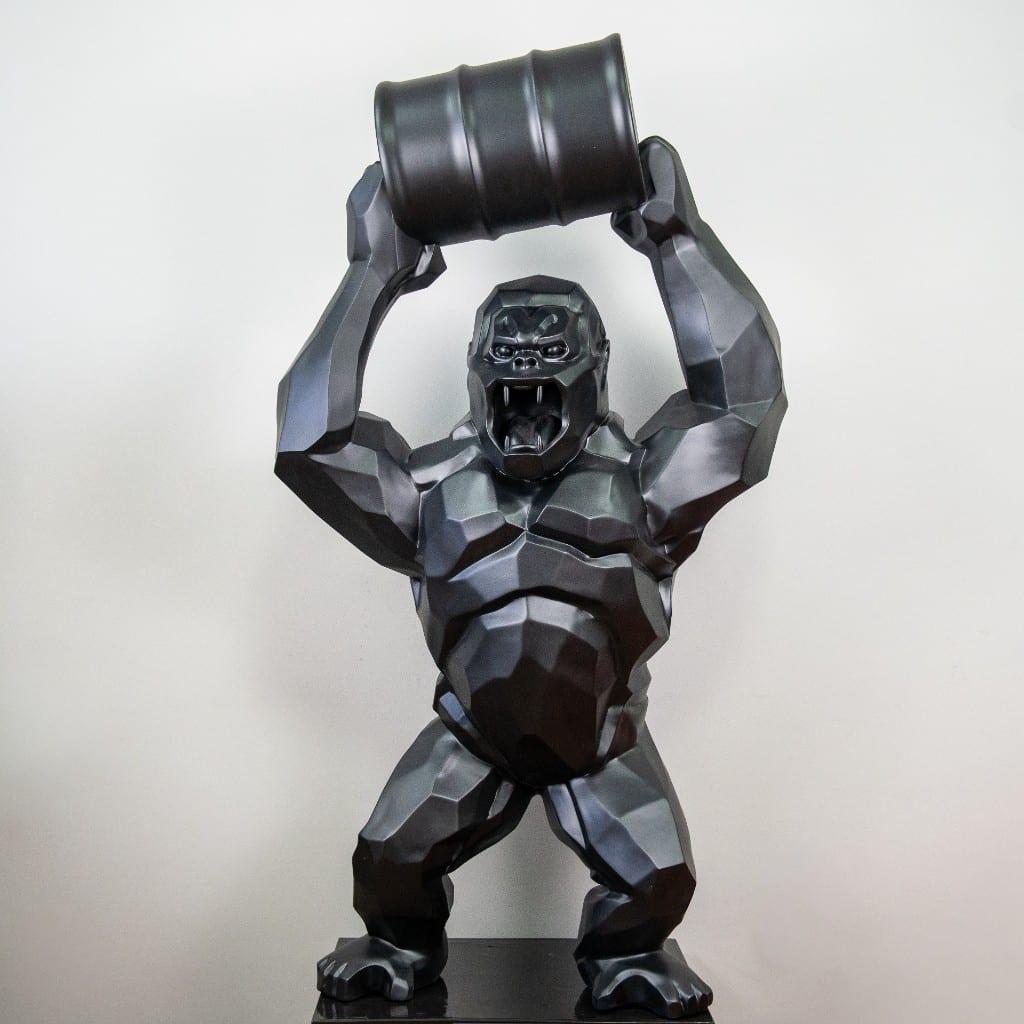
A neighboring sculpture either shares the bear’s visual weight or crushes it. The matte black faceted gorilla is another mass: it has no bear silhouette, and its stance is angular. Putting the two into the same gap builds two focuses for the room. If the distance is not opened, the eye cannot decide. If the distance is opened, each takes its own wall.
The same dark finish can make them kin. Kinship is not sticking side by side. The cylinder of one and the angled shoulder of the other should be readable without a race. If the large bear is set in front of the gorilla, both stay incomplete. If they stand side by side, at the same line, with room to walk between, the room approaches a gallery corner, not a storeroom.
This neighborhood is not a promise of a set. Two catalog pieces are two separate forms. One looks toward the language of the bear, the other toward the language of sculpture. Thinking of them together does not mean they share a Medicom percentage. What they share is that a large mass wants air. The collection is a calm place to see the two languages at once.
What is assumed wrongly in a large placement?
The first wrong assumption is that every bear that looks large on a screen is 1000%. On Medicom’s chart, 1000% is 700 mm. A photograph inflates height because it makes the background endless. A tape measure does not. The glossy black figure shown with this article is not evidence of the heights discussed here.
The second assumption is that the large one is the more official one. 400% and 1000% are heights. A logo on the foot, a box, or a hologram does not prove that order on its own either.
The third assumption is to turn the in-between percentages into millimetres by eye, somewhere between 280 and 700. Other percentages exist in the system. Their match is on the manufacturer’s current chart. If there is no chart, there is no number. A large placement is not made with the surprise of an invented in-between height.
What rehearsal happens before placement?
The rehearsal happens before the figure arrives. For 280 mm, set a book or a box on the console and check the hand’s width on each side and the margin above. For 700 mm, draw the height and the width of the base on the floor with tape. Walk across that line for a day. If you bump it, the place is wrong. If you do not bump it but the silhouette drowns in a corner, the place is still tight.
Add the light to the rehearsal. In the evening, bring a lamp toward the same point. Does a dark mass separate, or does a glossy surface cut the room? If the answer is no, the height is reduced or the ground is opened. If the answer is yes, the figure is a guest worthy of that gap. Among decorative pieces, other large masses deserve the same rehearsal.
A large bear is placed not to complete the room, but to ask the room for space. 28 cm asks for it on a console. 70 cm asks for it on the floor. Both are Medicom’s published names. If the piece in your home does not arrive under one of those names, the rehearsal is still the same: gap, path, light. The name is spoken only once the chart confirms it.