
What should you look at when buying a collectible figure?
When you buy a collectible figure, look at condition, the clarity of what the seller says, what the packaging actually documents, and how scale is described. Those four headings build one decision. If one of them shines, the others are not finished on their own. A calm purchase reads the list in order.
Excitement chooses the first silhouette. The decision happens on the second look. Is there a wave in the surface, is the paint edge clean, is there a mark at a joint, does the base sit? A photograph answers some of this. What it does not answer should be asked.
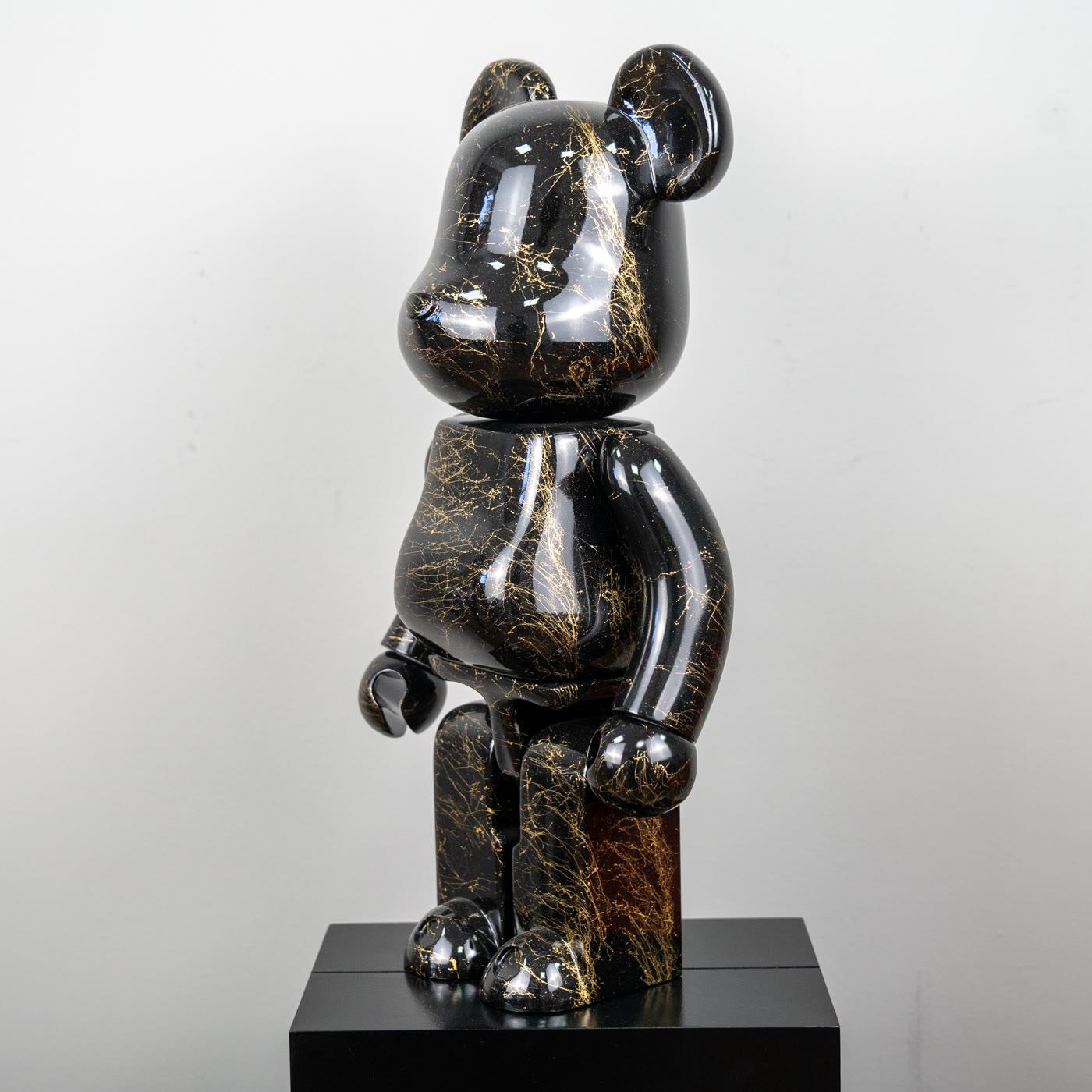
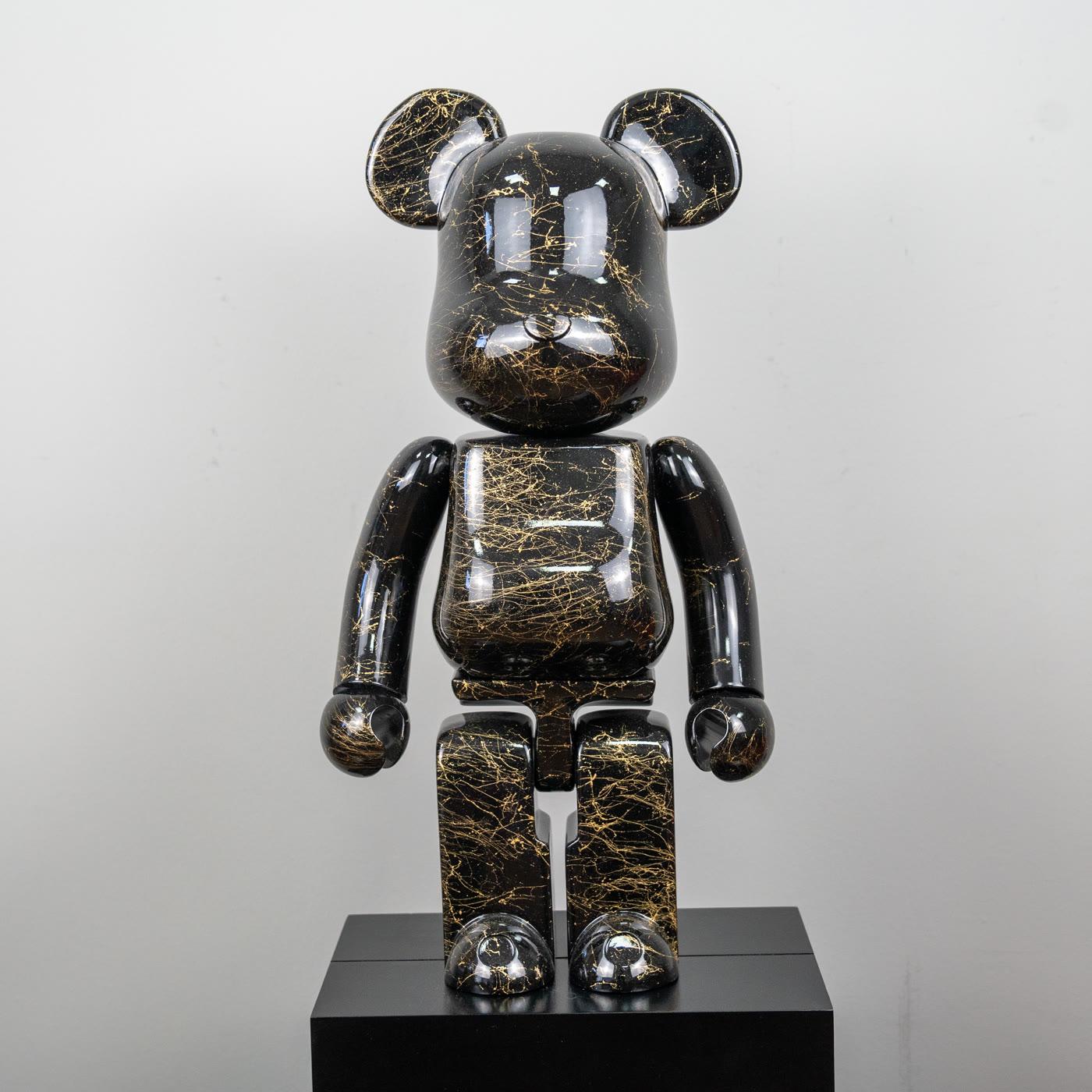
The black marble Bearbrick asks for that look in particular. High gloss enlarges scratches and dust. A mark that hides on a matte piece speaks at once on a mirror-like surface. Beauty and fragility share the same place here. The same eye belongs on the Bearbrick selection.
Condition and surface
Condition is the piece’s story. A new surface and a surface that has already stood somewhere do not write the same sentence. Both can be bought. What you are seeing should be said out loud. Yellowing, a dent, a repair, a missing part, or a paint difference belongs to the decision.
Change the light. A single studio flash can make glossy black look perfectly smooth. Daylight, a lamp from the side, and a close frame tell the same surface three times. Ask for all three when you can. One frame is a vitrine promise.
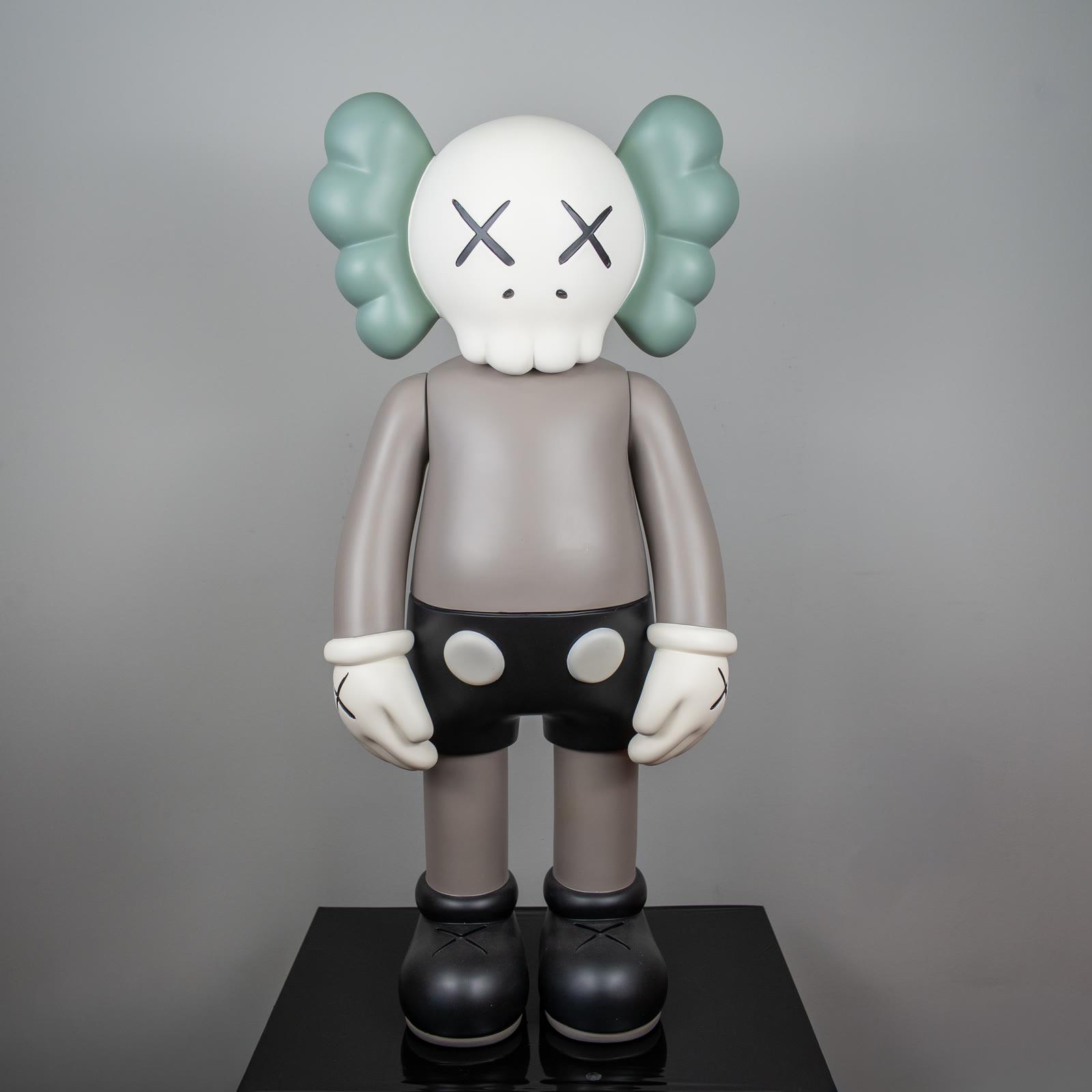
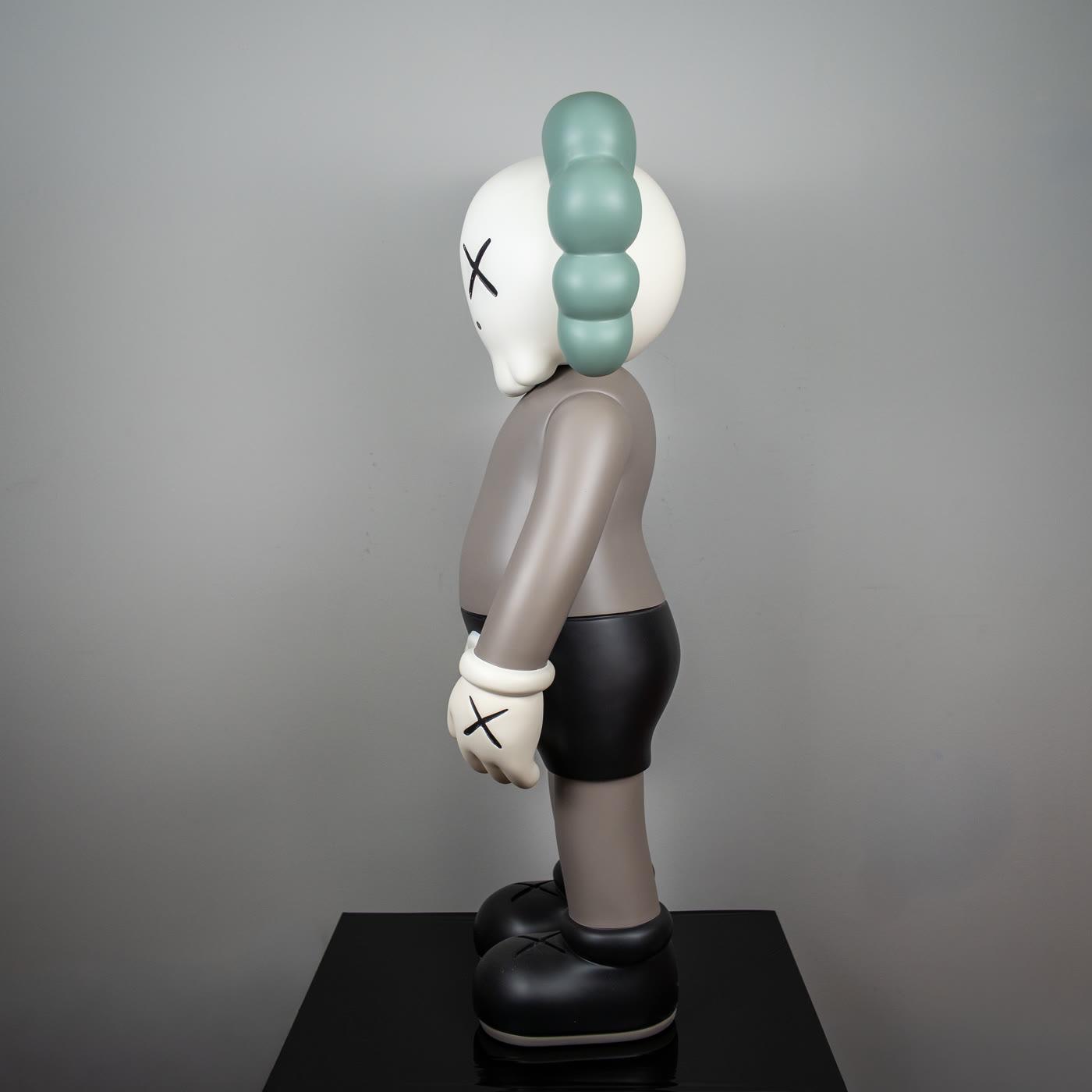
The Companion with sage ears asks a different surface question. Matte paint holds fingerprints and dust in its own way. Is the color break between ear and body clear, and do the shorts and glove detail read in the photograph? The search is for a match between what you see and what is described. The same match applies to KAWS pieces.
What is said, and what is visible
A good description stays short. The name, the finish you can see, what is missing, and which records exist can sit in a few sentences. Decorative adjectives do not take the place of that sentence. Clarity is the trust.
The questions are plain. Where is the piece, do the photographs belong to it, what is in the packaging, how is scale described, how is delivery imagined? If the answers stay short and inside one story, the conversation is healthy. If each answer slides toward a new claim, return your eye to the object itself.
The same plainness holds when you write to Popüler Sanat. Say which figure you want, where it will stand, and what you want made clear. The contact channel exists for that sentence. A pushy tone does not replace a decision.
Packaging, scale, and the record
Packaging can be a clue to a piece’s story. The stance of a box, the inner form, a label, a missing lid: these belong to the account. The box does not build the piece’s worth on its own. A handsome box is not a reason to ignore the surface. A missing box is not, by itself, a verdict. Whatever is there should be said.
Scale asks for the same honesty. A percentage, a platform name, or the words large and small may not describe what the piece will occupy in your room. A chart a manufacturer publishes belongs to that manufacturer’s system. The measure of the piece in front of you should be stated separately. If it is not stated, ask. An invented number does not make placement easier.
A record can be an invoice, a message, or the description on the piece’s own page. What matters is a sentence you can return to. Memory drops the detail of a glossy surface quickly. A written note keeps it.
No single sign proves a figure is original
The most repeated mistake in collecting is to hang a final verdict on one sign. A hologram, a box, a seam, a feeling of weight, or a logo does not, on its own, prove that a figure is original. These signs raise questions. They do not close the door.
The reverse is just as true. One flaw is not a court that throws a piece out in a single glance. A production mark, a light, and a photograph can be mistaken for one another. The decision looks at whether several sources tell the same story. If condition, description, packaging, and scale point the same way, you proceed.
So do not hunt for a secret test, a trick, or a method that settles the question at one look. That kind of method calms the viewer and often misleads. Calm comes from a surface and a document that agree. If they do not agree, waiting is a legitimate result.
Once it is home
When the piece enters the house, the first job is to see it outside the light it was sold in. Look in your own window, under the evening lamp, and from close up. A color you loved in a photograph can shift warmer on your wall. That shift can be the first fact of placement.
Cleaning should not be rushed. Glossy black scratches under a hard cloth. A matte Companion can mark if it is wiped wet. What to use, and what to leave alone, sits in cleaning a figure. On the first day, the best care is not to touch it.
Display and protection start the same day. If sun hits the piece directly, move it. The top of a radiator gathers dust and dulls a glossy surface quickly. Displaying and protecting a Bearbrick keeps that habit going.
A calm decision
A good purchase does not have to feel like a victory. A clear surface, a clear account, and a clear sense of place are enough. If a fact is missing, the piece is not yours until that fact arrives. Waiting is not the same as losing it.
A first figure also does not have to carry an entire collection. Starting a collection is a way of looking, more than a hunt for one perfect object. That way of looking meets the next piece with the same four questions.
When you return to the collection, use the same order. Condition, account, packaging, scale. If all four are calm, the piece can enter the room.