
Lift the dust, do not add chemistry
Day-to-day cleaning of a collectible figure is a soft dry brush or a clean microfiber cloth. Alcohol, acetone, window cleaner, a dishwasher, a jewelry cleaner, and a scouring pad are not the tools. If a specific manufacturer has written something else for their own piece, follow that writing. A general article does not invite an aggressive test, not even on a hidden corner. Glossy surfaces scratch. Color that sun has yellowed or faded does not wipe back. Cleaning takes dust. We do not say it restores value.
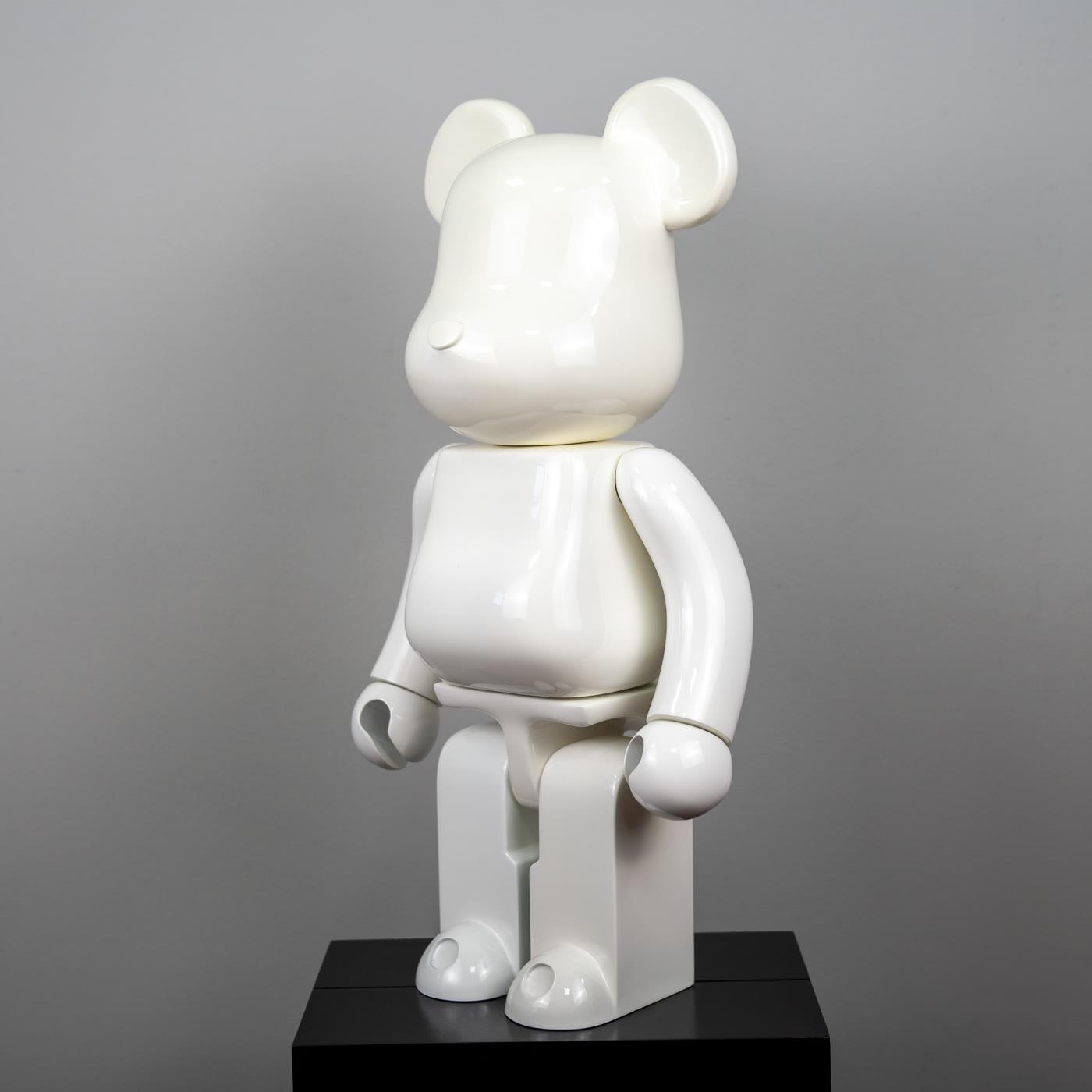
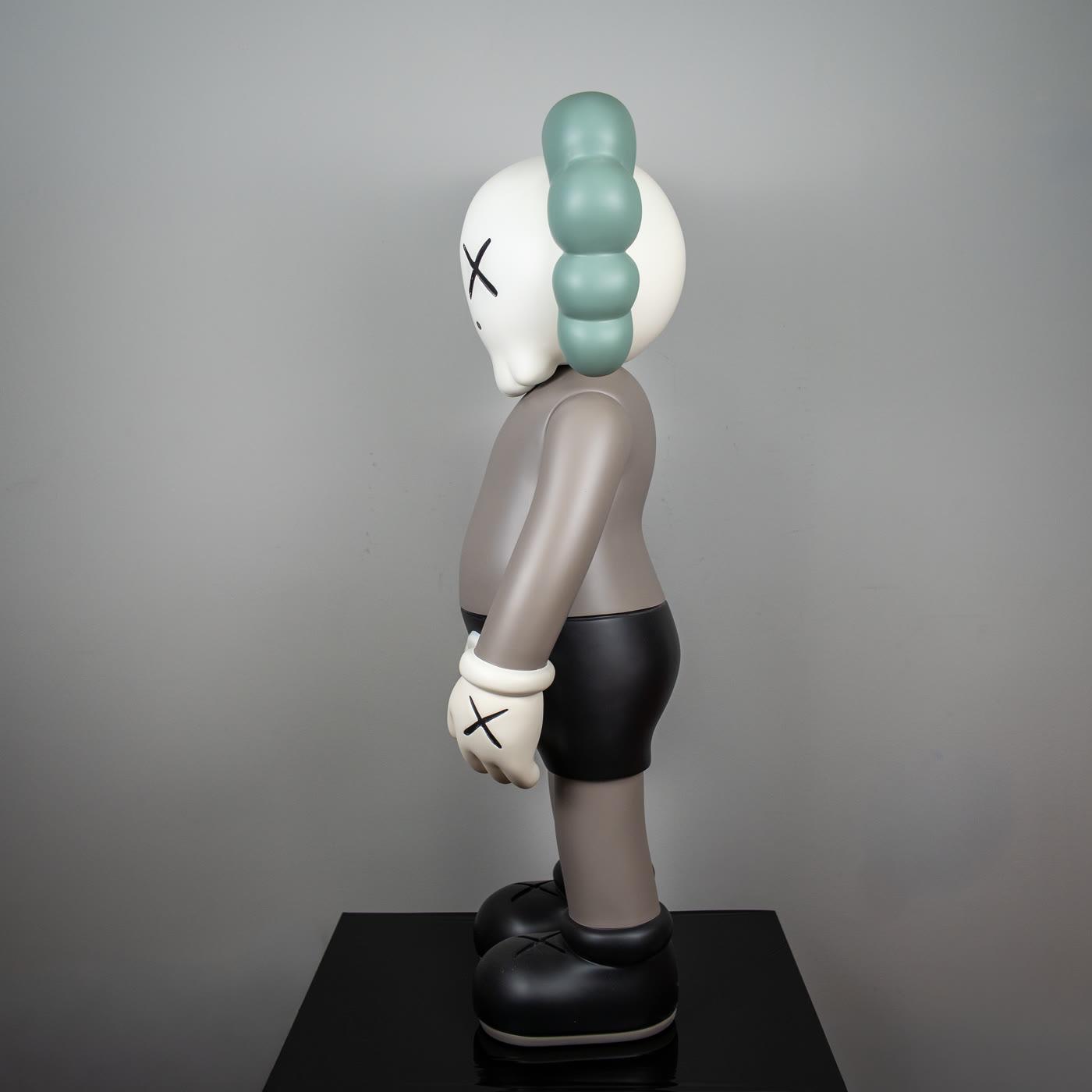
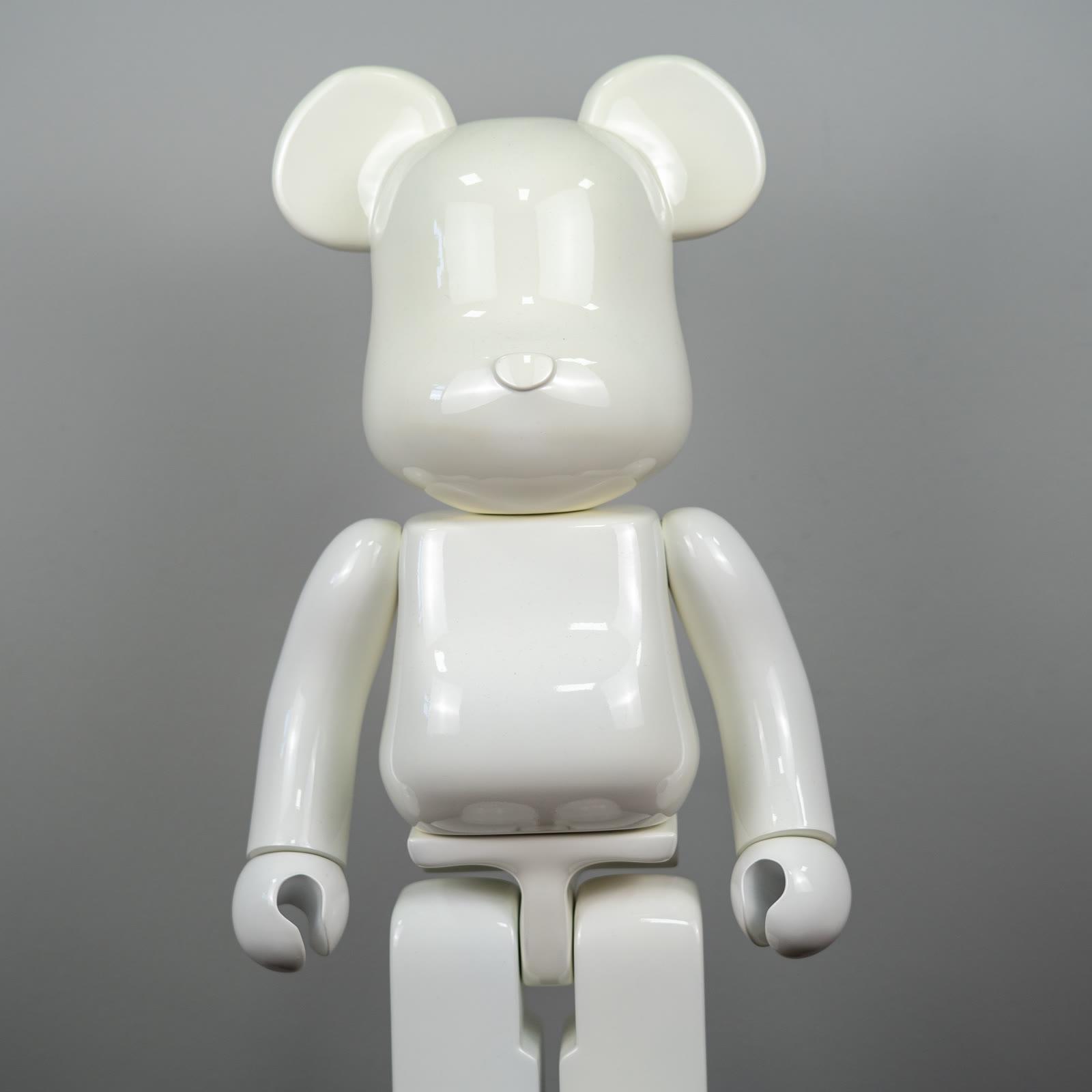
A glossy white bear shows dust and fingerprints at once. A matte sage Companion shows a mark later, but an oily hand still stains it. The care is the same kind of plain: dry, soft, light pressure. There is no wet miracle. Choosing a figure already asks whether the surface is matte or gloss. That answer also tells you which cloth will matter once it is home.
Brush first, cloth second
Start with a soft dry brush that has not been used for anything else. A clean artist’s brush, as soft as a makeup brush, is enough. Walk the dust from the top downward, into the recesses and out. Then a clean, dry microfiber. On gloss, one direction, light pressure. You are not polishing. You are keeping grit from sitting in the cloth and sanding the surface. If the cloth is dirty, you are scratching. Wash the cloth often, skip fabric softener, and do not leave cream on the face you will put against the piece.
The glossy white bear does not forgive this mistake. White shows both dust and fine scratches. If you hold it to the light and see a new mark, do not go over it with a rougher cloth. That mark is probably grit. A second pass deepens it. The sage Companion is matte, so a scratch breaks the light differently. Matte still does not mean scrubbable. Matte paint and a soft coating stain when a finger tries to buff them. Gloves are not required. A clean, dry hand is. If your hands are creamed, do not handle it.
Leave the bottle in the cupboard
The list of what not to use is long, and it should stay long. Alcohol, acetone, nail-polish remover, window cleaner, degreaser, toothpaste, baking soda, a melamine sponge, bleach, a dishwasher, bathroom steam, and an ultrasonic jewelry bath. Do not try them unless a manufacturer has clearly written one of them for their own object. We are not giving that instruction for the pieces on this page. Testing on the hidden base is still a test. The hidden corner is still part of the piece. Aggressive chemistry clouds clear coats and paint.
A damp cloth is a second step, not the first. If you truly need it, dampen a microfiber slightly and follow at once with a dry cloth. Water left in a recess marks. Do not add detergent. The green side of a kitchen sponge is sandpaper. The white side is sandpaper too, once it has picked up grit. A machine delivers heat and detergent together. No collectible figure is a plate.
Scratches, stains, and what does not come back
Gloss scratches when a grain of dust is trapped under the cloth. Polishing a scratch away usually wears the sound surface around it. We are not promising that. On a matte surface, oil stays as a fingerprint. A dry brush does not always lift it. If it stays, leave it. A solvent on top makes the mark larger. Yellowing and fade are not cleaning problems. They are the work of light and heat. Sunlight and figures keeps that subject separate. Wiping does not undo what the window did.
Value does not come back either. A dusted piece looks tidier. A scratched, yellowed, or rubbed piece is not returned to an earlier state by a cloth. Do not trust a listing that says otherwise. Care means not adding more harm. Restoration is not the subject of this article, and a polishing session at the kitchen table is not restoration.
Mistakes that keep coming back
The first mistake is treating alcohol as the safe default. It is not. The second is assuming bathroom steam or a kitchen machine is suitable for vinyl or resin. Heat and detergent are a rough combination for both. The third is thinking white hides dust. Glossy white displays it. The fourth is thinking matte does not get dirty. Matte shows dirt slowly, and it can hold oil more stubbornly.
The fifth mistake is trying a mixture from a forum on your own piece. The sixth is treating cleaning as a way to raise value. The seventh is attacking sun-faded color with toothpaste. That paste is an abrasive. The eighth is wiping the cloth on the floor and then on the sculpture. The floor is grit. Grit on gloss is a scratch.
How often, and where
A piece on an open shelf takes more dust than one in a case. A dry brush once a week is enough for most homes. A case reduces dust. It does not solve the sun. Do not build the case in front of the window, and do not spray glass cleaner so that it drips onto the piece. While you clean, do not work at the edge of a slippery glass table. Use your lap only if you must. A stable table with a towel is better.
Displaying and protecting a Bearbrick widens the decision about boxes, shelves, and light. Cleaning is the small weekly version of that decision. Do not handle the piece every day. Every touch leaves oil, and every dirty cloth scratches. A figure passed from hand to hand tires faster than one that stays on the shelf. Handing it to a guest can be courtesy. Remember the dry brush afterward.
A short checklist
Is the brush clean, is the cloth freshly washed and dry, are your hands free of cream, is the surface stable. If those four are yes, begin. If not, wait. Dust from the top down, one direction on gloss, no pressure on matte either. Do not leave damp in the recesses. Do not make a second, harder pass because you are hunting for a new scratch in the light. When you finish, put the piece back outside the sun patch.
If a mark did not lift, stop. Do not open a bottle to chase it. If a manufacturer has published care for their own piece, read that. If they have not, the dry method is enough. Writing to us can clarify which surface you actually have in hand. We will not recommend a solvent from a distance. We should not. Every liquid you are unsure about is an untested risk.
Clean is not restored
Good care is dull. A dry brush, a clean microfiber, light pressure, no alcohol, no machine. Glossy white is the mirror of that rule: the mistake shows at once. Matte sage looks more polite and follows the same rule. Neither one is a plate.
When the dust is gone, the piece sits more neatly. The scratch, the yellowing, and the fade stay where they are. Do not count that as a failure. It is not one. Those things do not wipe off. You produce fewer of them by taking the window and the hand seriously. Cleaning is the weekly form of that seriousness. It is not a promise about value.