
What is display for?
Display is for letting the silhouette be read without being cut, and for not wearing the surface without need. The cylindrical torso, round ears, and block limbs stay a bear only if there is air above and to the side. The aim is not to lock the piece in a case, and not to promise that this will protect its value. The aim is to keep it in a state that can be looked at.
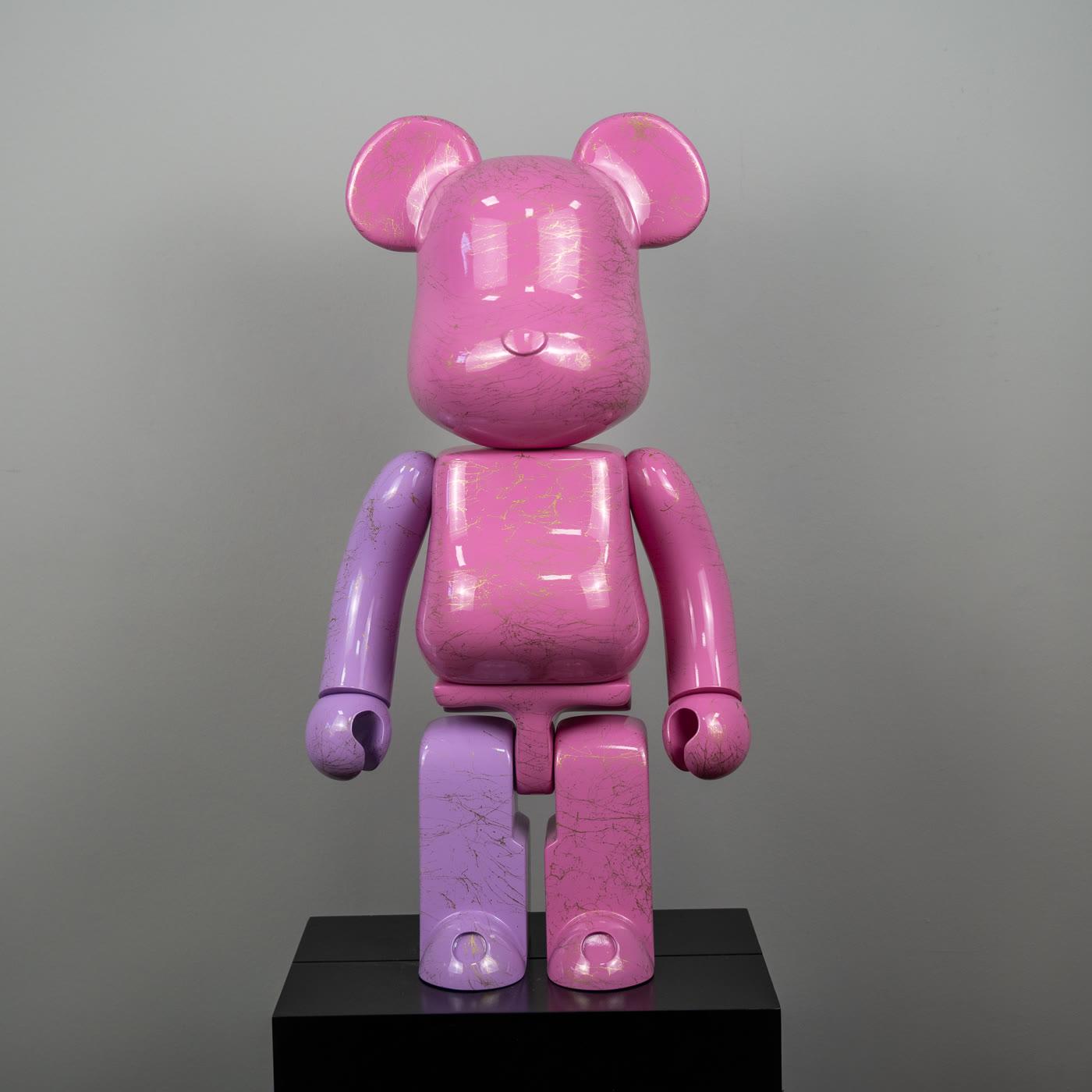
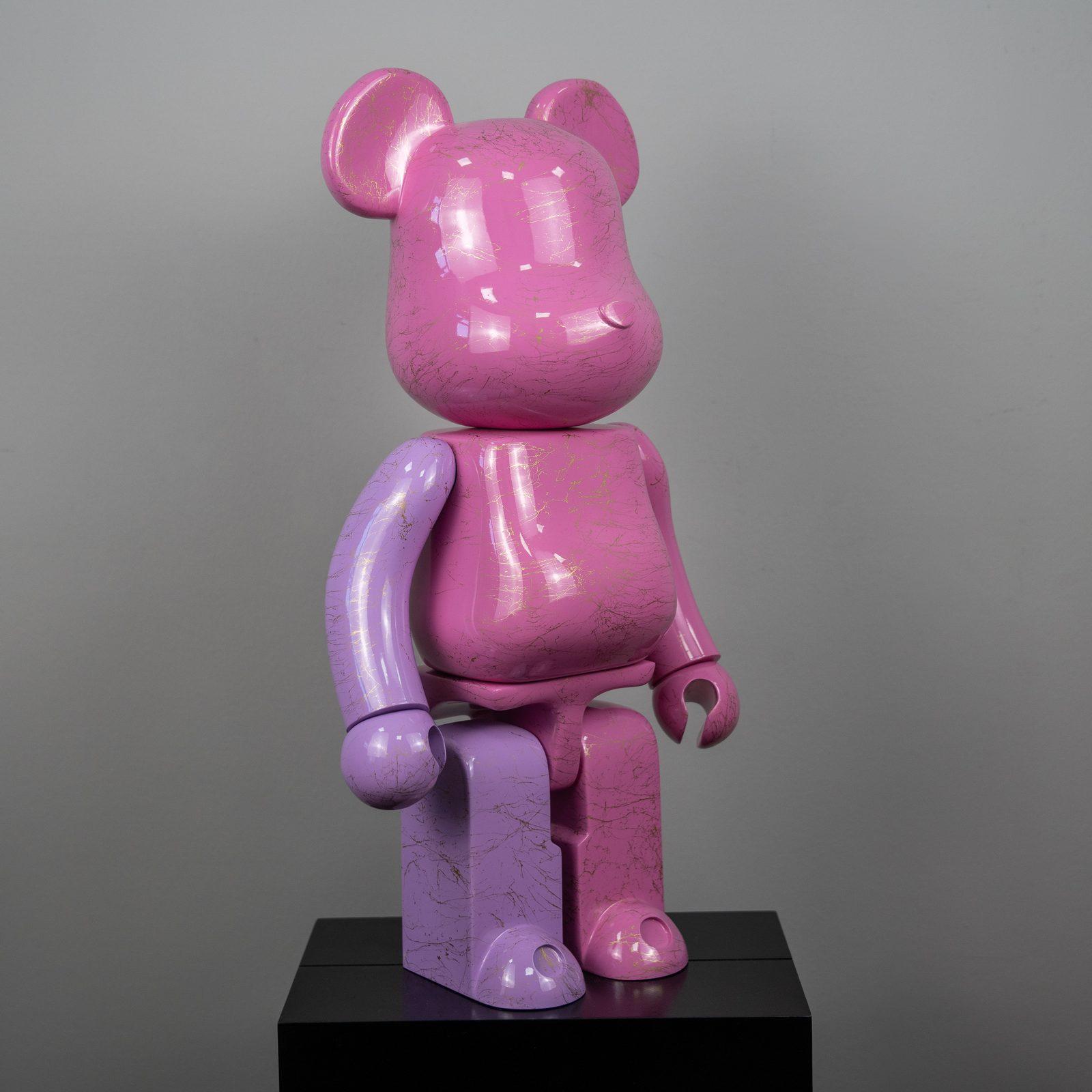
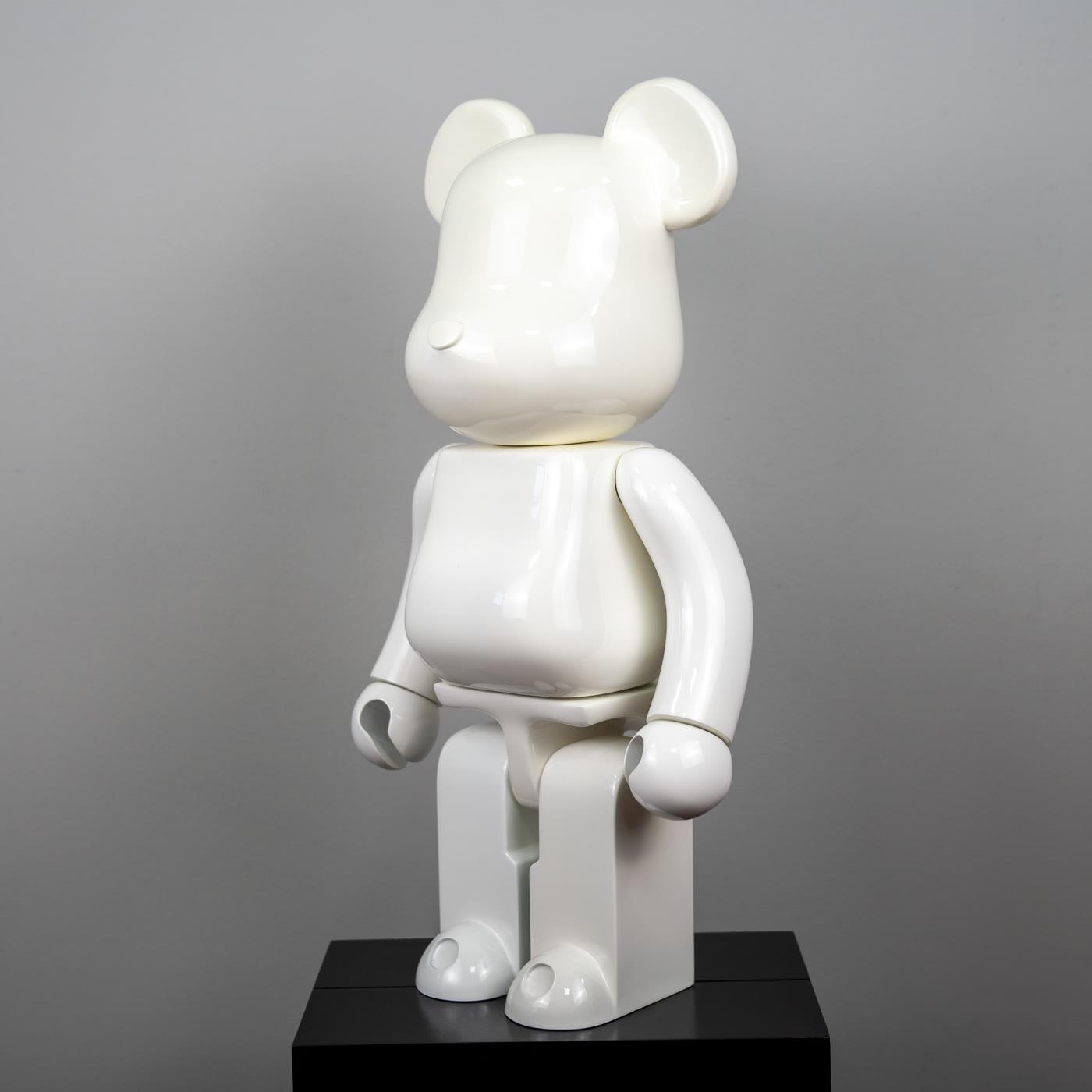
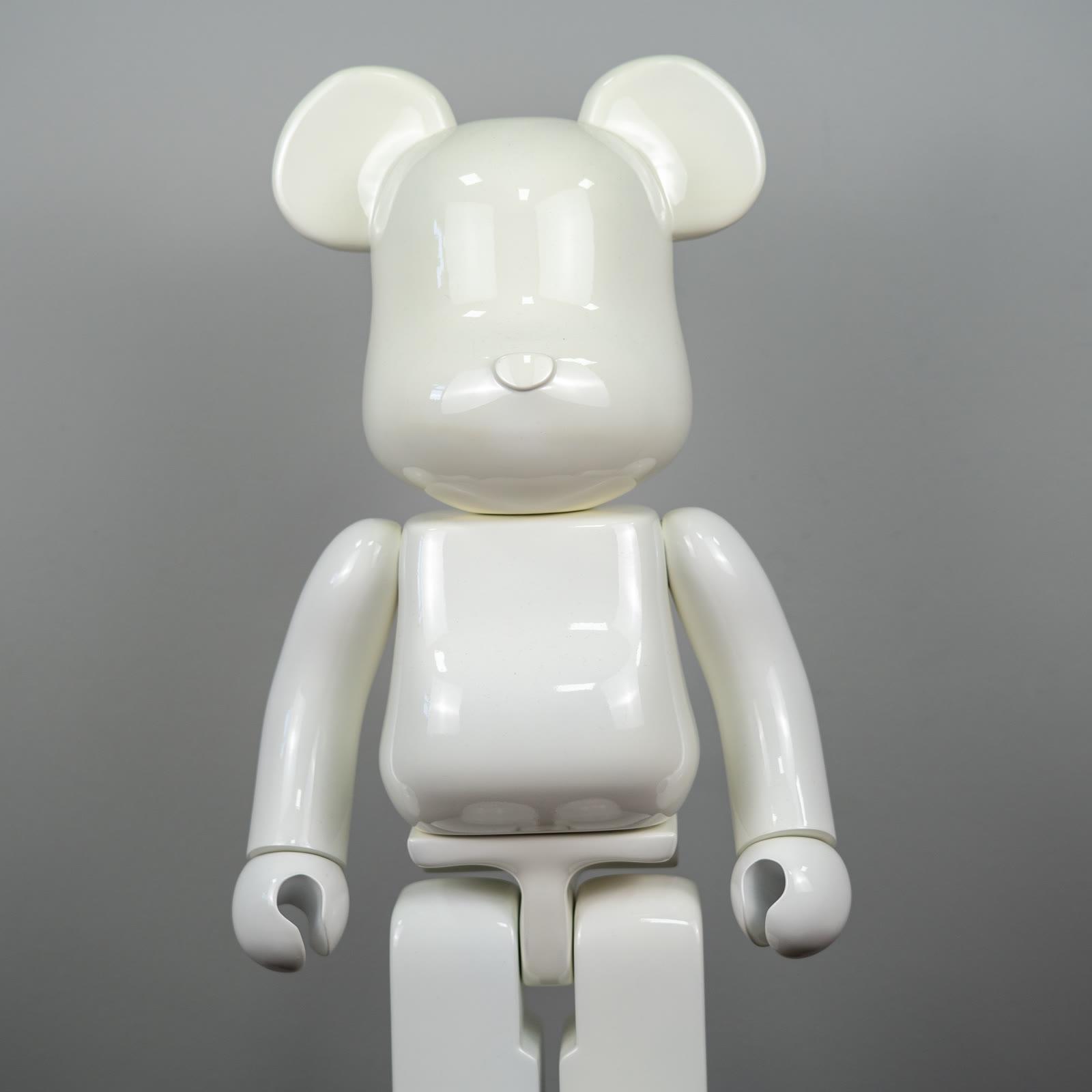
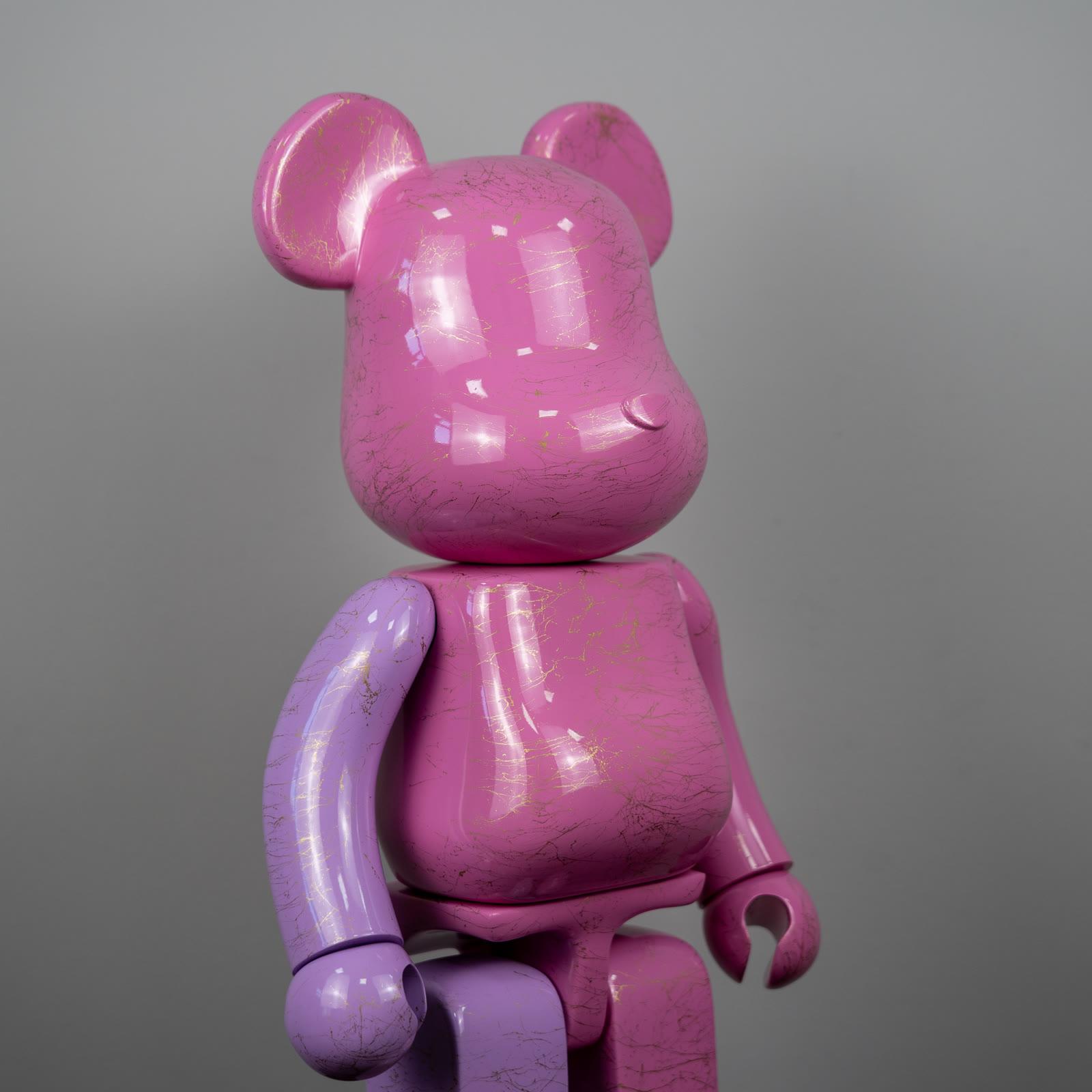
BE@RBRICK is the figure Medicom Toy introduced in 2001. A care note does not build a sentence about investment either. A surface that stands well is not written as something that will be worth more tomorrow. The glossy bear figure in pink and purple tones with gold marble pattern and the glossy white bear figure give light back differently. Both are kept with the same calm habit.
If the manufacturer has left a care note, that note wins. This article is a general, conservative guide for the home. If a box, a label, or a product page says something more specific, the specific thing is what you follow. The general thing comes in only when that note is absent.
Where does the figure stand, and at what distance?
The figure stands on a level, stable surface, brought in from the edge. A piece stuck to the lip of a shelf falls when an arm bumps it. A fall marks both the gloss and the marble pattern. Bringing it in by a few centimetres does not break the composition. It reduces the risk. The ground is checked so the base does not slide. A slippery varnish can walk a heavy mass slowly forward.
Distance is for both the gaze and the hand. The silhouette should be picked out from the door, and the marble pattern or the plain color should still be readable when you sit. The daily path should not meet the arms. If a large mass stands on the floor, it is left outside the line of walking. In Medicom’s system, 400% is published as 280 mm and 1000% as 700 mm. These numbers are not the height of catalog photographs. Whatever the height, the rule of edge and path does not change. The millimetres of other percentages belong to the current chart.
A vitrine glass can be a choice. It is not a requirement. Glass reduces dust and also adds reflection. A glossy pink-purple surface can behave like a second mirror behind glass. If glass is used, the room’s light should not hit it straight on. If it is not used, the dust habit is more frequent, and softer.
How should light meet the surface?
Light should meet the surface from the side, or slightly from above, and it should stay indirect. Side light lets the round of the ears and the gap at the joints be read. A hard spot from above leaves a long white stripe on a glossy body and erases a gold marble pattern. Glossy white can turn, in that stripe, into a blot without detail. Lighting tells the same principle for pieces other than the figure.
Direct sun is avoided. The front of a window can look harmless at one hour and tire the color in the afternoon. Light that slips past a curtain is enough for display. Keeping sun off holds, more widely, why fading starts slowly and invisibly. The rule here is short: the figure is not placed where a patch of sun walks across the ground all day.
Light is not a promise of protection. The right lamp does not guarantee what the piece will be worth tomorrow. The right lamp lets the marble pattern and the plain color be read this evening. If they are not read, the place or the lamp is changed. The piece is not rubbed with the promise of a brighter finish.
How is dust taken off?
Dust is taken off with a soft, dry brush. A makeup brush or a clean paintbrush reaches the gaps at the joints. Wiping with pressure from a cloth gathers fine scratches on a glossy surface. The brush is passed lightly, in one direction. The figure is not lifted and shaken. Shaking strains a joint and puts whatever stands nearby at risk.
A wet process is not part of this guide. Water, soap, glass cleaner, alcohol, acetone, and similar solvents are not used. A dishwasher, steam, and ultrasound are out of the question. A glossy bear is not washed like a kitchen object. On a marble-patterned surface a solvent can disturb the edge of the color. This guide does not promise that the disturbance can be undone. It only stands as a risk that is not worth the trial.
If the dust seems stuck, the brush is put down and the manufacturer’s note is checked. If there is no note, the surface is not forced. Cleaning a figure keeps the same conservatism for other pieces. A stubborn mark does not want a heroics trial with a liquid from the house. What it wants ends with a surface that is no longer read the same way.
What do hands and carrying watch for?
The hand should be dry and clean. Glossy white shows a fingerprint sooner than a pink surface. The mark is not scraped with a nail. If a dry brush is not enough, the piece is left where it is. Rubbing thins the finish. Thinning is not something this article can repair.
When you carry it, the figure is supported from the body, with two hands. It is not held by one ear or one arm. A joint is not a handle. When a large mass is set down, the path is cleared, the curl of a rug is flattened, and the floor is dry. A hurried move, meant to correct the wrong light, ends in a fall.
A box is not an identity paper for carrying. A box can help you take the piece somewhere without a bump. The presence of a box, a logo, or a hologram does not, on its own, prove what the piece is. Storage and verification are separate jobs. Storage wants a place that is not damp and does not crush corners. Verification wants the maker’s own record.
Which habits cause harm in care?
The first habit that causes harm is the wish to polish. Furniture polish, metal polish, and an oily cloth do not belong on the surface of a bear figure. Gloss is the job of the factory finish. Gloss added at home holds dust and can yellow the color. A pink-purple marble pattern loses its gold line inside that yellowing.
The second habit is to take sun lightly because the time is short. A short time repeats every day. The repetition spreads fading across a season, not across one afternoon. When it is noticed, the surface does not return to what it was. That does not mean the value will fall. It means the color may no longer be read the same way. Care here is an aesthetic limit, not a financial promise.
The third habit is to apply the same aggressive kitchen cleaning to every piece. A dishwasher and a solvent are outside this guide, whatever the series. The pink-marble-patterned figure and the glossy white figure in the catalog are inside that ban as well. If a manufacturer’s note one day describes a wet method, that note is listened to. Until it does, a dry brush is enough.
How do you set a calm care routine?
The routine is set once a week, without hurry. Pass the brush through the gaps at the joints. Do not test the surface with a nail. See whether a patch of sun is standing on the figure at that hour. If the lamp whitens the marble pattern, change its angle. If there is still a margin for a fall, bring the piece in by a few centimetres. These five looks are the whole routine for most homes.
Three bans are written beside the routine. No solvents. No dishwasher. No direct sun. If the manufacturer left a note, that note stands in front of all three. The note does not promise a rise in price. It is only information closer to that piece’s surface. The general guide was not written to take the place of that information.
Display is not a matter of forgetting the figure inside a safe either. The Bearbrick selection stands for comparing colors. At home, a single piece stands to be looked at, in the right light, with a dry brush, away from the edge. A piece that is not looked at does not count as cared for. A piece that is looked at, and not forced, is the whole promise of this article. The limit of the promise is here as well: let the surface stay readable. The rest is not said.